Category

Ethics & Moral Philosophy

6 published books 0 published articles

Books in this category

Primary category

The Expanding Circle

Ethics, Evolution, and Moral Progress

By Peter Singer

Why do human beings help one another, and how can concern extend beyond family, community, or nation? Peter Singer approaches these questions by bringing evolutionary accounts of altruism into conversation with moral philosophy. Biology, he argues, helps explain the origins and limits of many social impulses: natural selection can favor assistance to relatives, reciprocal cooperation, and loyalty within groups. Yet an evolutionary explanation of conduct does not by itself determine how anyone ought to live. Singer assigns a decisive role to reason, whose demand for consistency can expose the arbitrariness of privileging one’s own group simply because it is one’s own. The resulting image is an expanding circle of moral concern, potentially widening from kin and neighbors to distant strangers and nonhuman animals. Originally published amid intense debate over sociobiology, the book remains a compact argument about human nature, impartiality, and whether moral progress is possible.
View book

Related category

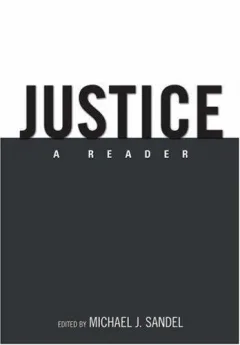
Justice

What's the Right Thing to Do?

By Michael J. Sandel

Michael J. Sandel turns political philosophy into a sustained public argument about how people should live together. Beginning with vivid moral dilemmas and disputes over policy, he tests three broad approaches to justice: maximizing welfare, respecting freedom, and cultivating virtue or the common good. Utilitarianism, libertarianism, Immanuel Kant’s account of duty, John Rawls’s theory of fairness, and Aristotle’s purpose-centered ethics are introduced through questions about taxation, military service, markets, affirmative action, loyalty, and marriage. Sandel does more than survey competing schools of thought. He asks readers to uncover the moral assumptions beneath their political opinions and to decide whether a just society can remain neutral about the good life. The book’s enduring value lies in its method: difficult public controversies become occasions for reasoning with, and against, principles that may initially seem self-evident.

View book

Related category

The Happiness Hypothesis

Finding Modern Truth in Ancient Wisdom

By Jonathan Haidt

In The Happiness Hypothesis, social psychologist Jonathan Haidt examines enduring claims about happiness, virtue, love, adversity, self-command, and meaningful living. Rather than accepting ancient wisdom as timeless truth—or dismissing it as obsolete—he compares ideas drawn from religious and philosophical traditions with findings from psychology, neuroscience, and evolutionary thought. The book begins with the divided mind, memorably represented as a conscious rider attempting to guide a much larger elephant of automatic feeling and intuition. It then moves outward into reciprocity, self-serving judgment, relationships, circumstances, moral development, sacredness, and purpose. Haidt’s central conclusion is that flourishing is not produced by introspection or pleasure alone. It emerges through a workable alignment among temperament, habits, relationships, commitments, values, and social life. The result is an accessible investigation of what ancient traditions understood about human…

View book

Related category

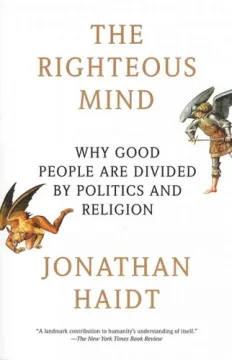
The Righteous Mind

Why Good People Are Divided by Politics and Religion

By Jonathan Haidt

Why do sincere, decent people reach sharply opposed conclusions about politics, religion, and morality? Social psychologist Jonathan Haidt argues that moral judgment usually begins with rapid intuition, while conscious reasoning often arrives afterward to explain or defend what already feels right. He then presents morality as a plural system: people respond to several concerns—including care, fairness, loyalty, authority, sanctity, and liberty—but cultures and political groups assign them different weight. The final part examines humanity’s capacity to form cohesive groups, proposing that the same moral instincts that make cooperation, institutions, and religious communities possible can also produce tribalism and hostility. Combining psychological research, evolutionary argument, anthropology, political analysis, and memorable metaphors, The Righteous Mind offers a framework for interpreting disagreement without assuming that one’s opponents are merely ignorant or malicious. Its cen…

View book

Related category

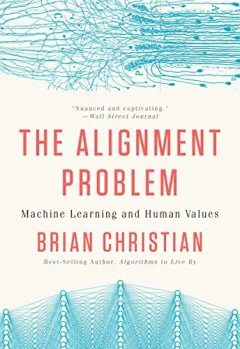
The Alignment Problem

Machine Learning and Human Values

By Brian Christian

Machine-learning systems learn from examples, rewards, and human behavior—but none of these provides a simple or neutral expression of what people truly want. Brian Christian investigates the resulting alignment problem: the difficulty of making computational systems reliably serve human purposes and values. Moving between the history of artificial intelligence, psychology, moral philosophy, and contemporary research, he examines biased representations, incompatible definitions of fairness, opaque models, poorly specified rewards, imitation learning, preference inference, and uncertainty about human objectives. The book treats alignment not merely as a future problem involving hypothetical superintelligence, but as a present challenge wherever automated systems classify people or influence consequential decisions. Christian’s central contribution is to connect technical design choices with the unresolved ambiguities of human judgment. The result is an accessible account of why buildin…

View book

Related category

How We Die

Reflections on Life's Final Chapter

By Sherwin B. Nuland

In How We Die, surgeon and medical educator Sherwin B. Nuland examines what happens to the human body during common forms of death. Moving through heart disease, aging, Alzheimer’s disease, violence, accidents, suicide, AIDS, and cancer, he combines physiological explanation with clinical observation and personal stories. His purpose is not to offer reassurance through euphemism, but to replace frightening uncertainty with a clearer understanding of dying as a biological process. The book also challenges idealized images of a peaceful, fully controlled death. Nuland argues that medicine’s power to prolong life can become harmful when treatment continues without a realistic appraisal of its burdens and prospects. The result is both an anatomy of bodily decline and a reflection on hope, dignity, physician responsibility, and the difficult choices faced by patients and families near the end of life.

View book

Articles in this category

No published articles are currently connected to this category in this language.