WebToTell

Books

Discover published books from independent authors and publishers.

Explore the library

Find your next book

77 unique books found Books may appear in more than one category.

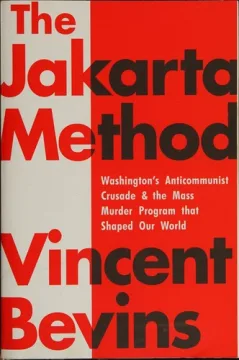
The Jakarta Method book cover

The Jakarta Method

By Vincent Bevins

Washington's Anticommunist Crusade and the Mass Murder Program That Shaped Our World

Vincent Bevins presents a transnational history of Cold War anticommunist violence, placing the Indonesian mass killings of 1965–1966 at the center of a much larger story. Rather than treating Indonesia as a peripheral episode in a contest dominated by Washington and Moscow, he argues that the destruction of Indonesia’s organized left was a major geopolitical turning point. The book traces connections among decolonization, the Non-Aligned Movement, the 1964 Brazilian military coup, the Indonesian Army’s rise under Suharto, and later campaigns of repression in Latin America and elsewhere. The phrase “Jakarta Method” describes more than one operation or fixed doctrine. In the book, it becomes a framework for recognizing a recurring political pattern: communist, socialist, labor, peasant, or reform movements are portrayed as existential threats; military and conservative forces receive encouragement or assistance; targeted people are detained, disappeared, or killed; and the resulting po…


View The Jakarta Method

Say Nothing book cover

Say Nothing

By Patrick Radden Keefe

A True Story of Murder and Memory in Northern Ireland

Say Nothing is a work of investigative narrative nonfiction about the Troubles and their long aftermath in Northern Ireland. Its central case is the December 1972 abduction and killing of Jean McConville, a widowed mother of ten taken from her Belfast home. McConville’s disappearance gives the book a human-scale route into a much larger history of republican militancy, British security policy, sectarian division, clandestine intelligence, imprisonment, political negotiation, and unresolved grief. Rather than attempting a complete chronological history of the conflict, Keefe follows intersecting lives. These include members of the McConville family; republican activists Dolours and Marian Price; senior IRA figure Brendan Hughes; and Gerry Adams, whose alleged relationship to the IRA is treated as a major question in the narrative. The book also examines the Boston College oral-history undertaking commonly known as the Belfast Project. Interviews recorded for that archive promised parti…

View Say Nothing

Evicted book cover

Evicted

By Matthew Desmond

Poverty and Profit in the American City

Evicted examines how the loss of a home operates within the broader machinery of American poverty. Its principal setting is Milwaukee during and after the 2008 financial crisis, where Desmond follows eight low-income families—Black tenants on the city’s North Side and white tenants in a South Side mobile-home park—along with the landlords whose decisions shape their housing prospects. Rather than presenting poverty only through statistics or policy analysis, the book reconstructs daily life under severe rent burdens: searching for apartments, negotiating with landlords, appearing in housing court, losing possessions, moving between temporary homes, and trying to preserve work and family routines amid displacement. The narrative is based on embedded fieldwork supplemented by interviews, surveys, and analysis of eviction-court records. Desmond reports that he interviewed 250 tenants in eviction court, surveyed more than 1,000 Milwaukee renters, and analyzed hundreds of thousands of cour…

View Evicted

The Overstory book cover

The Overstory

By Richard Powers

The Overstory is a large-scale literary novel in which the lives of nine Americans become entangled with trees, forests, scientific discovery, and environmental resistance. Its opening movement presents several largely independent personal and family histories. Each history contains an encounter with a particular tree or species—a surviving American chestnut, a banyan, a mulberry, a maple, or the ancient forests of the Pacific Northwest—that changes how a character understands time, survival, or human responsibility. These separate narratives eventually converge around forest defense and then branch apart again as the consequences of activism reshape the characters' lives. The novel is divided into four parts—“Roots,” “Trunk,” “Crown,” and “Seeds”—so that its architecture follows an arboreal pattern. This is more than decorative organization. The early biographies establish the characters' origins; the central sections connect them through shared purposes and conflicts; and the conclu…

View The Overstory

The Dawn of Everything book cover

The Dawn of Everything

By David Graeber , David Wengrow

A New History of Humanity

The Dawn of Everything is an ambitious reinterpretation of early human social and political history. Rather than offering another single-track account of humanity's supposed ascent from small egalitarian bands through agriculture, cities, states, and entrenched inequality, David Graeber and David Wengrow challenge the idea that these developments formed an inevitable sequence. They assemble archaeological, anthropological, and historical examples suggesting that people repeatedly experimented with different combinations of hierarchy, equality, administration, ritual authority, seasonal leadership, and collective government. The book begins by examining familiar European stories about human origins, particularly narratives associated with Thomas Hobbes and Jean-Jacques Rousseau. It then argues that European political thought was partly shaped by Indigenous criticism of European society, giving particular attention to accounts involving the Wendat statesman Kandiaronk. From there, the a…

View The Dawn of Everything

The Gene book cover

The Gene

By Siddhartha Mukherjee

An Intimate History

The Gene is a large-scale history of heredity as both a scientific problem and a consequential human idea. Mukherjee follows the subject from early speculation about reproduction and inheritance through Gregor Mendel’s experiments, Darwinian evolution, chromosome theory, the identification of DNA as hereditary material, molecular genetics, recombinant DNA, gene sequencing, cloning, the Human Genome Project, and early twenty-first-century genome editing. The chronology is interwoven with accounts of Mukherjee’s family history of mental illness and his clinical perspective as a cancer physician and researcher. This personal strand turns heredity from an abstract mechanism into a source of uncertainty about illness, identity, probability, and family responsibility. The book is therefore not simply a technical account of how genes work. It examines how societies have interpreted genetic knowledge, how eugenic programs converted claims about heredity into coercive policy, and how the abili…

View The Gene

The Anarchy book cover

The Anarchy

By William Dalrymple

The East India Company, Corporate Violence, and the Pillage of an Empire

The Anarchy is a large-scale narrative history of how the English East India Company evolved from a commercial enterprise into a military and governmental power in South Asia. Its central story runs through the eighteenth century, when Mughal authority fragmented, regional powers competed for territory and revenue, and Company officials learned to exploit both Indian political rivalries and financial resources. The book is not simply a chronicle of British expansion. Dalrymple reconstructs a crowded political field involving the Mughal court, Bengal’s nawabs, the Maratha Confederacy, Mysore, Afghan invaders, Indian bankers and financiers, European mercenaries, Company shareholders and officials in London. Figures such as Shah Alam II, Robert Clive, Warren Hastings, Tipu Sultan and the Maratha leader Mahadji Scindia appear within a history shaped as much by negotiation, credit and revenue collection as by battles. Dalrymple’s organizing argument is that the conquest was extraordinary b…

View The Anarchy

The Emperor of All Maladies book cover

The Emperor of All Maladies

By Siddhartha Mukherjee

A Biography of Cancer

Siddhartha Mukherjee approaches cancer as though it were the subject of a biography: an entity with ancient appearances, changing identities, influential interpreters, periods of apparent defeat, and repeated transformations. The book moves from early descriptions of tumors through surgery, radiation, chemotherapy, epidemiology, prevention, genetics, targeted treatment, and the political campaign commonly called the War on Cancer. Rather than presenting medical progress as a smooth accumulation of discoveries, Mukherjee reconstructs a history shaped by experiments, rival theories, institutional ambitions, public advocacy, commercial interests, clinical failures, and patients willing to undergo uncertain treatments. A contemporary leukemia patient, Carla Reed, helps anchor the historical account in the realities of diagnosis and care. The result combines medical history, popular science, clinical narrative, and institutional history while repeatedly returning to a central biological in…

View The Emperor of All Maladies

The Dispossessed book cover

The Dispossessed

By Ursula K. Le Guin

An Ambiguous Utopia

The Dispossessed follows Shevek, a physicist raised on Anarres, an arid moon settled by revolutionaries seeking to build a stateless, non-proprietary society. Convinced that intellectual isolation is obstructing both his scientific work and meaningful contact between worlds, Shevek travels to Urras, the wealthy planet from which the Anarresti founders departed generations earlier. His journey places him between societies that define freedom in radically different ways. The novel develops along two alternating timelines. One traces Shevek’s life on Anarres: his education, scientific vocation, partnership with Takver, experience of famine, and conflicts with institutions that exercise power despite officially rejecting hierarchy. The other follows his visit to Urras, where he receives material comfort and professional recognition but gradually recognizes the political interests surrounding his research. The timelines illuminate each other, turning his journey into both a political compa…

View The Dispossessed

The Sixth Extinction book cover

The Sixth Extinction

By Elizabeth Kolbert

An Unnatural History

The Sixth Extinction investigates the proposition that human activity is producing a biological crisis comparable in scale—though not necessarily identical in mechanism or duration—to the five major mass extinctions identified in the fossil record. Kolbert develops this case through thirteen chapters, each organized around an emblematic species, extinction mechanism, scientific discovery, or conservation problem. The sequence moves between deep time and contemporary field sites rather than presenting a conventional textbook survey. The early chapters reconstruct the intellectual history of extinction. Georges Cuvier’s study of fossil remains helped establish that species could disappear permanently, overturning assumptions that nature’s inventory was fixed. The great auk illustrates how direct exploitation can eliminate an abundant species, while ammonites and the end-Cretaceous catastrophe introduce sudden planetary disruption and the scientific struggle to recognize it. The book the…

View The Sixth Extinction

The Immortal Life of Henrietta Lacks book cover

The Immortal Life of Henrietta Lacks

By Rebecca Skloot

Rebecca Skloot combines biography, family history, science writing, medical history, and investigative reporting to reconstruct the life and legacy of Henrietta Lacks. In 1951, while Lacks was being treated for cervical cancer at Johns Hopkins Hospital, cells obtained from her tumor without her knowledge or consent became the source of HeLa, the first human cell line that could be continuously propagated in culture. The book explains why this development mattered to laboratory science, but its central purpose is to restore a person and family to a story that had often been told chiefly as scientific progress. The narrative moves among three interconnected histories: Henrietta's life and treatment; the development and expanding use of HeLa cells; and the later experiences of her children, particularly Deborah Lacks, as they tried to understand what had happened. Skloot also includes the process of her own reporting, showing that access to a family's history depends on trust, patience,…

View The Immortal Life of Henrietta Lacks

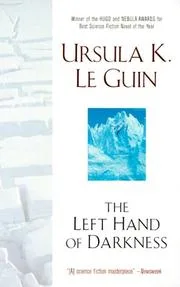
The Left Hand of Darkness book cover

The Left Hand of Darkness

By Ursula K. Le Guin

The Left Hand of Darkness combines diplomatic science fiction, speculative anthropology, political intrigue, and an arduous survival journey. Genly Ai, an envoy from a loose interplanetary association called the Ekumen, travels alone to Gethen—also known as Winter—to invite its nations into wider contact with other human worlds. His assignment is complicated by political rivalry, his limited understanding of Gethenian customs, and his difficulty perceiving the planet’s inhabitants outside the gender categories he brings with him. The novel initially follows Genly’s uncertain dealings in Karhide, where indirect communication, personal influence, ceremonial behavior, and political suspicion make straightforward diplomacy nearly impossible. His relationship with the statesman Estraven becomes central: Genly repeatedly misreads Estraven’s motives, while Estraven acts from a conception of loyalty larger than allegiance to a single ruler or nation. The story later moves through the bureaucr…

View The Left Hand of Darkness