Category

War & Society

What war does to the people and societies caught up in it. Dee Brown's Bury My Heart at Wounded Knee tells the destruction of Native American nations in the American West. Lindsey Fitzharris's The Facemaker follows the doctors who treated the terrible facial wounds of the First World War, and The Monuments Men by Robert M. Edsel follows the effort to save Europe's art from the Nazis. Maaza Mengiste's novel The Shadow King imagines the Ethiopian women who fought against Mussolini's invasion. Moving, often hard reading about war beyond the battlefield.

5 published books 0 published articles

Books in this category

Primary category

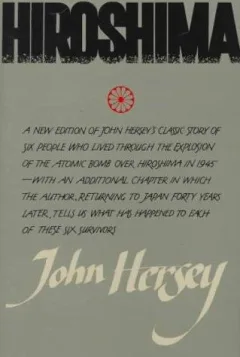
Hiroshima

By John Hersey

John Hersey's Hiroshima follows six people through the atomic bombing of Hiroshima on August 6, 1945, and the weeks, months and years that followed: two physicians, a clerk, a tailor's widow, a Methodist pastor and a German Jesuit priest. Rather than arguing about strategy or morality, Hersey reconstructs what each person saw, did and suffered, and lets plain detail carry the scale of the catastrophe. The text first appeared in The New Yorker in 1946 and then became a book that has stayed in print. This 1985 Knopf edition adds a closing chapter based on Hersey's return to Japan four decades later. For anyone assembling world war 2 books, it is a short, humane and influential piece of reporting that shows how the war's end looked from the ground.
View book

Related category

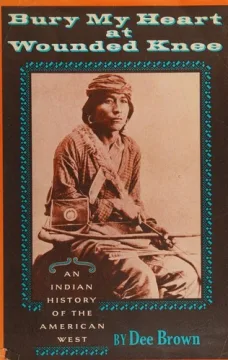
Bury My Heart at Wounded Knee

An Indian History of the American West

By Dee Brown

Dee Brown’s Bury My Heart at Wounded Knee recounts the conquest of the American West largely through the experiences and recorded words of Native peoples. Concentrating on the period from 1860 to 1890, it follows a succession of treaty negotiations, removals, wars, surrenders, killings, and reservation policies involving nations across the Plains, Southwest, Great Basin, and Northwest. Leaders including Little Crow, Red Cloud, Black Kettle, Sitting Bull, Crazy Horse, Chief Joseph, Captain Jack, and Big Foot emerge not as marginal figures in someone else’s frontier story but as political and military actors confronting invasion and dispossession. Brown ends with the killing at Wounded Knee, making it the culmination of a repeated pattern: federal promises yield to settler pressure, military force, and administrative control. Published in 1970, the book decisively challenged celebratory popular accounts of western expansion. It remains powerful and influential, though it is best read al…

View book

Related category

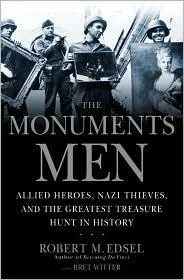
The Monuments Men

Allied Heroes, Nazi Thieves, and the Greatest Treasure Hunt in History

By Robert M. Edsel with Bret Witter

Robert M. Edsel’s narrative history follows a small group of art specialists serving with the Allied forces during the final phase of World War II in Europe. Members of the Monuments, Fine Arts, and Archives program entered damaged cities, advised commanders about culturally important sites, inspected churches and museums, and pursued works stolen or displaced by Nazi agencies. Concentrating largely on the period from the Normandy invasion to Germany’s defeat, the book turns cultural preservation into a frontline story. Figures including George Stout, James Rorimer, Walker Hancock, Ronald Balfour, Rose Valland, and Harry Ettlinger reveal different parts of the undertaking: conservation, intelligence gathering, military coordination, documentation, and recovery. Their work raises a larger question about what victory means when buildings, archives, religious objects, and art embody the histories of communities. The result connects military history with art crime, restitution, museum pra…

View book

Related category

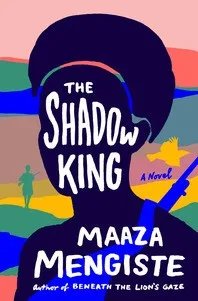
The Shadow King

A Novel

By Maaza Mengiste

Set principally during Fascist Italy’s 1935 invasion of Ethiopia, The Shadow King follows Hirut, a recently orphaned servant who is drawn from domestic subordination into armed resistance. She initially enters the conflict alongside Kidane, an officer in Emperor Haile Selassie’s army, and Aster, Kidane’s formidable wife. As Ethiopia confronts a technologically superior invader and the emperor leaves the country, Hirut helps transform a humble musician who resembles Haile Selassie into a symbolic “shadow king” capable of sustaining morale. The novel also crosses the battle line through Ettore Navarra, a Jewish Italian soldier and photographer serving a violent colonial command. By combining intimate trauma, military struggle, photography, myth, and collective memory, Maaza Mengiste recasts a frequently marginalized theater of twentieth-century history around women who fought, endured, and remembered. The result is both a war narrative and an inquiry into who controls the images through…

View book

Related category

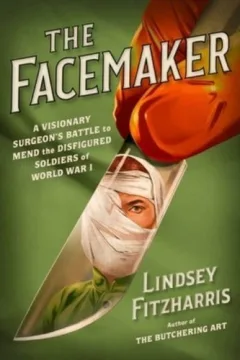
The Facemaker

A Visionary Surgeon's Battle to Mend the Disfigured Soldiers of World War I

By Lindsey Fitzharris

The Facemaker recounts how surgeon Harold Gillies and an interdisciplinary medical team confronted the devastating facial wounds of the First World War. Modern artillery and trench combat produced injuries that existing surgical practice was poorly equipped to treat, leaving survivors with impaired breathing, eating, speech, and vision as well as severe social isolation. Lindsey Fitzharris follows Gillies from wartime service to his leadership of specialized treatment in Britain, where repeated operations, skin grafts, dental work, anesthesia, medical illustration, and careful experimentation helped establish modern reconstructive plastic surgery. The book is both a historical biography and a patient-centered account of medical innovation. It emphasizes that repairing a face was never solely a technical problem: the work also concerned identity, dignity, relationships, and the possibility of returning to public life. By placing surgical progress beside individual experiences of injury…

View book

Articles in this category

No published articles are currently connected to this category in this language.