Category

Public Policy

5 published books 0 published articles

Books in this category

Related category

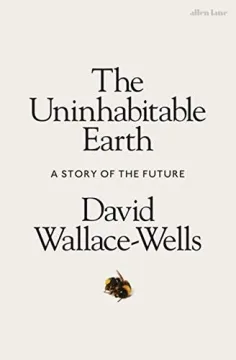
The Uninhabitable Earth

Life After Warming

By David Wallace-Wells

In The Uninhabitable Earth, journalist David Wallace-Wells surveys the human consequences of a rapidly warming planet. Rather than treating climate change chiefly as a question of rising seas or endangered wildlife, he presents it as a force capable of reshaping food systems, public health, migration, conflict, economic life, politics, and culture. The book moves from physical dangers—including extreme heat, wildfire, water scarcity, ocean damage, and disease—to the social narratives and institutions through which people interpret those dangers. Its central contention is that climate disruption is neither remote nor confined to a single environmental problem: it is an all-encompassing condition created by human choices. Wallace-Wells writes in an intentionally alarming register, but he does not argue that catastrophe is predetermined. The range of possible futures remains politically contingent, making the book both a warning about cascading risks and an argument for collective agency.
View book

Related category

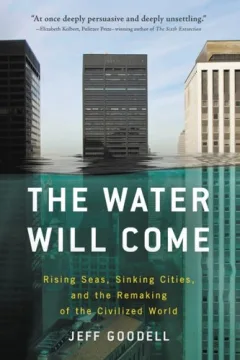
The Water Will Come

Rising Seas, Sinking Cities, and the Remaking of the Civilized World

By Jeff Goodell

In The Water Will Come, environmental journalist Jeff Goodell investigates how rising seas will alter coastlines, cities, economies, and patterns of human settlement. Traveling from Miami and New York to Venice, Lagos, the Netherlands, the Marshall Islands, and vulnerable military installations, he connects climate science with the decisions being made by engineers, politicians, property owners, and residents. The book explains how warming water and melting land ice raise sea levels, but its principal concern is social: what happens when roads, homes, drinking-water systems, cultural landmarks, and entire communities can no longer be defended at an acceptable cost? Goodell presents adaptation as an unavoidable process involving engineering, finance, migration, and political conflict. Published in 2017, the book is both a report from places already confronting recurrent flooding and an examination of the difficult choices that coastal societies face as the boundary between land and sea…

View book

Related category

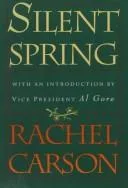
Silent Spring

By Rachel Carson

Silent Spring investigates the ecological and human consequences of widespread synthetic-pesticide use in mid-twentieth-century America. Rachel Carson follows chemicals such as DDT beyond the moment of application, tracing how persistent poisons move through soil and water, enter food chains, accumulate in living tissue, and injure organisms that were never their intended targets. Birds provide the book’s most memorable warning, but Carson’s argument encompasses insects, fish, mammals, plants, and human beings. She also examines the institutions behind chemical control: government eradication campaigns, commercial promotion, limited public consent, and regulatory systems that treated environmental harm as secondary to immediate results. Rather than demanding the abandonment of every pesticide, Carson argues against indiscriminate use and for careful research, selective intervention, biological controls, and public accountability. Published in 1962, the book transformed a technical dis…

View book

Related category

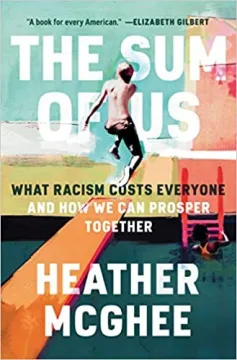
The Sum of Us

What Racism Costs Everyone and How We Can Prosper Together

By Heather McGhee

Heather McGhee examines a central contradiction in American public life: policies shaped by racial division often harm the people they are presented as protecting. Drawing on economic research, political history, interviews, and reporting across the United States, she connects racism to weakened public services, barriers to healthcare, declining worker power, housing inequality, environmental danger, and restrictions on democratic participation. Her governing idea is the “zero-sum” story—the belief that progress for people of color must mean loss for white people. The book’s defining image is the public swimming pool that officials chose to close rather than integrate, sacrificing a shared resource to preserve racial exclusion. Against that pattern, McGhee develops the “Solidarity Dividend”: the material and civic gains made possible when people organize across racial lines. The result is both a diagnosis of American inequality and an argument that racial justice and broadly shared pr…

View book

Related category

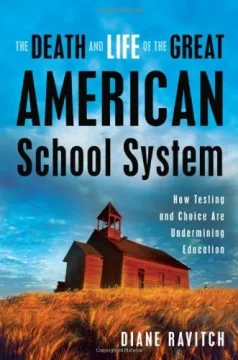
The Death and Life of the Great American School System

How Testing and Choice Are Undermining Education

By Diane Ravitch

In this critique of American education reform, historian and former federal education official Diane Ravitch reassesses policies she once supported. She argues that standards-based reform lost its educational purpose when standards became inseparable from high-stakes testing, sanctions, and numerical targets. She also questions whether charter schools, school choice, mayoral control, private management, and business-style accountability can deliver the broad improvements their advocates promise. Drawing on federal policy and reform campaigns in cities including New York and San Diego, Ravitch examines how incentives can narrow curricula, encourage manipulation of results, destabilize schools, and weaken trust in teachers. The book is both a policy argument and an intellectual self-correction: Ravitch explains why she changed her mind about central elements of the reform movement. Her alternative emphasizes a coherent curriculum, knowledgeable teachers, strong neighborhood schools, app…

View book

Articles in this category

No published articles are currently connected to this category in this language.