Category

Space & Exploration

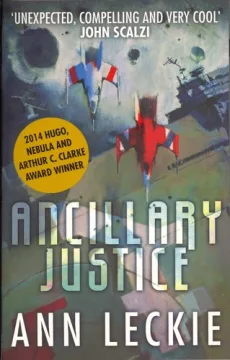
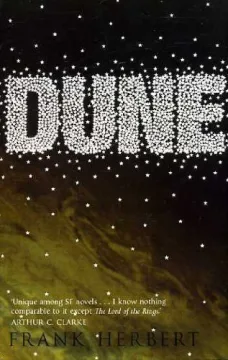
Stories set among the stars. Frank Herbert's Dune, one of the best-selling science fiction novels of all time, follows a noble family's fall and rise on the desert planet Arrakis. Ann Leckie's Ancillary Justice, which won the Hugo, Nebula and Arthur C. Clarke awards, is told by a warship's artificial intelligence trapped in a single human body. Andy Weir's Project Hail Mary is a problem-solving survival story in deep space, and Douglas Adams's The Hitchhiker's Guide to the Galaxy is the funniest trip across the galaxy ever written.

5 published books 0 published articles

Books in this category

Primary category

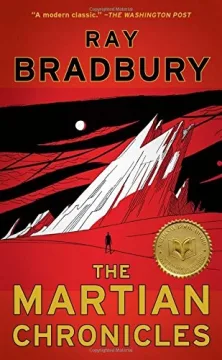
The Martian Chronicles

By Ray Bradbury

Ray Bradbury's The Martian Chronicles follows the human settlement of Mars through a chain of linked stories. Early expeditions meet a gentle, sophisticated Martian civilization and wreck it, sometimes by violence and sometimes by accident. Settlers then arrive in numbers, bringing their towns, prejudices and appetites with them, until a catastrophe on Earth cuts the colonies off. Bradbury treats Mars as a mirror: the book reads as a meditation on colonial conquest, nuclear fear, censorship and the cost of treating a new world as a blank slate. Its lyrical, melancholy tone sets it apart from engineering-minded space adventure. Among science fiction books, it is a standard introduction to the genre's literary and humane side, and it remains short enough to read in a weekend.
View book

Primary category

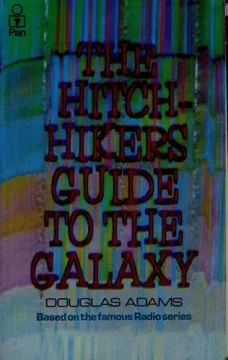
The Hitchhiker's Guide to the Galaxy

By Douglas Adams

Seconds before Earth is demolished for an interstellar bypass, the bewildered Englishman Arthur Dent is rescued by his friend Ford Prefect, secretly a researcher for a galactic travel guide. Their escape leads to the stolen spaceship Heart of Gold and its unlikely crew: the recklessly self-involved president Zaphod Beeblebrox, the capable Trillian, and the chronically miserable robot Marvin. As the survivors encounter bureaucratic aliens, improbable technology, and unsettling revelations about Earth, Douglas Adams turns space adventure into an absurdist examination of authority, knowledge, meaning, and humanity's place in the universe. The novel is both a brisk comic journey and a foundational work of modern science-fiction satire.

View book

Primary category

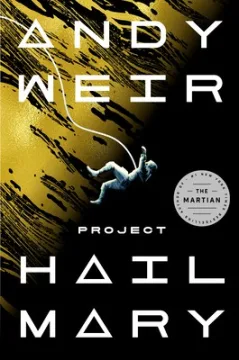
Project Hail Mary

A Novel

By Andy Weir

Ryland Grace wakes aboard a spacecraft with two dead crewmates, no accessible memories, and only fragmentary evidence of his mission. As he reconstructs his identity and purpose, he learns that Earth faces catastrophe from Astrophage, an extraterrestrial organism that is diminishing the Sun’s output. His destination, Tau Ceti, may hold the explanation—and a possible remedy. The novel combines an amnesia mystery, a sequence of scientific puzzles, and a first-contact story whose emotional center is an unexpected partnership. Andy Weir turns experiments, engineering improvisation, and competing planetary needs into suspense while asking whether courage is an inborn trait or a choice made under pressure.

View book

Primary category

Ancillary Justice

By Ann Leckie

Breq travels across a remote, frozen world in pursuit of the final stage of a long-planned act of vengeance. Although she appears to be one human being, she was once the artificial intelligence of Justice of Toren, a Radchaai warship whose consciousness extended through the vessel and thousands of human ancillary bodies. Now confined to one surviving body, she carries the memories of an imperial conquest, a beloved officer’s death, and the betrayal that destroyed nearly everything she was. Moving between Breq’s present journey and the events that produced it, Ancillary Justice combines space opera with a study of divided identity, colonial power, loyalty, grief, and moral responsibility. Ann Leckie’s use of “she” as the Radchaai default pronoun also makes readers confront how language shapes assumptions about gender. The result is both a revenge narrative and an inquiry into whether a being created to serve an empire can judge that empire—and act against it.

View book

Related category

Dune

By Frank Herbert

On Arrakis, the only source of the consciousness-altering spice melange, control of ecology is inseparable from control of empire. When House Atreides receives authority over the desert planet, young Paul Atreides enters a trap shaped by imperial politics, family rivalry, economic dependence, and ancient schemes. Betrayal drives Paul and his mother, Jessica, into the desert, where the Fremen have built a demanding culture around water scarcity and dreams of planetary transformation. Paul’s unusual training and emerging prescience make him valuable to competing powers—and dangerous to himself. Dune combines dynastic conflict, survival adventure, religious mythmaking, and ecological speculation. Its deeper tension lies in Paul’s rise: the abilities that help him resist oppression may also create a leader whose legend unleashes consequences beyond his control. The novel asks readers to distrust simple heroic narratives even while constructing one of science fiction’s most influential exa…

View book

Articles in this category

No published articles are currently connected to this category in this language.