Category

Historical Fiction

19 published books 0 published articles

Books in this category

Primary category

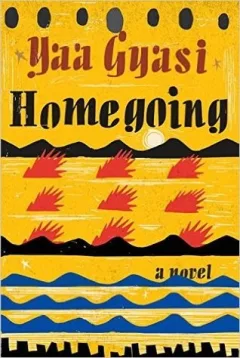
Homegoing

By Yaa Gyasi

Beginning in eighteenth-century Ghana, Homegoing follows two branches of one family whose histories divide before its members know they are related. Effia becomes the wife of a British officer at Cape Coast Castle, while her half sister, Esi, is imprisoned below and transported into American slavery. Yaa Gyasi then moves through successive generations in alternating chapters, tracing lives shaped by the slave trade, British colonial power, racial slavery in the United States, convict leasing, migration, segregation, and their modern consequences. Each character receives a concentrated story, yet together those stories form a family saga spanning roughly 250 years. The novel’s central achievement is to make historical inheritance visible without reducing descendants to symbols of suffering. Love, ambition, complicity, estrangement, and survival remain intensely personal even as institutions limit what each person can choose. Homegoing presents history not as a finished past but as a fo…
View book

Primary category

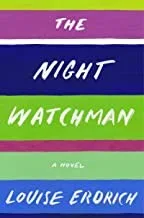
The Night Watchman

A Novel

By Louise Erdrich

In 1953, Thomas Wazhashk works nights at a jewel-bearing factory near North Dakota’s Turtle Mountain Reservation while serving as a tribal council leader. When Congress promotes a policy presented as Native “emancipation,” Thomas recognizes its real danger: ending federal obligations, weakening tribal sovereignty, and exposing his community’s remaining land and institutions to dissolution. He begins organizing a resistance that must carry local testimony all the way to Washington, D.C. Alongside this political struggle, young factory worker Patrice Paranteau travels to Minneapolis in search of her missing sister, Vera, encountering an urban world of danger, exploitation, and uneasy possibility. Through these intersecting stories, Louise Erdrich portrays a community defending itself through paperwork, memory, humor, kinship, labor, and spiritual endurance. Inspired by the life and letters of Erdrich’s grandfather, Patrick Gourneau, the novel transforms an often-overlooked chapter of fe…

View book

Primary category

The Thousand Autumns of Jacob de Zoet

By David Mitchell

In 1799, Jacob de Zoet arrives at Dejima, the tightly controlled Dutch trading post in Nagasaki Harbor, intending to earn enough money to marry his fiancée at home. Employed as a clerk, he is expected to investigate corrupt accounts without becoming entangled in the colony’s rivalries. His plans change after he meets Orito Aibagawa, a gifted Japanese midwife and medical student whose intelligence attracts him across formidable boundaries of language, law, class, and custom. When Orito is taken to an isolated religious estate governed by the powerful Lord Enomoto, the novel widens from commercial intrigue and constrained courtship into a darker struggle over coercion, belief, and political influence. David Mitchell uses Jacob’s moral awakening, Orito’s fight for autonomy, and interpreter Uzaemon Ogawa’s divided loyalties to explore contact between societies that exchange goods and knowledge while remaining deeply suspicious of one another.

View book

Related category

Sophie's Choice

By William Styron

William Styron's Sophie's Choice, a National Book Award winner and a landmark of American literary fiction, is set in Brooklyn in 1947. Stingo, a young Southern writer, rents a room in a boarding house and is drawn into the volatile love affair of Nathan Landau, a charismatic and unstable Jewish man, and Sophie Zawistowska, a Polish Catholic who survived Auschwitz. As Stingo learns her history piece by piece, the novel moves between postwar New York, a trip to the South, and wartime Poland and the camp. It asks how guilt, memory and love endure after atrocity. Among award winning books about the Holocaust, it is both widely read and sharply debated, because of how it frames suffering, evil and who may imagine them.

View book

Related category

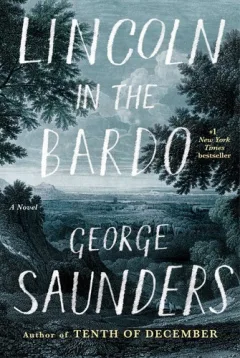
Lincoln in the Bardo

By George Saunders

In February 1862, as the American Civil War enters a worsening phase, eleven-year-old Willie Lincoln dies of illness and is placed in a Georgetown cemetery. George Saunders builds his novel around the grief of Willie’s father, President Abraham Lincoln, and the voices of spirits who linger among the graves, unable or unwilling to accept their deaths. During one night, the child’s confusion, the president’s mourning, and the ghosts’ unfinished attachments converge. The story moves between supernatural testimony and documentary-looking fragments about the Lincolns, the war, and the night of Willie’s burial. Its unusual chorus turns private bereavement into a larger meditation on attachment, denial, compassion, and collective loss. Both historical and deliberately invented, the novel asks how people release what they love—and how sorrow might deepen a person’s sense of responsibility toward strangers.

View book

Related category

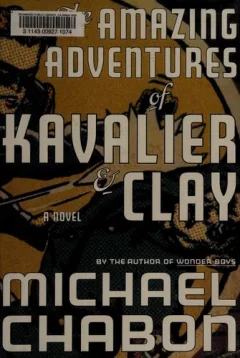
The Amazing Adventures of Kavalier & Clay

A Novel

By Michael Chabon

Beginning in 1939, Michael Chabon’s historical novel brings together Josef “Joe” Kavalier, a Jewish artist who has escaped Nazi-occupied Prague, and his Brooklyn cousin, Sammy Klayman, who adopts the professional name Sam Clay. Their complementary talents—Joe’s visual imagination and Sammy’s instinct for stories—produce the Escapist, a superhero whose battles transform private longings into colorful public fantasy. Success in the emerging comic-book business offers money, recognition, and a symbolic weapon against fascism, but it cannot rescue Joe’s family or release either cousin from grief, fear, secrecy, and compromise. Moving through wartime New York and beyond, the novel links the rise of American superhero comics with refugee experience, Jewish identity, artistic ownership, queer life under repression, and the uneasy promise of reinvention. Its central insight is that escape can be necessary and creative without ever being complete.

View book

Related category

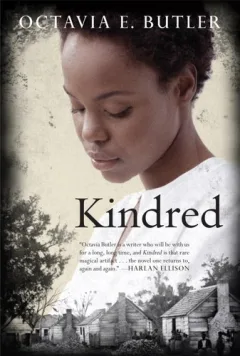
Kindred

By Octavia E. Butler

In 1976 California, Dana Franklin, a Black writer, is repeatedly and inexplicably transported to antebellum Maryland. Each journey places her near Rufus Weylin, a white ancestor whose survival is necessary for Dana’s own birth. What initially appears to be a series of rescues becomes prolonged exposure to the plantation on which Rufus is being formed by slavery’s habits of ownership, violence, and entitlement. Dana must protect him without accepting the system he represents, while also trying to help the enslaved people whose lives are bound to her family history. When her white husband, Kevin, is carried into the past with her, their marriage is tested by a society that assigns them radically unequal positions. Combining time travel, historical fiction, and the tradition of the slavery narrative, Kindred turns ancestry into an immediate physical crisis. Butler asks what it means to inherit a history that remains present in bodies, families, institutions, and relationships.

View book

Related category

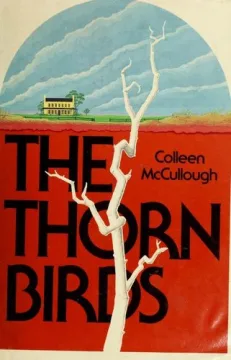
The Thorn Birds

By Colleen McCullough

Spanning much of the twentieth century, The Thorn Birds follows the Irish-Australian Cleary family after they move from New Zealand to Drogheda, an immense sheep station in New South Wales. Its emotional center is Meggie Cleary’s lifelong bond with Ralph de Bricassart, a Catholic priest divided between love, vocation, and ambition. Around them, births, deaths, inheritances, marriages, disasters, and departures shape several generations. Colleen McCullough combines a family saga, historical fiction, and tragic romance while treating the Australian landscape as a force that tests every human plan. Readers seeking classic romance novels with broad social scope will find a story concerned not only with forbidden love, but also with faith, power, sacrifice, gender, and the consequences of choosing one consuming desire over every competing claim.

View book

Articles in this category

No published articles are currently connected to this category in this language.