Category

Literary Fiction

Novels centered on character, society, memory, identity, and the human experience.

31 published books 0 published articles

Books in this category

Related category

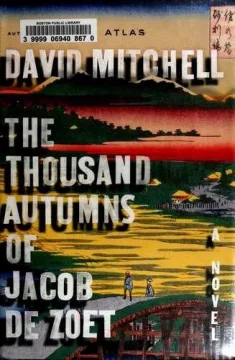
The Thousand Autumns of Jacob de Zoet

By David Mitchell

In 1799, Jacob de Zoet arrives at Dejima, the tightly controlled Dutch trading post in Nagasaki Harbor, intending to earn enough money to marry his fiancée at home. Employed as a clerk, he is expected to investigate corrupt accounts without becoming entangled in the colony’s rivalries. His plans change after he meets Orito Aibagawa, a gifted Japanese midwife and medical student whose intelligence attracts him across formidable boundaries of language, law, class, and custom. When Orito is taken to an isolated religious estate governed by the powerful Lord Enomoto, the novel widens from commercial intrigue and constrained courtship into a darker struggle over coercion, belief, and political influence. David Mitchell uses Jacob’s moral awakening, Orito’s fight for autonomy, and interpreter Uzaemon Ogawa’s divided loyalties to explore contact between societies that exchange goods and knowledge while remaining deeply suspicious of one another.
View book

Related category

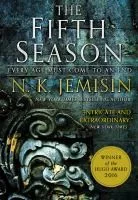
The Fifth Season

By N. K. Jemisin

On the continent called the Stillness, civilization has been shaped by recurring geological catastrophes known as Fifth Seasons. Communities survive through rigid planning, inherited rules, and the exploitation of orogenes—people capable of sensing and manipulating thermal and seismic energy. When a massive rift threatens to produce an exceptionally long Season, Essun discovers that her husband has murdered their young son and fled with their daughter. Her pursuit unfolds alongside the stories of Damaya, a frightened child taken for training, and Syenite, an ambitious young orogene sent on an imperial assignment. Through these intertwined lives, N. K. Jemisin examines oppression, survival, parenthood, trauma, and the dangerous bargain between social usefulness and freedom. The result is both an apocalyptic journey and a structural mystery, using speculative geology and intimate human loss to ask what happens when a civilization depends upon the people it dehumanizes.

View book

Related category

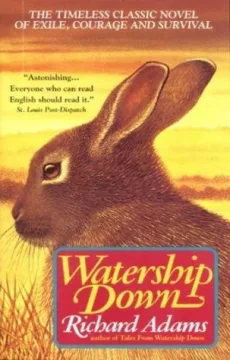
Watership Down

By Richard Adams

After the visionary Fiver foresees the destruction of Sandleford Warren, his brother Hazel leads a small band of rabbits into the dangerous English countryside. Their search for a secure home becomes an epic of migration, improvisation, and political conflict. The travelers encounter communities that have answered fear in radically different ways, from passive accommodation to rigid authoritarian control. To survive, they must combine courage, specialized talents, storytelling, and cooperation. Richard Adams grounds the adventure in recognizable animal behavior while giving the rabbits a language, mythology, and social memory of their own. The result is both a suspenseful survival narrative and an inquiry into leadership, freedom, community, and the stories through which vulnerable creatures make sense of danger.

View book

Related category

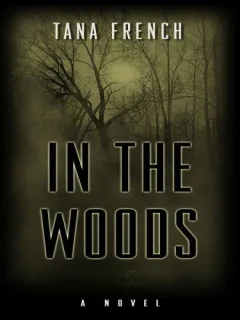
In the Woods

By Tana French

In a Dublin suburb, twelve-year-old Adam Ryan entered the woods with two friends in 1984 and emerged alone, blood in his shoes and unable to remember what happened. Twenty years later, living as Rob Ryan and concealing his past, he is a detective on Dublin’s murder squad. When another twelve-year-old is killed near the same place, Rob and his partner, Cassie Maddox, take the case. The investigation brings him dangerously close to the childhood mystery that has shaped his identity. Tana French’s debut combines a police procedural with an intimate study of trauma, memory, friendship, and self-deception. The immediate murder supplies the investigative momentum, but the novel’s deeper tension comes from Rob’s unreliable narration and deteriorating judgment. Rather than treating detection as a clean path from evidence to certainty, the book examines what happens when an investigator’s need for personal answers collides with his professional responsibilities.

View book

Related category

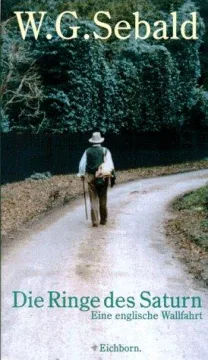
The Rings of Saturn

An English Pilgrimage

By W. G. Sebald

A walking journey through coastal East Anglia becomes an investigation of memory, destruction, and the hidden connections between local landscapes and global history. The narrator passes through towns, estates, heathlands, and shorelines, but physical travel repeatedly gives way to meditations on subjects including Sir Thomas Browne, Rembrandt, Joseph Conrad, Roger Casement, the herring industry, European sericulture, colonial exploitation, the destruction of war, and imperial China. Photographs and other images interrupt the prose without settling whether they document, haunt, or complicate its accounts. Neither conventional novel nor straightforward travelogue, The Rings of Saturn follows associative paths rather than a plot-driven itinerary. Its deepest concern is the persistence of loss: how ruined buildings, depleted industries, natural processes, works of art, and unreliable recollections preserve traces of vanished lives. Sebald makes a sparsely populated English region feel li…

View book

Related category

Jonathan Strange & Mr Norrell

By Susanna Clarke

In an alternative version of early nineteenth-century England, magic survives mainly as an antiquarian subject discussed by gentlemen who cannot perform it. That changes when the private, possessive Gilbert Norrell proves that practical magic still exists. Seeking respectability and political influence, he takes English magic to London and offers his services during the Napoleonic Wars. His rise depends, however, on a secret bargain with a dangerous fairy. Jonathan Strange soon emerges as a second practicing magician. More intuitive, sociable, and adventurous than Norrell, Strange becomes first his pupil and then his rival. Their dispute over how magic should be studied, controlled, and restored draws in the Duke of Wellington, Lord Byron, the legendary Raven King, and people trapped by enchantments the magicians do not fully understand. Susanna Clarke combines historical fantasy, social comedy, Gothic unease, and an invented scholarly record to examine authority, ambition, knowledge,…

View book

Related category

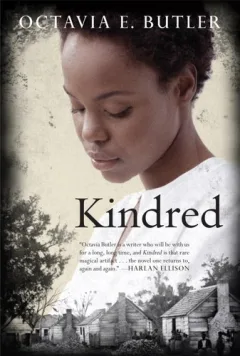
Kindred

By Octavia E. Butler

In 1976 California, Dana Franklin, a Black writer, is repeatedly and inexplicably transported to antebellum Maryland. Each journey places her near Rufus Weylin, a white ancestor whose survival is necessary for Dana’s own birth. What initially appears to be a series of rescues becomes prolonged exposure to the plantation on which Rufus is being formed by slavery’s habits of ownership, violence, and entitlement. Dana must protect him without accepting the system he represents, while also trying to help the enslaved people whose lives are bound to her family history. When her white husband, Kevin, is carried into the past with her, their marriage is tested by a society that assigns them radically unequal positions. Combining time travel, historical fiction, and the tradition of the slavery narrative, Kindred turns ancestry into an immediate physical crisis. Butler asks what it means to inherit a history that remains present in bodies, families, institutions, and relationships.

View book

Articles in this category

No published articles are currently connected to this category in this language.