Category

Literary Fiction

Novels centered on character, society, memory, identity, and the human experience.

31 published books 0 published articles

Books in this category

Related category

The Book of Longings

A Novel

By Sue Monk Kidd

In first-century Galilee, Ana is a wealthy, intellectually restless young woman determined to write the stories of women whose lives have been neglected or erased. Her ambitions conflict with a family intent on arranging a profitable marriage and with a society that grants women little authority over their work, bodies, or futures. After meeting Jesus of Nazareth, Ana becomes his wife and enters a household far poorer than the one she has known. Their marriage unfolds amid domestic strain, Roman occupation, political resistance, and Jesus’s developing spiritual vocation. Ana’s own path eventually carries her from Sepphoris and Nazareth to Alexandria and a community of Jewish contemplatives. By imagining a fictional wife for Jesus, Sue Monk Kidd shifts attention from familiar sacred history to the contested question of who is permitted to leave a record. The novel treats longing, writing, and female solidarity as forms of resistance against disappearance.

View book

Related category

Never Let Me Go

By Kazuo Ishiguro

In an alternative late-twentieth-century England, Kathy H. looks back on her childhood at Hailsham, an isolated school where students were encouraged to make art, guard their health, and accept rules they only partly understood. Her memories center on Ruth and Tommy, the two friends with whom she forms a tense, enduring triangle of loyalty, rivalry, love, and regret. As Kathy’s recollections move from school to early adulthood, ordinary incidents acquire a darker meaning: the students have been created to supply organs to others, and their futures are severely limited. Rather than making technological speculation its main attraction, the novel studies how people build meaningful lives while inhabiting systems they cannot—or do not know how to—resist. Its quiet treatment of memory, mortality, social conditioning, and medical exploitation makes it both an intimate tragedy and an unsettling work of dystopian social fiction.

View book

Related category

The Marriage Portrait

By Maggie O’Farrell

In Renaissance Italy, Lucrezia de’ Medici is transformed from an observant, artistically gifted Florentine girl into the adolescent wife of Alfonso II d’Este, heir to the duchy of Ferrara. Marriage removes her from her family and places her inside a court governed by ceremony, surveillance, dynastic rivalry, and the urgent demand that she produce an heir. When Lucrezia comes to believe that Alfonso intends to kill her, the novel becomes both a psychological struggle for survival and an inquiry into how powerful men control women’s bodies, images, and stories. Maggie O’Farrell draws on the historical Lucrezia, who died at sixteen, and on the cultural afterlife associated with Robert Browning’s “My Last Duchess.” Moving between Lucrezia’s endangered present and the experiences that brought her there, the book combines literary historical fiction with mounting suspense while restoring imagination, perception, and agency to a young woman largely reduced by history to a marriage and an ear…

View book

Related category

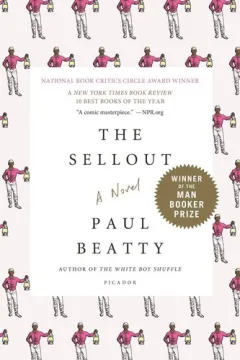
The Sellout

A Novel

By Paul Beatty

Paul Beatty’s The Sellout is a ferocious comic novel about race, belonging, and the contradictions hidden inside American ideals. Its unnamed Black narrator lives in Dickens, a fictional community on the southern edge of Los Angeles that has been erased from official maps. Convinced that restoring the town requires drastic action, he attempts to reintroduce segregation and becomes entangled in an arrangement that others interpret as slavery. The resulting case carries him to the United States Supreme Court. Beatty uses this deliberately outrageous premise to examine racial identity, civic neglect, educational inequality, policing, historical memory, and the consolations offered by simplistic stories of progress. The novel’s jokes are dense, abrasive, and inseparable from its serious questions: Who is allowed to define a community? What does equality mean when institutions remain unequal? And what happens when the language of racial transcendence obscures the persistence of racism?

View book

Related category

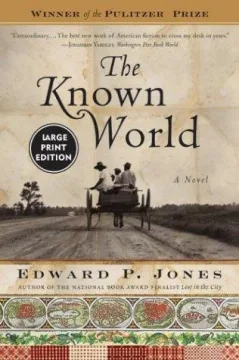
The Known World

By Edward P. Jones

Set in fictional Manchester County, Virginia, before the Civil War, The Known World begins with the death of Henry Townsend, a formerly enslaved Black man who has become a landowner and enslaver. His death unsettles the plantation he leaves to his widow, Caldonia, but the novel’s reach extends far beyond that household. Edward P. Jones follows enslaved people, free Black families, white landowners, patrolmen, officials, and others whose lives are connected by ownership, law, kinship, desire, and betrayal. Moving backward and forward through time, the narrative reveals consequences before causes and exposes how slavery reshapes generations. The novel’s central historical complication—Black participation in slaveholding—does not soften its judgment of slavery. Instead, it demonstrates how a system based on human property corrupts freedom itself, placing even legally free people inside a social order that can erase their rights, divide families, and turn aspiration into complicity.

View book

Related category

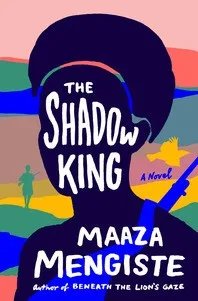
The Shadow King

A Novel

By Maaza Mengiste

Set principally during Fascist Italy’s 1935 invasion of Ethiopia, The Shadow King follows Hirut, a recently orphaned servant who is drawn from domestic subordination into armed resistance. She initially enters the conflict alongside Kidane, an officer in Emperor Haile Selassie’s army, and Aster, Kidane’s formidable wife. As Ethiopia confronts a technologically superior invader and the emperor leaves the country, Hirut helps transform a humble musician who resembles Haile Selassie into a symbolic “shadow king” capable of sustaining morale. The novel also crosses the battle line through Ettore Navarra, a Jewish Italian soldier and photographer serving a violent colonial command. By combining intimate trauma, military struggle, photography, myth, and collective memory, Maaza Mengiste recasts a frequently marginalized theater of twentieth-century history around women who fought, endured, and remembered. The result is both a war narrative and an inquiry into who controls the images through…

View book

Related category

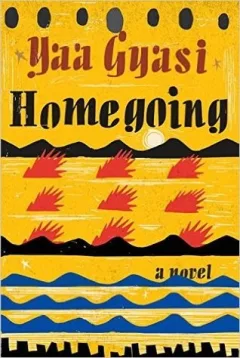
Homegoing

By Yaa Gyasi

Beginning in eighteenth-century Ghana, Homegoing follows two branches of one family whose histories divide before its members know they are related. Effia becomes the wife of a British officer at Cape Coast Castle, while her half sister, Esi, is imprisoned below and transported into American slavery. Yaa Gyasi then moves through successive generations in alternating chapters, tracing lives shaped by the slave trade, British colonial power, racial slavery in the United States, convict leasing, migration, segregation, and their modern consequences. Each character receives a concentrated story, yet together those stories form a family saga spanning roughly 250 years. The novel’s central achievement is to make historical inheritance visible without reducing descendants to symbols of suffering. Love, ambition, complicity, estrangement, and survival remain intensely personal even as institutions limit what each person can choose. Homegoing presents history not as a finished past but as a fo…

View book

Related category

The Night Watchman

A Novel

By Louise Erdrich

In 1953, Thomas Wazhashk works nights at a jewel-bearing factory near North Dakota’s Turtle Mountain Reservation while serving as a tribal council leader. When Congress promotes a policy presented as Native “emancipation,” Thomas recognizes its real danger: ending federal obligations, weakening tribal sovereignty, and exposing his community’s remaining land and institutions to dissolution. He begins organizing a resistance that must carry local testimony all the way to Washington, D.C. Alongside this political struggle, young factory worker Patrice Paranteau travels to Minneapolis in search of her missing sister, Vera, encountering an urban world of danger, exploitation, and uneasy possibility. Through these intersecting stories, Louise Erdrich portrays a community defending itself through paperwork, memory, humor, kinship, labor, and spiritual endurance. Inspired by the life and letters of Erdrich’s grandfather, Patrick Gourneau, the novel transforms an often-overlooked chapter of fe…

View book

Articles in this category

No published articles are currently connected to this category in this language.