Category

Literary Fiction

Novels centered on character, society, memory, identity, and the human experience.

31 published books 0 published articles

Books in this category

Primary category

Wolf Hall

By Hilary Mantel

Hilary Mantel’s Wolf Hall reimagines the rise of Thomas Cromwell, the statesman who moves from Cardinal Thomas Wolsey’s household into the center of Henry VIII’s government. Beginning with Cromwell’s violent childhood and advancing through the political crisis surrounding Henry’s marriage to Catherine of Aragon, the novel follows a gifted outsider as he turns legal knowledge, commercial experience, memory, and personal alliances into power. Mantel presents Tudor politics not as a settled sequence of famous events but as an unstable present in which succession, religion, money, family loyalty, and royal desire continually alter what is possible.
View book

Primary category

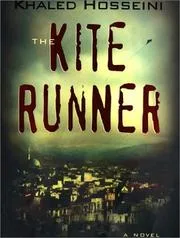
The Kite Runner

By Khaled Hosseini

The Kite Runner is a first-person novel about Amir, a privileged boy growing up in Kabul, and Hassan, the Hazara son of a servant in Amir’s household. Their intimacy is genuine but structurally unequal: affection, dependence, ethnicity, social rank, and Amir’s desire for his father’s approval all shape what the boys can ask of one another. After Amir witnesses a brutal assault and fails to help Hassan, fear and shame lead him into a further betrayal. The narrative follows the long consequences of that failure. Political upheaval drives Amir and his father from Afghanistan to the United States, where their social positions change dramatically. Amir builds an adult life in California, but migration does not erase his memory or responsibility. A summons from the past eventually returns him to an Afghanistan transformed by war and Taliban rule, where an attempt to help Hassan’s son becomes both a rescue mission and a test of whether remorse can produce meaningful action. Although major ev…

View book

Related category

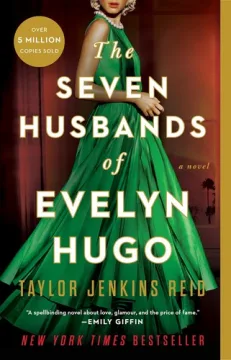
The Seven Husbands of Evelyn Hugo

A Novel

By Taylor Jenkins Reid

Reclusive screen legend Evelyn Hugo summons little-known journalist Monique Grant to record the truth behind her celebrated career and seven marriages. Moving from 1950s Hollywood to the present, Evelyn describes how ambition, sexuality, reinvention, and carefully managed publicity shaped both her stardom and her private life. Her account gradually reveals that the husbands named in the title were only part of the story: the defining relationship of her life was one she could not safely acknowledge in public. Meanwhile, Monique must determine why Evelyn selected her and what to do with a confession that may transform her own understanding of family, success, and moral responsibility.

View book

Related category

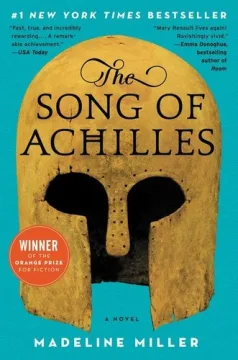
The Song of Achilles

By Madeline Miller

Patroclus, an exiled and unexceptional young prince, is sent to the court of King Peleus, where he forms an intense bond with Peleus’s gifted son, Achilles. Friendship becomes love as they train under the centaur Chiron and grow toward the futures prescribed by family, prophecy, and heroic culture. When the Greek kings sail against Troy, Achilles pursues the glory that may immortalize his name but shorten his life, while Patroclus follows out of devotion. Narrating from the margins of epic fame, Patroclus reveals the private costs behind the public legend: captivity, pride, political rivalry, and the transformation of human beings into instruments of war. Miller’s novel reimagines the Trojan cycle as both a coming-of-age story and a tragedy about love confronting mortality.

View book

Related category

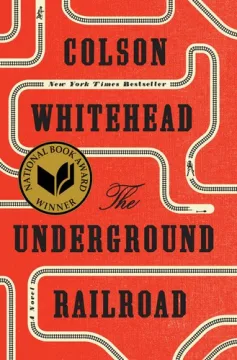
The Underground Railroad

A Novel

By Colson Whitehead

Cora, an enslaved young woman on a Georgia cotton plantation, accepts Caesar’s proposal that they flee north together. In Colson Whitehead’s central transformation of history, the Underground Railroad is not merely a clandestine network of people and routes: it is an actual subterranean railway. Cora’s passage from state to state becomes both a suspenseful pursuit and a journey through sharply different systems of racial control. Slave catcher Arnold Ridgeway follows her while each apparent refuge reveals another way that American institutions can exploit, confine, erase, or terrorize Black people. Combining historical fiction with allegory and speculative invention, the novel examines slavery’s violence, the instability of freedom, and the repeated reinvention of white supremacy. Its episodic geography reaches beyond a single decade, making Cora’s flight a larger reckoning with American history and the distance between national ideals and lived reality.

View book

Related category

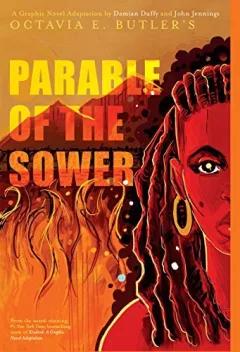
Parable of the Sower

By Octavia E. Butler

In a near-future California destabilized by climate disruption, extreme inequality, privatization, addiction, and failing public institutions, teenager Lauren Olamina recognizes that her walled neighborhood cannot remain safe. She also lives with hyperempathy, a condition that makes her physically experience the suffering she witnesses. When violence destroys her home, Lauren travels north among displaced people, concealing her vulnerability while gathering companions and testing the principles of Earthseed, the belief system she has begun to formulate. Told chiefly through Lauren’s dated journal entries, the novel combines a dangerous migration story with an inquiry into leadership, faith, adaptation, and collective survival. Butler’s future is frightening not because it depends on a single spectacular catastrophe, but because familiar social failures intensify and reinforce one another. The result is both dystopian science fiction and a coming-of-age novel about building purpose wit…

View book

Related category

The Name of the Rose

By Umberto Eco

In a secluded Benedictine abbey in 1327, a series of unexplained deaths interrupts preparations for a politically sensitive religious meeting. William of Baskerville, a Franciscan friar skilled in observation and inference, investigates with the help of Adso of Melk, the young novice who later records their experience. Their inquiry leads through theological disputes, concealed histories, encoded manuscripts, and the abbey’s forbidden labyrinthine library. Although structured as a murder mystery, The Name of the Rose is equally concerned with how people interpret signs, preserve knowledge, enforce orthodoxy, and mistake persuasive patterns for truth. Umberto Eco combines a vividly constructed medieval setting with detective fiction, philosophical argument, literary play, and reflections on censorship. The result is a novel in which solving crimes cannot be separated from examining who controls books, how institutions defend authority, and whether certainty is ever justified by the evi…

View book

Related category

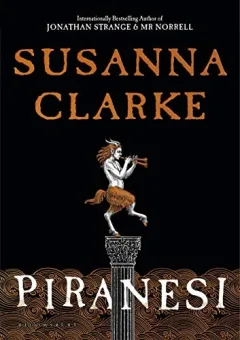
Piranesi

By Susanna Clarke

Piranesi lives in the House, an apparently endless world of classical halls, monumental statues, birds, clouds, and seawater. He maps its spaces, predicts its dangerous tides, cares for its dead, and records his discoveries in journals. His only regular companion is the Other, a sharply contrasting figure who treats the House as the possible repository of secret knowledge. When signs suggest that another living person has entered this world, Piranesi begins examining inconsistencies in his records and gaps in his memory. What starts as an account of solitary exploration gradually becomes a mystery about identity, captivity, trust, and the uses of knowledge. Susanna Clarke combines a fantastical setting with the investigative momentum of a psychological mystery, making the narrator’s careful observations both the substance of the world and the means by which its hidden history can be recovered.

View book

Articles in this category

No published articles are currently connected to this category in this language.