Category

Travel Writing

The great travel writers on the road. Patrick Leigh Fermor walks across 1930s Europe in A Time of Gifts; Wilfred Thesiger crosses Arabia's Empty Quarter in Arabian Sands; Paul Theroux rides the trains of Asia in The Great Railway Bazaar; and Bruce Chatwin collects the stories of South America's far south in In Patagonia. W. G. Sebald's The Rings of Saturn makes a walk through Suffolk into a journey through history. Books to read for the places, the people and the prose.

5 published books 0 published articles

Books in this category

Primary category

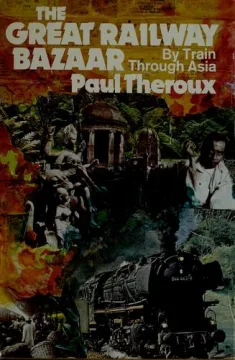
The Great Railway Bazaar

By Train Through Asia

By Paul Theroux

In The Great Railway Bazaar, Paul Theroux recounts a four-month rail journey begun in London in 1973. Traveling east through Europe, Turkey, Iran, the Indian subcontinent, Southeast Asia, and Japan, he eventually returns across the Soviet Union on the Trans-Siberian Railway. The itinerary supplies the book's structure, but its real substance lies in railway compartments, stations, border crossings, delays, landscapes, and conversations with strangers. Theroux treats each train as a temporary society in which class, nationality, loneliness, prejudice, curiosity, and political tension become unusually visible. His approach is literary rather than instructional: he selects telling encounters and sharp impressions instead of offering a comprehensive account of every destination. The result is both a record of a vanished network of overland travel and an influential example of personality-driven travel writing. Its wit and observational force remain central to its appeal, while its judgmen…
View book

Primary category

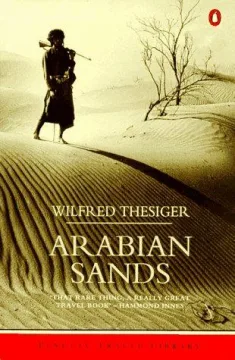
Arabian Sands

By Wilfred Thesiger

Arabian Sands is Wilfred Thesiger’s account of his journeys through southern Arabia between 1945 and 1950, including two camel crossings of the Rubʿ al Khali, or Empty Quarter. Although the crossings supply the book’s physical drama, its deeper subject is the life Thesiger shared with his Bedouin companions: dependence on wells and camels, endurance of hunger and thirst, tribal obligations, hospitality, loyalty, raiding, and the constant judgment required for survival. Written after oil development and motor transport had begun transforming the region, the narrative also serves as an elegy for a social world Thesiger believed was disappearing. The book combines expedition narrative, portraiture, landscape description, and cultural observation. Its lasting interest lies in the tension between its unusually close record of mid-twentieth-century desert life and the unmistakably personal—and sometimes romanticizing—perspective through which that life is presented.

View book

Primary category

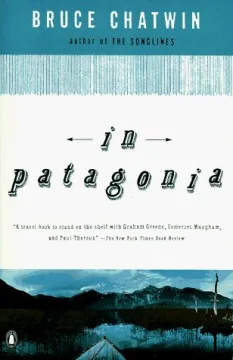
In Patagonia

By Bruce Chatwin

Bruce Chatwin’s In Patagonia follows a journey through the southern regions of Argentina and Chile, but it is neither a practical guide nor a continuous record of an itinerary. Chatwin assembles the book from brief encounters, historical digressions, family legends, archival traces, and sharply observed landscapes. A childhood memory of a mysterious scrap of animal skin—said to come from a prehistoric creature—provides the journey with its initial quest. Along the way, Chatwin investigates Welsh settlement, Indigenous displacement, European migration, labor unrest, vanished outlaws, eccentric colonists, and stories attached to remote houses and settlements. The result is a mosaic in which Patagonia becomes both a geographical region and a repository of exile, longing, violence, and reinvention. First published in 1977, the book became influential for its compressed, episodic approach to travel writing and its deliberate movement between reportage, oral history, literary reconstruction…

View book

Related category

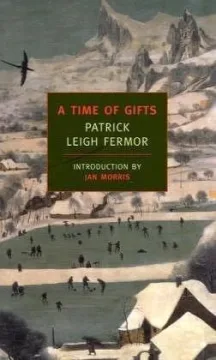
A Time of Gifts

On Foot to Constantinople: From the Hook of Holland to the Middle Danube

By Patrick Leigh Fermor

In December 1933, eighteen-year-old Patrick Leigh Fermor began walking from the Hook of Holland toward Constantinople. A Time of Gifts follows the first portion of that journey through the Low Countries, Germany, Austria, Czechoslovakia, and toward Hungary. He moves between barns, inns, monasteries, workers’ homes, and aristocratic houses, observing landscapes and social worlds that would soon be transformed by dictatorship and war. Written more than four decades after the walk, the book combines youthful immediacy with an older writer’s historical knowledge. Rivers, buildings, songs, languages, legends, religious traditions, and chance encounters become routes into Europe’s layered past. The result is at once a travel narrative, a coming-of-age memoir, and an elegy for the cultural variety of interwar Central Europe. Its central achievement lies less in reaching a destination than in showing how attentive movement through unfamiliar places can turn geography into lived history.

View book

Related category

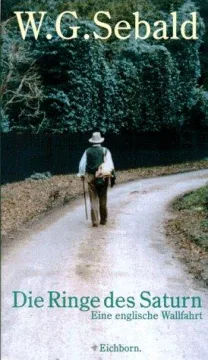
The Rings of Saturn

An English Pilgrimage

By W. G. Sebald

A walking journey through coastal East Anglia becomes an investigation of memory, destruction, and the hidden connections between local landscapes and global history. The narrator passes through towns, estates, heathlands, and shorelines, but physical travel repeatedly gives way to meditations on subjects including Sir Thomas Browne, Rembrandt, Joseph Conrad, Roger Casement, the herring industry, European sericulture, colonial exploitation, the destruction of war, and imperial China. Photographs and other images interrupt the prose without settling whether they document, haunt, or complicate its accounts. Neither conventional novel nor straightforward travelogue, The Rings of Saturn follows associative paths rather than a plot-driven itinerary. Its deepest concern is the persistence of loss: how ruined buildings, depleted industries, natural processes, works of art, and unreliable recollections preserve traces of vanished lives. Sebald makes a sparsely populated English region feel li…

View book

Articles in this category

No published articles are currently connected to this category in this language.