WebToTell

Books

Discover published books from independent authors and publishers.

Explore the library

Find your next book

247 unique books found Books may appear in more than one category.

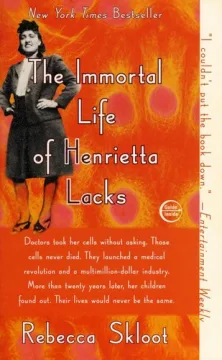
The Immortal Life of Henrietta Lacks book cover

The Immortal Life of Henrietta Lacks

By Rebecca Skloot

Rebecca Skloot combines biography, family history, science writing, medical history, and investigative reporting to reconstruct the life and legacy of Henrietta Lacks. In 1951, while Lacks was being treated for cervical cancer at Johns Hopkins Hospital, cells obtained from her tumor without her knowledge or consent became the source of HeLa, the first human cell line that could be continuously propagated in culture. The book explains why this development mattered to laboratory science, but its central purpose is to restore a person and family to a story that had often been told chiefly as scientific progress. The narrative moves among three interconnected histories: Henrietta's life and treatment; the development and expanding use of HeLa cells; and the later experiences of her children, particularly Deborah Lacks, as they tried to understand what had happened. Skloot also includes the process of her own reporting, showing that access to a family's history depends on trust, patience,…
View The Immortal Life of Henrietta Lacks

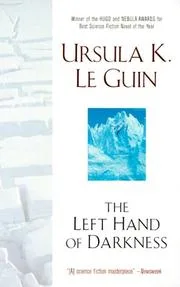
The Left Hand of Darkness book cover

The Left Hand of Darkness

By Ursula K. Le Guin

The Left Hand of Darkness combines diplomatic science fiction, speculative anthropology, political intrigue, and an arduous survival journey. Genly Ai, an envoy from a loose interplanetary association called the Ekumen, travels alone to Gethen—also known as Winter—to invite its nations into wider contact with other human worlds. His assignment is complicated by political rivalry, his limited understanding of Gethenian customs, and his difficulty perceiving the planet’s inhabitants outside the gender categories he brings with him. The novel initially follows Genly’s uncertain dealings in Karhide, where indirect communication, personal influence, ceremonial behavior, and political suspicion make straightforward diplomacy nearly impossible. His relationship with the statesman Estraven becomes central: Genly repeatedly misreads Estraven’s motives, while Estraven acts from a conception of loyalty larger than allegiance to a single ruler or nation. The story later moves through the bureaucr…

View The Left Hand of Darkness

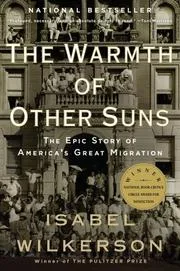
The Warmth of Other Suns book cover

The Warmth of Other Suns

By Isabel Wilkerson

The Epic Story of America’s Great Migration

Isabel Wilkerson reconstructs the Great Migration, the decades-long movement of roughly six million Black Americans from the South to Northern, Midwestern, and Western cities. Rather than treating migration primarily as a demographic trend, she builds the history around three people whose journeys represent different routes, decades, social positions, and destinations: Ida Mae Brandon Gladney leaves Mississippi sharecropping for Chicago; George Swanson Starling escapes dangerous labor conflict in Florida and settles in New York; and Robert Joseph Pershing Foster leaves Louisiana to pursue a medical career in Los Angeles. Their stories are interwoven with census findings, archival evidence, historical explanation, and accounts gathered through extensive interviews. The result is both a collective history and a study of individual decision-making under racial constraint. The narrative follows the migrants before departure, through the practical and emotional ordeal of leaving, and acros…

View The Warmth of Other Suns

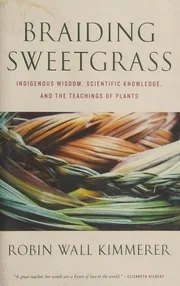
Braiding Sweetgrass book cover

Braiding Sweetgrass

By Robin Wall Kimmerer

Indigenous Wisdom, Scientific Knowledge and the Teachings of Plants

Braiding Sweetgrass is a collection of connected nonfiction essays in which Robin Wall Kimmerer brings together botany, personal experience, Potawatomi teachings, environmental history, and reflections on language and ethics. Rather than presenting Indigenous knowledge and Western science as interchangeable, the book explores what each way of knowing can perceive and what may become possible when they enter a respectful conversation. Plants provide the book’s recurring subjects and organizing teachers. Pecans, strawberries, maples, asters, goldenrod, black ash, beans, corn, squash, sweetgrass, and other beings become points of entry into ecology, family history, land use, gratitude, restoration, and responsibility. Scientific explanations are embedded in stories about parenting, teaching, gathering, gardening, field research, and participation in community life. The book gradually expands in scale. Early essays establish creation, gift, attention, and relationship as guiding ideas. Mi…

View Braiding Sweetgrass

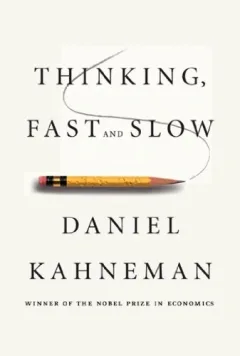
Thinking, Fast and Slow book cover

Thinking, Fast and Slow

By Daniel Kahneman

Thinking, Fast and Slow is a wide-ranging account of how people form judgments, estimate probabilities, make choices under uncertainty, remember experiences, and evaluate their lives. Kahneman organizes much of this material around two personified modes of cognition. System 1 represents rapid, automatic, associative, and usually effortless processing; System 2 represents more deliberate, attention-demanding reasoning. These are explanatory characters rather than literal anatomical divisions of the brain. The book’s five-part structure moves from cognitive machinery to practical consequences. Part I introduces the two-system vocabulary and examines attention, mental effort, associative memory, cognitive ease, and the mind’s tendency to construct coherent interpretations from limited evidence. Part II turns to heuristics: useful shortcuts that can also produce predictable errors involving small samples, anchors, availability, stereotypes, base rates, conjunctions, regression to the mean…

View Thinking, Fast and Slow

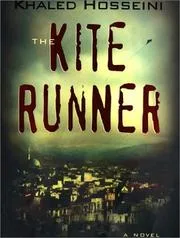
The Kite Runner book cover

The Kite Runner

By Khaled Hosseini

The Kite Runner is a first-person novel about Amir, a privileged boy growing up in Kabul, and Hassan, the Hazara son of a servant in Amir’s household. Their intimacy is genuine but structurally unequal: affection, dependence, ethnicity, social rank, and Amir’s desire for his father’s approval all shape what the boys can ask of one another. After Amir witnesses a brutal assault and fails to help Hassan, fear and shame lead him into a further betrayal. The narrative follows the long consequences of that failure. Political upheaval drives Amir and his father from Afghanistan to the United States, where their social positions change dramatically. Amir builds an adult life in California, but migration does not erase his memory or responsibility. A summons from the past eventually returns him to an Afghanistan transformed by war and Taliban rule, where an attempt to help Hassan’s son becomes both a rescue mission and a test of whether remorse can produce meaningful action. Although major ev…

View The Kite Runner