Category

Humor & Satirical Fiction

7 published books 0 published articles

Books in this category

Primary category

Fear and Loathing in Las Vegas: A Savage Journey to the Heart of the American Dream

A Savage Journey to the Heart of the American Dream

By Hunter S. Thompson , Ralph Steadman

Hunter S. Thompson's 1971 book follows Raoul Duke, a journalist standing in for the author, and his attorney, Dr. Gonzo, on a chaotic trip to Las Vegas. Duke is meant to cover a desert motorcycle race and later a law-enforcement conference on drugs. Instead, the pair spend most of the book in a haze of drugs, wrecked hotel rooms and rental-car mayhem. Thompson uses the binge to ask what had become of the 1960s counterculture and of the American Dream. Part reportage, part fiction and part confession, it is the best-known example of gonzo journalism, in which the writer is the story. Often found on lists of books made into movies, it began as a Rolling Stone serial, with Ralph Steadman's illustrations, and has remained a cultural touchstone.

View book

Primary category

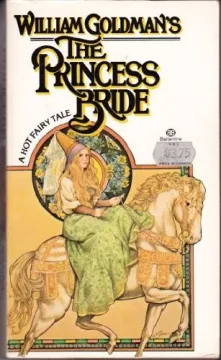
The Princess Bride

S. Morgenstern’s Classic Tale of True Love and High Adventure, the “Good Parts” Version

By William Goldman

William Goldman presents a comic adventure about Buttercup, Westley, and the ruthless Prince Humperdinck—but disguises it as his abridgment of an older novel by the invented S. Morgenstern. The romance unfolds through abduction, swordplay, revenge, deception, torture, and unlikely alliances. Around that tale, a fictionalized Goldman interrupts to explain what he has supposedly removed and why the story mattered to him as a child. The result is both an absorbing fairy-tale adventure and a playful examination of how stories are selected, reshaped, remembered, and passed between generations. Its wit does not cancel its emotional stakes: loyalty, grief, courage, and the difficult survival of love remain central.

View book

Primary category

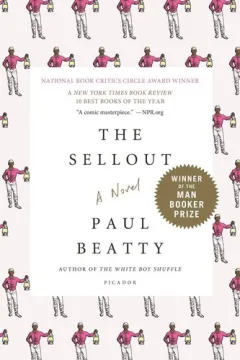
The Sellout

A Novel

By Paul Beatty

Paul Beatty’s The Sellout is a ferocious comic novel about race, belonging, and the contradictions hidden inside American ideals. Its unnamed Black narrator lives in Dickens, a fictional community on the southern edge of Los Angeles that has been erased from official maps. Convinced that restoring the town requires drastic action, he attempts to reintroduce segregation and becomes entangled in an arrangement that others interpret as slavery. The resulting case carries him to the United States Supreme Court. Beatty uses this deliberately outrageous premise to examine racial identity, civic neglect, educational inequality, policing, historical memory, and the consolations offered by simplistic stories of progress. The novel’s jokes are dense, abrasive, and inseparable from its serious questions: Who is allowed to define a community? What does equality mean when institutions remain unequal? And what happens when the language of racial transcendence obscures the persistence of racism?

View book

Related category

Where the Sidewalk Ends

The Poems & Drawings of Shel Silverstein

By Shel Silverstein , Shel Silverstein

Shel Silverstein’s landmark children’s collection joins brief, highly performable poems with loose black-and-white drawings. Its speakers encounter impossible creatures, stubborn children, runaway shadows, peculiar machines, exaggerated disasters, and ordinary frustrations pushed into absurdity. Beneath the jokes, the poems repeatedly test adult rules, childhood fears, responsibility, difference, and the freedom to imagine alternatives. Rhymes, refrains, comic timing, and visual punch lines make the volume especially inviting for reading aloud, while moments of tenderness and unease keep it from becoming merely silly. For families or teachers seeking poetry books that welcome hesitant readers, it offers an accessible entrance into sound, rhythm, figurative language, and the pleasure of verbal surprise.

View book

Related category

The Hitchhiker's Guide to the Galaxy

By Douglas Adams

Seconds before Earth is demolished for an interstellar bypass, the bewildered Englishman Arthur Dent is rescued by his friend Ford Prefect, secretly a researcher for a galactic travel guide. Their escape leads to the stolen spaceship Heart of Gold and its unlikely crew: the recklessly self-involved president Zaphod Beeblebrox, the capable Trillian, and the chronically miserable robot Marvin. As the survivors encounter bureaucratic aliens, improbable technology, and unsettling revelations about Earth, Douglas Adams turns space adventure into an absurdist examination of authority, knowledge, meaning, and humanity's place in the universe. The novel is both a brisk comic journey and a foundational work of modern science-fiction satire.

View book

Related category

The World According to Garp

By John Irving

Born to the fiercely independent nurse and eventual feminist icon Jenny Fields, T. S. Garp grows from an unconventional child into a wrestler, husband, father, and novelist. His effort to build a safe domestic life repeatedly collides with adultery, ideological conflict, public notoriety, random violence, and the unruly consequences of love. John Irving combines family saga, literary satire, embedded fiction, and dark comedy to examine gender, parenthood, artistic ambition, and mortality. Often included among classic novels to read, the book is memorable less for offering a settled worldview than for exposing how fear and certainty can deform human relationships.

View book

Related category

Pride and Prejudice

By Jane Austen

In rural England, the Bennet family’s uncertain future makes the marriages of its five daughters an urgent economic concern. Elizabeth Bennet, intelligent and quick to judge, resists treating marriage as a purely financial arrangement. Her encounters with the wealthy, reserved Fitzwilliam Darcy produce mutual attraction, wounded pride, and serious misunderstanding. Around them, other courtships reveal sharply different combinations of affection, convenience, vanity, status, and desire. The novel is both a romantic comedy and a precise examination of judgment. Elizabeth must recognize how readily wit and confidence can harden into prejudice, while Darcy must confront the arrogance encouraged by wealth and rank. Through lively dialogue, social embarrassment, letters, reversals, and carefully placed irony, Jane Austen explores how people learn—or fail to learn—to distinguish reputation from character. The result joins emotional satisfaction to a searching critique of class, inheritance,…

View book

Articles in this category

No published articles are currently connected to this category in this language.