Primary category
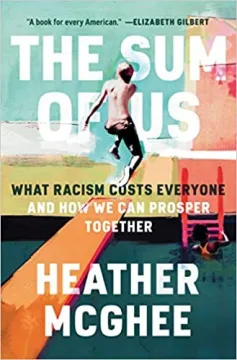
What Racism Costs Everyone and How We Can Prosper Together
Heather McGhee examines a central contradiction in American public life: policies shaped by racial division often harm the people they are presented as protecting. Drawing on economic research, political history, interviews, and reporting across the United States, she connects racism to weakened public services, barriers to healthcare, declining worker power, housing inequality, environmental danger, and restrictions on democratic participation. Her governing idea is the “zero-sum” story—the belief that progress for people of color must mean loss for white people. The book’s defining image is the public swimming pool that officials chose to close rather than integrate, sacrificing a shared resource to preserve racial exclusion. Against that pattern, McGhee develops the “Solidarity Dividend”: the material and civic gains made possible when people organize across racial lines. The result is both a diagnosis of American inequality and an argument that racial justice and broadly shared pr…
View book
Related category
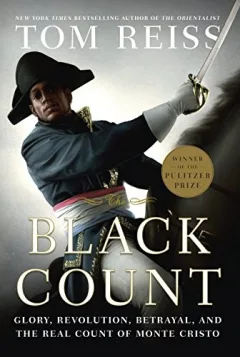
Glory, Revolution, Betrayal, and the Real Count of Monte Cristo
Tom Reiss reconstructs the life of Thomas-Alexandre Dumas, the father of novelist Alexandre Dumas and one of the most remarkable military figures of Revolutionary France. Born in colonial Saint-Domingue to an enslaved Black woman and a French nobleman, Dumas traveled to France, enlisted as an ordinary cavalryman, and rose to the rank of general during a brief revolutionary period of expanded opportunity for men of color. His campaigns in the Alps, Italy, and Egypt established his reputation for courage, physical power, and independence. Those same qualities eventually brought him into conflict with Napoleon Bonaparte. Capture, imprisonment, political abandonment, and the restoration of racial discrimination transformed his final years. Reiss connects this history to the fiction of Dumas’s celebrated son, showing how the general’s heroism, captivity, betrayal, and longing for justice helped shape works including The Count of Monte Cristo and The Three Musketeers. The result is simultan…
View book
Related category
A Novel
In 1953, Thomas Wazhashk works nights at a jewel-bearing factory near North Dakota’s Turtle Mountain Reservation while serving as a tribal council leader. When Congress promotes a policy presented as Native “emancipation,” Thomas recognizes its real danger: ending federal obligations, weakening tribal sovereignty, and exposing his community’s remaining land and institutions to dissolution. He begins organizing a resistance that must carry local testimony all the way to Washington, D.C. Alongside this political struggle, young factory worker Patrice Paranteau travels to Minneapolis in search of her missing sister, Vera, encountering an urban world of danger, exploitation, and uneasy possibility. Through these intersecting stories, Louise Erdrich portrays a community defending itself through paperwork, memory, humor, kinship, labor, and spiritual endurance. Inspired by the life and letters of Erdrich’s grandfather, Patrick Gourneau, the novel transforms an often-overlooked chapter of fe…
View book