Category

Dystopian & Social Science Fiction

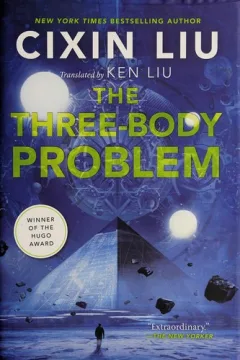
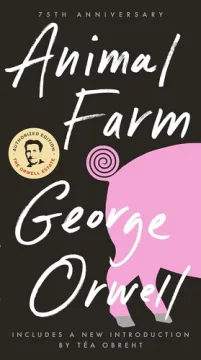
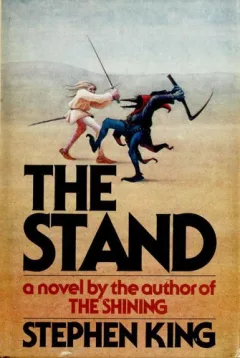
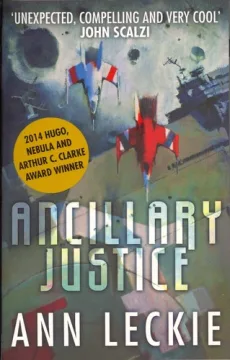
Science fiction that holds a mirror to society. Octavia E. Butler's Parable of the Sower follows a young woman through a collapsing America; Kazuo Ishiguro's Never Let Me Go reveals slowly what a quiet English boarding school is for. Frank Herbert's Dune explores power, religion and ecology on a desert planet, Ann Leckie's Ancillary Justice questions identity and empire, and Cixin Liu's The Three-Body Problem begins in China's Cultural Revolution. Stephen King's The Stand imagines the world after a plague. Books that ask hard questions about who we are, and where we are heading.

12 published books 0 published articles

Books in this category

Related category

Animal Farm

By George Orwell , Téa Obreht , Russell Baker

Animal Farm is George Orwell's short political fable, first published in 1945, about farm animals who expel their human owner and try to run the place on principles of equality. Once the pigs take charge, commandments are quietly rewritten, rivals are driven out, and hardship returns under new management. Orwell drew on the Russian Revolution and Stalin's rise, yet he told the story so plainly that it also works as a study of how propaganda and unchecked power can turn ideals into their opposite. It is brief enough to read in an afternoon and is frequently assigned in schools. This Signet paperback adds an introduction by Téa Obreht and an afterword by Russell Baker, and it suits anyone who likes classic books or dystopian novels and wants a sharper, shorter satire.
View book

Related category

The Stand

By Stephen King

After a lethal, laboratory-created influenza escapes military containment, the United States collapses with terrifying speed. The scattered survivors must first endure bereavement, isolation, and the hazards of an abandoned country; then shared dreams begin drawing them toward rival communities. In Boulder, Mother Abagail inspires an uncertain experiment in cooperation. In Las Vegas, Randall Flagg builds an authoritarian order based on fear and force. Following characters such as Stu Redman, Frannie Goldsmith, Larry Underwood, Nick Andros, and Harold Lauder, Stephen King combines plague narrative, road novel, social reconstruction, and supernatural conflict. The result is an expansive examination of what remains when institutions disappear—and how ordinary choices can become moral commitments.

View book

Related category

Ancillary Justice

By Ann Leckie

Breq travels across a remote, frozen world in pursuit of the final stage of a long-planned act of vengeance. Although she appears to be one human being, she was once the artificial intelligence of Justice of Toren, a Radchaai warship whose consciousness extended through the vessel and thousands of human ancillary bodies. Now confined to one surviving body, she carries the memories of an imperial conquest, a beloved officer’s death, and the betrayal that destroyed nearly everything she was. Moving between Breq’s present journey and the events that produced it, Ancillary Justice combines space opera with a study of divided identity, colonial power, loyalty, grief, and moral responsibility. Ann Leckie’s use of “she” as the Radchaai default pronoun also makes readers confront how language shapes assumptions about gender. The result is both a revenge narrative and an inquiry into whether a being created to serve an empire can judge that empire—and act against it.

View book

Related category

The Three-Body Problem

By Cixin Liu

During China’s Cultural Revolution, the persecution of scientists shapes astrophysicist Ye Wenjie’s judgment of humanity and eventually connects her to a secret installation searching for extraterrestrial intelligence. Decades later, nanotechnology researcher Wang Miao encounters inexplicable experimental results, a disturbing countdown, and a virtual world governed by wildly unstable celestial cycles. His investigation—with the blunt, observant police officer Shi Qiang—reveals that these mysteries belong to a conflict extending far beyond Earth. The Three-Body Problem combines historical trauma, scientific investigation, conspiracy, and first-contact fiction. Its central threat is not simply the arrival of another civilization, but humanity’s divided response to that possibility. Some see extraterrestrial intervention as extinction; others welcome it as judgment or rescue. Through this division, Cixin Liu asks whether technological intelligence produces wisdom, whether despair can be…

View book

Articles in this category

No published articles are currently connected to this category in this language.