Category

Time Travel & Alternate History

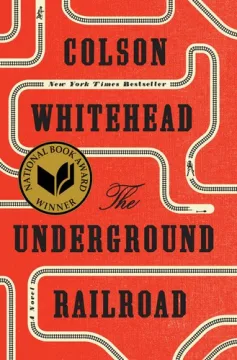
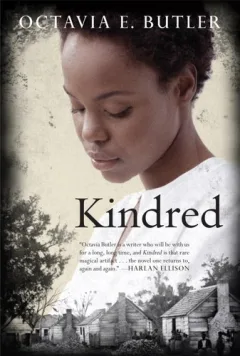
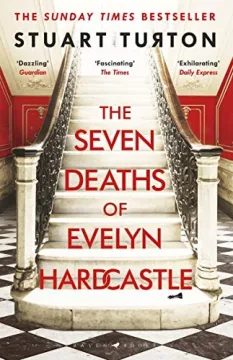
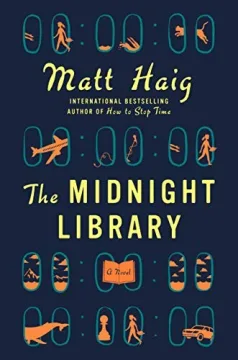
Stories that bend time or rewrite history. In Octavia E. Butler's Kindred, a Black woman in 1970s California is pulled back again and again to a slave plantation in Maryland. Colson Whitehead's The Underground Railroad turns the escape network into a real railway beneath the South. Matt Haig's The Midnight Library offers a library of other lives a woman might have lived, and Stuart Turton's The Seven Deaths of Evelyn Hardcastle repeats one fatal day until the murder is solved. Thought-provoking books that use time to ask what shapes a life.

4 published books 0 published articles

Books in this category

Primary category

Kindred

By Octavia E. Butler

In 1976 California, Dana Franklin, a Black writer, is repeatedly and inexplicably transported to antebellum Maryland. Each journey places her near Rufus Weylin, a white ancestor whose survival is necessary for Dana’s own birth. What initially appears to be a series of rescues becomes prolonged exposure to the plantation on which Rufus is being formed by slavery’s habits of ownership, violence, and entitlement. Dana must protect him without accepting the system he represents, while also trying to help the enslaved people whose lives are bound to her family history. When her white husband, Kevin, is carried into the past with her, their marriage is tested by a society that assigns them radically unequal positions. Combining time travel, historical fiction, and the tradition of the slavery narrative, Kindred turns ancestry into an immediate physical crisis. Butler asks what it means to inherit a history that remains present in bodies, families, institutions, and relationships.
View book

Related category

The Seven Deaths of Evelyn Hardcastle

By Stuart Turton

At Blackheath, a decaying English country estate, a house party is approaching the moment when Evelyn Hardcastle will die. Aiden Bishop must identify her killer if he hopes to escape—but he is trapped in a repeating day and awakens each time inside a different guest. Every host gives him new access, abilities, weaknesses, and prejudices, turning detection into a struggle over perspective as well as evidence. Meanwhile, rival investigators pursue their own freedom, a murderous footman stalks the estate, and Aiden’s missing memories conceal another mystery. Stuart Turton combines the clue-driven architecture of a country-house whodunit with a speculative time loop and body-swapping narrative. The result is an intricate puzzle about identity, observation, guilt, punishment, and whether people can become more than the worst things they have done.

View book

Related category

The Midnight Library

A Novel

By Matt Haig

After a succession of losses and disappointments, Nora Seed concludes that her life has become unbearable. She awakens in the Midnight Library, a realm between life and death where every volume contains a life she might have led had she chosen differently. Guided by her former school librarian, Mrs. Elm, Nora enters alternate realities shaped by abandoned ambitions, relationships, and opportunities. Yet success, love, adventure, and recognition prove more complicated than they appeared from a distance. Matt Haig uses this speculative premise to examine regret, depression, possibility, and the difficulty of judging a life from imagined alternatives. The novel is ultimately less interested in finding a flawless existence than in asking how a person might recover curiosity about an unfinished one.

View book

Related category

The Underground Railroad

A Novel

By Colson Whitehead

Cora, an enslaved young woman on a Georgia cotton plantation, accepts Caesar’s proposal that they flee north together. In Colson Whitehead’s central transformation of history, the Underground Railroad is not merely a clandestine network of people and routes: it is an actual subterranean railway. Cora’s passage from state to state becomes both a suspenseful pursuit and a journey through sharply different systems of racial control. Slave catcher Arnold Ridgeway follows her while each apparent refuge reveals another way that American institutions can exploit, confine, erase, or terrorize Black people. Combining historical fiction with allegory and speculative invention, the novel examines slavery’s violence, the instability of freedom, and the repeated reinvention of white supremacy. Its episodic geography reaches beyond a single decade, making Cora’s flight a larger reckoning with American history and the distance between national ideals and lived reality.

View book

Articles in this category

No published articles are currently connected to this category in this language.