
WebToTell

Books

Discover published books from independent authors and publishers.

Explore the library

Find your next book

77 unique books found Books may appear in more than one category.

The Devotion of Suspect X book cover

The Devotion of Suspect X

By Keigo Higashino , translated by Alexander O. Smith

A Detective Galileo Novel

Keigo Higashino’s The Devotion of Suspect X begins by revealing both a killing and the person who offers to conceal it. Yasuko Hanaoka and her daughter, Misato, kill Yasuko’s abusive former husband during a violent confrontation. Their neighbor, the solitary mathematics teacher Tetsuya Ishigami, constructs an elaborate plan to protect them. The central mystery is therefore not who committed the original act, but whether the police—and physicist Manabu Yukawa—can discover how Ishigami has reshaped the evidence. As Yukawa recognizes the mind of his former university classmate behind the apparently unbreakable alibi, the investigation becomes a contest between two exceptional reasoners. Yet the novel’s deepest concern is emotional rather than technical: what devotion permits a person to sacrifice, whether protection can become another form of control, and why a logically perfect plan may fail when confronted by conscience, grief, and human unpredictability.


View The Devotion of Suspect X

The Night Watchman book cover

The Night Watchman

By Louise Erdrich

A Novel

In 1953, Thomas Wazhashk works nights at a jewel-bearing factory near North Dakota’s Turtle Mountain Reservation while serving as a tribal council leader. When Congress promotes a policy presented as Native “emancipation,” Thomas recognizes its real danger: ending federal obligations, weakening tribal sovereignty, and exposing his community’s remaining land and institutions to dissolution. He begins organizing a resistance that must carry local testimony all the way to Washington, D.C. Alongside this political struggle, young factory worker Patrice Paranteau travels to Minneapolis in search of her missing sister, Vera, encountering an urban world of danger, exploitation, and uneasy possibility. Through these intersecting stories, Louise Erdrich portrays a community defending itself through paperwork, memory, humor, kinship, labor, and spiritual endurance. Inspired by the life and letters of Erdrich’s grandfather, Patrick Gourneau, the novel transforms an often-overlooked chapter of fe…

View The Night Watchman

The Years book cover

The Years

By Annie Ernaux , translated from the French by Alison L. Strayer

Spanning 1941 to 2006, The Years joins one woman’s life to the transformation of postwar France. Annie Ernaux recalls childhood, education, marriage, motherhood, work, sexuality, illness, aging, and the desire to write, but she resists presenting these experiences as a conventional first-person memoir. Instead, photographs, family meals, slogans, songs, advertisements, political events, consumer goods, and changing habits accumulate into the memory of a generation. The intimate and historical repeatedly alter one another: class mobility changes family language; reproductive freedom changes women’s futures; television and digital technology reshape attention; public events survive as fragments of ordinary conversation. By moving between “she,” “we,” and broader collective voices, Ernaux asks how much of a supposedly private identity is composed from shared social time. The result is both autobiography and social record—a sustained attempt to preserve lives, objects, expressions, and ex…

View The Years

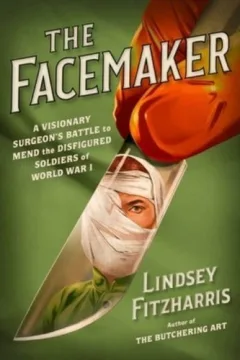
The Facemaker book cover

The Facemaker

By Lindsey Fitzharris

A Visionary Surgeon's Battle to Mend the Disfigured Soldiers of World War I

The Facemaker recounts how surgeon Harold Gillies and an interdisciplinary medical team confronted the devastating facial wounds of the First World War. Modern artillery and trench combat produced injuries that existing surgical practice was poorly equipped to treat, leaving survivors with impaired breathing, eating, speech, and vision as well as severe social isolation. Lindsey Fitzharris follows Gillies from wartime service to his leadership of specialized treatment in Britain, where repeated operations, skin grafts, dental work, anesthesia, medical illustration, and careful experimentation helped establish modern reconstructive plastic surgery. The book is both a historical biography and a patient-centered account of medical innovation. It emphasizes that repairing a face was never solely a technical problem: the work also concerned identity, dignity, relationships, and the possibility of returning to public life. By placing surgical progress beside individual experiences of injury…

View The Facemaker

The Flatshare book cover

The Flatshare

By Beth O’Leary

After leaving a troubled relationship, London book editor Tiffy Moore needs an affordable home immediately. Hospice nurse Leon Twomey needs extra money to help his brother challenge a wrongful conviction. Their solution is an unusual flatshare: Tiffy occupies Leon’s one-bedroom apartment at night and on weekends, while Leon uses it during the day after his night shifts. They even share the same bed—at different times—and initially conduct the arrangement without meeting. Household notes gradually become jokes, confidences, and acts of care, allowing an intimacy to develop before face-to-face attraction complicates the agreement. Beth O’Leary’s debut uses this playful romantic-comedy premise to examine trust, friendship, economic pressure, and recovery from emotional abuse. Alternating between Tiffy’s expansive voice and Leon’s clipped narration, the novel shows two people learning that a safe home depends less on conventional rules than on respect, communication, and the freedom to be…

View The Flatshare

The Black Count book cover

The Black Count

By Tom Reiss

Glory, Revolution, Betrayal, and the Real Count of Monte Cristo

Tom Reiss reconstructs the life of Thomas-Alexandre Dumas, the father of novelist Alexandre Dumas and one of the most remarkable military figures of Revolutionary France. Born in colonial Saint-Domingue to an enslaved Black woman and a French nobleman, Dumas traveled to France, enlisted as an ordinary cavalryman, and rose to the rank of general during a brief revolutionary period of expanded opportunity for men of color. His campaigns in the Alps, Italy, and Egypt established his reputation for courage, physical power, and independence. Those same qualities eventually brought him into conflict with Napoleon Bonaparte. Capture, imprisonment, political abandonment, and the restoration of racial discrimination transformed his final years. Reiss connects this history to the fiction of Dumas’s celebrated son, showing how the general’s heroism, captivity, betrayal, and longing for justice helped shape works including The Count of Monte Cristo and The Three Musketeers. The result is simultan…

View The Black Count

Seven Days in June book cover

Seven Days in June

By Tia Williams

A Novel

Eva Mercy has built a demanding life in Brooklyn as a successful writer of supernatural erotica and the single mother of a perceptive teenager. Her carefully managed world is disrupted when Shane Hall, an acclaimed and famously private literary novelist, appears at a publishing event. To everyone else, their meeting looks like an introduction. In reality, Eva and Shane shared an intense, formative week as troubled adolescents—and have carried its emotional consequences into adulthood. Their reunion unfolds over seven summer days, while flashbacks reveal the pain, attraction, and desperate coping strategies that first drew them together. As Eva and Shane reconsider what happened between them, the novel asks whether enduring love is enough without honesty, accountability, and recovery. Tia Williams combines a second-chance romance with an exploration of chronic pain, addiction, self-harm, Black literary culture, motherhood, inherited trauma, and the ways writers transform private experi…

View Seven Days in June

The End of Everything book cover

The End of Everything

By Katie Mack

(Astrophysically Speaking)

In The End of Everything (Astrophysically Speaking), theoretical astrophysicist Katie Mack examines five scientifically discussed ways the universe might meet its ultimate fate: the Big Crunch, heat death, the Big Rip, vacuum decay, and a cosmic bounce. Each possibility depends on unresolved questions about expansion, dark energy, gravity, quantum fields, and the earliest moments of cosmic history. Rather than treating these endings as disaster entertainment, Mack uses them to explain how cosmologists test theories about the universe as a whole. The result is both an introduction to modern cosmology and an exploration of scientific uncertainty. Mack distinguishes evidence-supported conclusions from increasingly speculative possibilities while showing how small changes in physical assumptions can produce radically different futures. Her informal humor makes the subject approachable without removing its intellectual or existential weight: even if humanity cannot influence the final dest…

View The End of Everything

Austerlitz book cover

Austerlitz

By W. G. Sebald

In Austerlitz, an unnamed narrator recounts his intermittent encounters with Jacques Austerlitz, an architectural historian whose composed intellectual life conceals a childhood he cannot remember. Sent from Prague to Britain on a Kindertransport in 1939, Austerlitz was raised by a Welsh minister and his wife under a different name and without knowledge of his Jewish family. Decades later, fragments of memory lead him through railway stations, libraries, archives, photographs, Prague, Terezín, and Paris as he attempts to reconstruct what was taken from him. Sebald turns this search into a meditation on historical catastrophe, exile, personal identity, and the uncertain authority of images and documents. Buildings and transport networks become repositories of suppressed history, while the novel’s long sentences and embedded photographs blur fiction, testimony, essay, and archival investigation. The result is both an intimate account of belated remembrance and a wider examination of how…

View Austerlitz

The Death and Life of the Great American School System book cover

The Death and Life of the Great American School System

By Diane Ravitch

How Testing and Choice Are Undermining Education

In this critique of American education reform, historian and former federal education official Diane Ravitch reassesses policies she once supported. She argues that standards-based reform lost its educational purpose when standards became inseparable from high-stakes testing, sanctions, and numerical targets. She also questions whether charter schools, school choice, mayoral control, private management, and business-style accountability can deliver the broad improvements their advocates promise. Drawing on federal policy and reform campaigns in cities including New York and San Diego, Ravitch examines how incentives can narrow curricula, encourage manipulation of results, destabilize schools, and weaken trust in teachers. The book is both a policy argument and an intellectual self-correction: Ravitch explains why she changed her mind about central elements of the reform movement. Her alternative emphasizes a coherent curriculum, knowledgeable teachers, strong neighborhood schools, app…

View The Death and Life of the Great American School System

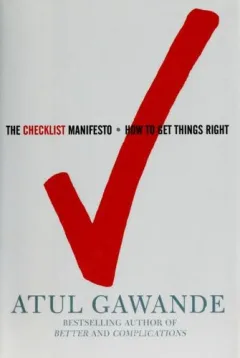
The Checklist Manifesto book cover

The Checklist Manifesto

By Atul Gawande

How to Get Things Right

Modern professionals possess extraordinary knowledge, yet serious mistakes persist because knowledge must be applied amid expanding complexity, time pressure, specialization, and imperfect communication. In The Checklist Manifesto, surgeon and writer Atul Gawande argues that well-designed checklists can make demanding work more reliable without replacing judgment or expertise. Drawing on medicine, aviation, construction, disaster response, and investment, he examines how brief prompts help teams remember essential steps, exchange critical information, and prepare for predictable trouble. The book gives particular attention to hospital infections and the development and testing of the World Health Organization Surgical Safety Checklist. Its larger argument concerns professional culture: experts often resist simple procedural aids because they appear to diminish autonomy, but disciplined coordination can be as important as individual brilliance. Gawande presents the checklist not as a u…

View The Checklist Manifesto

The Origins of Totalitarianism book cover

The Origins of Totalitarianism

By Hannah Arendt

Hannah Arendt’s The Origins of Totalitarianism investigates how unprecedented systems of domination emerged from the political and social crises of modern Europe. Organized into three major parts—Antisemitism, Imperialism, and Totalitarianism—the book traces elements that converged in Nazi Germany and Stalin’s Soviet Union without presenting their rise as the inevitable result of a single cause. Arendt examines the weakening of the nation-state, the production of stateless and rightless populations, racial ideology, colonial violence, mass political organization, propaganda, secret police, and concentration camps. Her central claim is that totalitarianism cannot be understood as ordinary dictatorship enlarged in scale. It seeks to transform reality and human beings themselves through ideology and terror, destroying spontaneity, plurality, legal protection, and the distinction between fact and fiction. The book remains influential because it joins historical inquiry to political theory…

View The Origins of Totalitarianism