
WebToTell

Books

Discover published books from independent authors and publishers.

Explore the library

Find your next book

77 unique books found Books may appear in more than one category.

The Thousand Autumns of Jacob de Zoet book cover

The Thousand Autumns of Jacob de Zoet

By David Mitchell

In 1799, Jacob de Zoet arrives at Dejima, the tightly controlled Dutch trading post in Nagasaki Harbor, intending to earn enough money to marry his fiancée at home. Employed as a clerk, he is expected to investigate corrupt accounts without becoming entangled in the colony’s rivalries. His plans change after he meets Orito Aibagawa, a gifted Japanese midwife and medical student whose intelligence attracts him across formidable boundaries of language, law, class, and custom. When Orito is taken to an isolated religious estate governed by the powerful Lord Enomoto, the novel widens from commercial intrigue and constrained courtship into a darker struggle over coercion, belief, and political influence. David Mitchell uses Jacob’s moral awakening, Orito’s fight for autonomy, and interpreter Uzaemon Ogawa’s divided loyalties to explore contact between societies that exchange goods and knowledge while remaining deeply suspicious of one another.


View The Thousand Autumns of Jacob de Zoet

The Uninhabitable Earth book cover

The Uninhabitable Earth

By David Wallace-Wells

Life After Warming

In The Uninhabitable Earth, journalist David Wallace-Wells surveys the human consequences of a rapidly warming planet. Rather than treating climate change chiefly as a question of rising seas or endangered wildlife, he presents it as a force capable of reshaping food systems, public health, migration, conflict, economic life, politics, and culture. The book moves from physical dangers—including extreme heat, wildfire, water scarcity, ocean damage, and disease—to the social narratives and institutions through which people interpret those dangers. Its central contention is that climate disruption is neither remote nor confined to a single environmental problem: it is an all-encompassing condition created by human choices. Wallace-Wells writes in an intentionally alarming register, but he does not argue that catastrophe is predetermined. The range of possible futures remains politically contingent, making the book both a warning about cascading risks and an argument for collective agency.

View The Uninhabitable Earth

Ways of Seeing book cover

Ways of Seeing

By John Berger

Based on the BBC Television Series with John Berger

In Ways of Seeing, John Berger examines how social conventions, technology, ownership, gender, and commerce influence the interpretation of visual images. Beginning with the transformation caused by photographic reproduction, he argues that paintings no longer remain confined to a single place or ritual setting: they can be copied, cropped, enlarged, captioned, and combined with other images, changing what viewers think they mean. Berger then turns to the European nude, where he distinguishes between living in one’s body and being arranged for another person’s inspection. He also interprets oil painting as a visual language closely connected to property and possession, before comparing its legacy with the promises made by modern advertising. Combining written and image-only essays, the book teaches readers to question not merely what a picture depicts, but who controls its presentation, what interests its conventions serve, and how the viewer’s own circumstances participate in meaning.

View Ways of Seeing

The Box book cover

The Box

By Marc Levinson

How the Shipping Container Made the World Smaller and the World Economy Bigger

A standardized steel box might seem an unlikely agent of economic transformation, but Marc Levinson shows how container shipping reorganized the movement of goods and helped create the infrastructure of globalization. Beginning with Malcom McLean’s 1956 experiment aboard the Ideal-X, the book follows containerization through technical disputes, labor conflict, costly port reconstruction, military logistics, international standardization, and commercial expansion. Its subject is not merely an invention but an interconnected system of ships, cranes, trucks, railways, terminals, regulations, and business practices. Levinson explains how sharply lower freight-handling costs altered the location of factories and warehouses, weakened older waterfront economies, strengthened new ports, and enabled longer supply chains. The result is both a history of modern logistics and an argument about technological change: simple devices become revolutionary only when institutions, infrastructure, invest…

View The Box

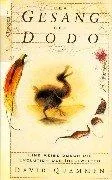
The Song of the Dodo book cover

The Song of the Dodo

By David Quammen

Island Biogeography in an Age of Extinctions

David Quammen uses islands—both literal and ecological—to explain how species originate, spread, persist, and disappear. Moving between evolutionary history, field reporting, scientific biography, and conservation debates, he traces island biogeography from the observations of nineteenth-century naturalists to the mathematical theories and reserve-design controversies of the twentieth century. Alfred Russel Wallace occupies a central place in this history, while later figures such as Robert MacArthur, Edward O. Wilson, Daniel Simberloff, and Jared Diamond show how island patterns became a framework for modern ecology. The book’s crucial shift is from oceanic islands to fragmented continents: forests, parks, and reserves surrounded by altered land can function as ecological islands. Their isolated populations become vulnerable to genetic decline, demographic accidents, invasive species, and habitat disruption. Expansive and cautionary, the book connects the intellectual history of evol…

View The Song of the Dodo

Kindred book cover

Kindred

By Octavia E. Butler

In 1976 California, Dana Franklin, a Black writer, is repeatedly and inexplicably transported to antebellum Maryland. Each journey places her near Rufus Weylin, a white ancestor whose survival is necessary for Dana’s own birth. What initially appears to be a series of rescues becomes prolonged exposure to the plantation on which Rufus is being formed by slavery’s habits of ownership, violence, and entitlement. Dana must protect him without accepting the system he represents, while also trying to help the enslaved people whose lives are bound to her family history. When her white husband, Kevin, is carried into the past with her, their marriage is tested by a society that assigns them radically unequal positions. Combining time travel, historical fiction, and the tradition of the slavery narrative, Kindred turns ancestry into an immediate physical crisis. Butler asks what it means to inherit a history that remains present in bodies, families, institutions, and relationships.

View Kindred

Get a Life, Chloe Brown book cover

Get a Life, Chloe Brown

By Talia Hibbert

A Novel

After a frightening brush with death, Chloe Brown decides that managing her fibromyalgia has allowed caution and isolation to define too much of her life. She moves out of her family home and creates a list of experiences intended to make her more adventurous. Help arrives from an unlikely source: Redford “Red” Morgan, the motorcycle-riding superintendent of her apartment building, whose warmth and artistic talent complicate Chloe’s dismissive first impression of him. Their mutually beneficial arrangement develops through sharp exchanges, physical attraction, and increasingly vulnerable conversations. Yet both characters carry wounds that affection alone cannot erase. Chloe must distinguish necessary self-protection from emotional withdrawal, while Red confronts the damage left by an abusive former relationship. Their romance becomes a story about pleasure, autonomy, disability, trust, and the difficult work of being understood without surrendering one’s boundaries.

View Get a Life, Chloe Brown

The Lucifer Effect book cover

The Lucifer Effect

By Philip Zimbardo

Understanding How Good People Turn Evil

Why do ordinary people sometimes participate in cruelty, humiliation, and organized violence? Social psychologist Philip Zimbardo argues that explanations centered only on defective character—the proverbial “bad apple”—overlook the power of situations and the institutions that construct them. The book’s central case is the 1971 Stanford Prison Experiment, in which students assigned to prisoner and guard roles occupied a simulated prison until the study was stopped after six days. Zimbardo uses his account of that project to examine conformity, obedience, deindividuation, role absorption, moral disengagement, and the diffusion of responsibility. He then connects these processes to abuses at Abu Ghraib prison and to broader instances of institutional wrongdoing. Although the Stanford study’s methods and interpretation have since faced substantial scholarly criticism, the book remains influential as an argument about how systems distribute power and normalize misconduct. Its final moveme…

View The Lucifer Effect

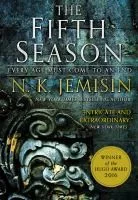
The Fifth Season book cover

The Fifth Season

By N. K. Jemisin

On the continent called the Stillness, civilization has been shaped by recurring geological catastrophes known as Fifth Seasons. Communities survive through rigid planning, inherited rules, and the exploitation of orogenes—people capable of sensing and manipulating thermal and seismic energy. When a massive rift threatens to produce an exceptionally long Season, Essun discovers that her husband has murdered their young son and fled with their daughter. Her pursuit unfolds alongside the stories of Damaya, a frightened child taken for training, and Syenite, an ambitious young orogene sent on an imperial assignment. Through these intertwined lives, N. K. Jemisin examines oppression, survival, parenthood, trauma, and the dangerous bargain between social usefulness and freedom. The result is both an apocalyptic journey and a structural mystery, using speculative geology and intimate human loss to ask what happens when a civilization depends upon the people it dehumanizes.

View The Fifth Season

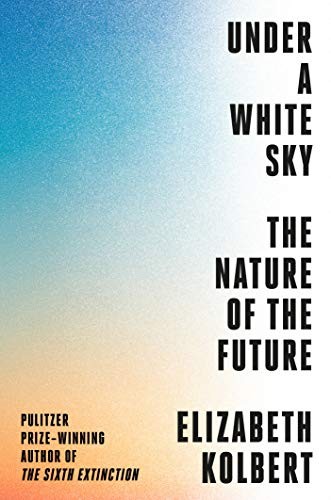
Under a White Sky book cover

Under a White Sky

By Elizabeth Kolbert

The Nature of the Future

Human beings have altered rivers, coastlines, climates, and ecosystems on such a scale that further intervention can appear to be the only way to contain the damage. In Under a White Sky, environmental journalist Elizabeth Kolbert investigates this unsettling predicament through visits to laboratories, waterways, endangered-species habitats, and experimental climate projects. Her subjects include efforts to block invasive carp from the Great Lakes, sustain the exceptionally vulnerable Devils Hole pupfish, help corals survive warmer oceans, remove carbon dioxide from the atmosphere, and reduce global temperatures through solar geoengineering. These projects display remarkable scientific ingenuity, but they also expose the risks of treating complex natural systems as manageable machinery. Rather than offering a simple case for or against technology, Kolbert examines the recurring cycle in which one attempted solution creates conditions demanding another. The result is a concise explorat…

View Under a White Sky

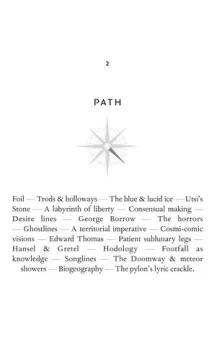
The Old Ways book cover

The Old Ways

By Robert Macfarlane

A Journey on Foot

In The Old Ways, Robert Macfarlane travels along ancient routes to investigate how paths connect landscape, history, imagination, and memory. His journeys encompass chalk tracks, holloways, pilgrimage roads, dangerous tidal crossings, mountain routes, and sea paths in Britain and beyond. Rather than treating a path as a line between destinations, Macfarlane reads it as a record made through repeated movement—a place where geology, ecology, language, custom, and personal experience converge. The poet and walker Edward Thomas serves as an important guiding presence, linking physical travel to literary remembrance. Macfarlane also walks with contemporary artists, writers, sailors, and local guides whose knowledge reveals different ways of inhabiting terrain. Blending travel narrative, nature writing, cultural history, biography, and meditation, the book argues that people shape paths while paths, in turn, shape perception, memory, and identity.

View The Old Ways

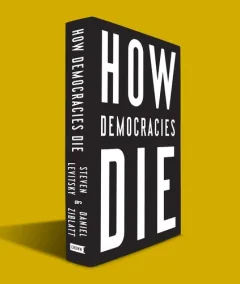
How Democracies Die book cover

How Democracies Die

By Steven Levitsky , Daniel Ziblatt

How Democracies Die examines how elected leaders can dismantle democratic government without abolishing elections or staging a traditional military coup. Drawing on cases from Europe, Latin America, and the United States, political scientists Steven Levitsky and Daniel Ziblatt describe a gradual process in which incumbents weaken institutional checks, discredit opponents, intimidate independent organizations, and alter political rules in their own favor. The authors emphasize the gatekeeping responsibility of political parties: established leaders can either block authoritarian figures or help normalize them. They also argue that constitutions cannot protect democracy by themselves. Democratic survival depends on unwritten practices—especially accepting opponents as legitimate and exercising restraint in the use of legal power. The book applies this comparative framework to Donald Trump’s rise and to the longer deterioration of political norms in the United States, presenting democrat…

View How Democracies Die