WebToTell

Books

Discover published books from independent authors and publishers.

Explore the library

Find your next book

77 unique books found Books may appear in more than one category.

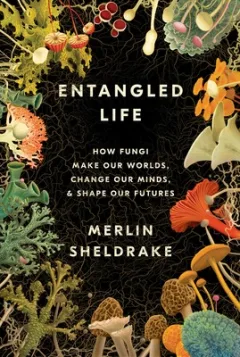
Entangled Life book cover

Entangled Life

By Merlin Sheldrake

How Fungi Make Our Worlds, Change Our Minds & Shape Our Futures

In Entangled Life, biologist Merlin Sheldrake examines fungi as organisms that transform environments, sustain ecological partnerships, and unsettle familiar definitions of intelligence and individuality. Moving from truffles, lichens, yeasts, and psychedelic mushrooms to vast underground mycelial networks, the book shows that fungi are far more than the mushrooms visible above ground. They decompose matter, help plants obtain nutrients, participate in soil formation, alter animal behavior, produce medicines, and make fermentation possible. Sheldrake also considers how fungal abilities might contribute to environmental repair and new materials. The book’s larger purpose is conceptual as well as scientific: fungal lives reveal how poorly the natural world fits into categories built around separate, self-contained individuals. Combining biology, ecological fieldwork, cultural history, and philosophical inquiry, Entangled Life invites readers to see life as a web of changing relationship…

View Entangled Life

Beloved book cover

Beloved

By Toni Morrison

A Novel

Set in Cincinnati in 1873, Beloved follows Sethe, a formerly enslaved woman living with her daughter Denver in a house troubled by a hostile spirit. When Paul D, a man Sethe knew at the Kentucky plantation called Sweet Home, reenters her life, his arrival unsettles the household’s uneasy relationship with the past. Soon afterward, a mysterious young woman calling herself Beloved appears and develops an intense attachment to Sethe. Her presence draws buried memories into the open, including the desperate act that made Sethe an outcast within her community. Moving between Reconstruction and the years of enslavement, Toni Morrison examines how historical violence persists in bodies, families, language, and memory. The novel combines psychological realism, fragmented chronology, oral storytelling, and the supernatural to portray survival after slavery—not as a clean passage into freedom, but as a difficult struggle to reclaim selfhood, love, and connection.

View Beloved

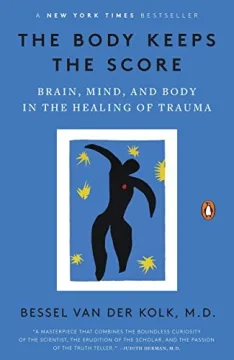
The Body Keeps the Score book cover

The Body Keeps the Score

By Bessel van der Kolk

Brain, Mind, and Body in the Healing of Trauma

In The Body Keeps the Score, psychiatrist Bessel van der Kolk presents trauma as an experience that can persist through bodily reactions, disrupted attention, emotional dysregulation, dissociation, and altered relationships—not merely through consciously remembered events. Drawing on clinical cases, the history of post-traumatic stress research, neuroscience, developmental psychology, and his own professional experience, he examines how overwhelming experiences can affect a person’s sense of safety and control. The book moves from the recognition and diagnosis of traumatic stress to an account of memory and brain-body responses, then surveys approaches to recovery, including established trauma-focused psychotherapy and several body-, movement-, and attention-based practices. Its broad synthesis helped bring embodied accounts of trauma into mainstream discussion. Readers should also treat its strongest scientific and therapeutic claims critically, because subsequent scholarship has cha…

View The Body Keeps the Score

Wolf Hall book cover

Wolf Hall

By Hilary Mantel

Hilary Mantel’s Wolf Hall reimagines the rise of Thomas Cromwell, the statesman who moves from Cardinal Thomas Wolsey’s household into the center of Henry VIII’s government. Beginning with Cromwell’s violent childhood and advancing through the political crisis surrounding Henry’s marriage to Catherine of Aragon, the novel follows a gifted outsider as he turns legal knowledge, commercial experience, memory, and personal alliances into power. Mantel presents Tudor politics not as a settled sequence of famous events but as an unstable present in which succession, religion, money, family loyalty, and royal desire continually alter what is possible.

View Wolf Hall

The Soul of a New Machine book cover

The Soul of a New Machine

By Tracy Kidder

Tracy Kidder’s The Soul of a New Machine follows a team of Data General engineers as they race to design and debug a new 32-bit minicomputer under intense competitive and organizational pressure. Rather than treating computer development as an abstract sequence of inventions, Kidder presents it as collective human labor shaped by ambition, rivalry, improvisation, exhaustion, management decisions, and technical judgment. The resulting work is both a history of the Eclipse MV/8000 and an enduring study of how demanding technological projects acquire momentum—and what they ask of the people who complete them.

View The Soul of a New Machine

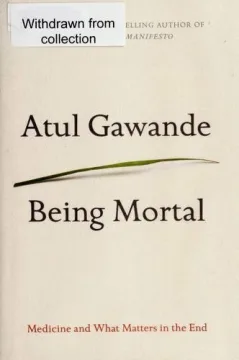
Being Mortal book cover

Being Mortal

By Atul Gawande

Medicine and What Matters in the End

In Being Mortal, surgeon and writer Atul Gawande examines how modern medicine responds when cure, recovery, or indefinite independence is no longer possible. Moving between medical history, reported case studies, conversations with patients and families, and the illness of his own father, Gawande argues that care should be organized around the life a person still wishes to live—not only around safety, treatment, or survival. The book explores aging, frailty, nursing homes, assisted living, serious-illness conversations, palliative care, and hospice while asking how autonomy, purpose, dignity, and human connection can be preserved near the end of life.

View Being Mortal

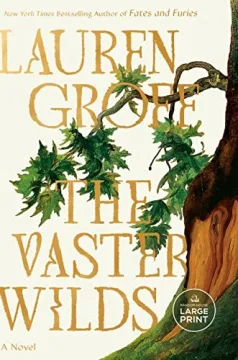
The Vaster Wilds book cover

The Vaster Wilds

By Lauren Groff

The Vaster Wilds is a historical survival novel centered on a young English servant who escapes a devastated colonial settlement during the winter of 1609–1610. Although the settlement is not immediately named, the historical circumstances identify it with Jamestown during the catastrophic period remembered as the Starving Time. The girl’s flight into the forests of Virginia supplies the book’s forward momentum: she must find food, water, warmth, shelter, and a route toward a place she imagines may offer safety. Memories gradually disclose the conditions that formed her, the household she served, the Atlantic crossing, the colony’s breakdown, and her reason for fleeing. The novel consequently operates on several levels at once—as a physically exacting survival narrative, a psychological portrait of a socially powerless person, a critique of colonial assumptions, and a spiritual inquiry into humanity’s place within nature. Rather than treating the landscape as an empty stage awaiting E…

View The Vaster Wilds

Pachinko book cover

Pachinko

By Min Jin Lee

A Novel

Pachinko is a multigenerational historical novel following a Korean family from a fishing village near Busan into immigrant life in Japan. Beginning during Japan’s colonial rule of Korea, the narrative develops from Sunja’s consequential early choices and follows their effects through successive generations. Family members confront poverty, war, displacement, social exclusion, religious conviction, commercial ambition, and changing ideas about what constitutes a successful life. Rather than treating history primarily through political leaders or military campaigns, Min Jin Lee places large historical forces inside homes, workplaces, marriages, schools, churches, and family relationships. Colonialism and discrimination become visible through restrictions on movement, employment, housing, education, reputation, and belonging. The novel’s wide time span also allows it to examine how hardship changes form: later generations may acquire education and money without escaping inherited stigma…

View Pachinko

The Nickel Boys book cover

The Nickel Boys

By Colson Whitehead

A Novel

The Nickel Boys is a historical literary novel about Elwood Curtis, a studious Black teenager growing up in Tallahassee during the civil rights era. Inspired by Martin Luther King Jr.'s moral vision, Elwood believes that integrity and disciplined resistance can help bend society toward justice. An encounter with a stolen car—without his knowing participation in the theft—derails his plans and sends him to Nickel Academy, a segregated juvenile reformatory. Nickel presents itself as a place of education and rehabilitation, but its official mission conceals a system built on violence, exploitation, racial hierarchy, sexual predation, and administrative corruption. The institution distributes punishment arbitrarily while shielding employees from accountability. Black boys face especially brutal treatment, yet the novel also shows that institutional power can prey on any child made dependent and socially invisible. Elwood's friendship with Turner supplies the novel's central ethical tensio…

View The Nickel Boys

The Remains of the Day book cover

The Remains of the Day

By Kazuo Ishiguro

The novel follows Stevens, the longtime butler of Darlington Hall, during a motoring trip through the English countryside in 1956. Although the journey ostensibly allows him to visit Miss Kenton, the hall’s former housekeeper, it becomes an extended reconsideration of his professional ideals, his loyalty to Lord Darlington and the personal choices he has made. Stevens narrates through recollection rather than straightforward confession. His measured explanations gradually reveal discrepancies between how he wishes to understand his life and what readers can infer from the events he describes. The result is simultaneously a character study, a restrained love story and an examination of moral responsibility. Public history and private regret remain intertwined: Stevens’s emotional evasions resemble his reluctance to judge the political activities conducted at Darlington Hall before the Second World War.

View The Remains of the Day

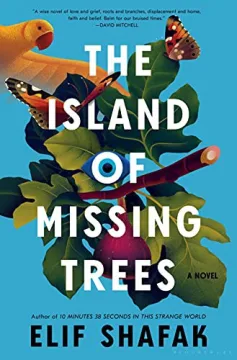
The Island of Missing Trees book cover

The Island of Missing Trees

By Elif Shafak

A Novel

The novel links a divided family to the divided island of Cyprus. Its principal human story follows Kostas, a Greek Cypriot, and Defne, a Turkish Cypriot, whose youthful relationship develops amid communal hostility and the violence surrounding Cyprus in 1974. A second timeline centers on their London-born daughter, Ada, who inherits the emotional consequences of a past her parents have largely concealed from her. Between these narratives stands a fig tree descended from one that grew through a Nicosia tavern where Kostas and Defne once met. Shafak uses the fig tree not simply as a symbol but as a speaking character and witness. Human history, family memory, migration, plant life and ecological damage are therefore narrated as interconnected rather than separate subjects. The chronology moves between Cyprus and London and between the 1970s and a later family present, gradually disclosing how political violence enters intimate relationships and persists through silence. The novel’s six…

View The Island of Missing Trees

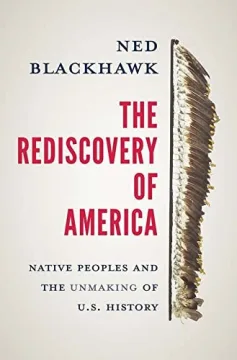
The Rediscovery of America book cover

The Rediscovery of America

By Ned Blackhawk

Native Peoples and the Unmaking of U.S. History

The Rediscovery of America is a large-scale reinterpretation of United States history that places Native nations within—not beside—the histories of colonization, revolution, constitutional government, territorial expansion, the Civil War, federal administration, and twentieth-century reform. Spanning roughly five centuries, the book draws together scholarship on numerous regions and communities to show that Native peoples remained political actors whose diplomacy, resistance, adaptation, labor, territorial power, and legal claims influenced the developing United States. Blackhawk’s method is synthetic rather than encyclopedic: he does not attempt to provide a complete chronological history of every Indigenous nation. Instead, he revisits major turning points commonly found in national histories and asks how they look when Native-newcomer relations become part of the central explanation. European colonization emerges as uncertain and contested rather than inevitable. Britain’s imperial…

View The Rediscovery of America