Category

Social & Cultural History

How societies are shaped by race, gender, class and memory. Isabel Wilkerson's Caste and Heather McGhee's The Sum of Us examine racism in America and what it costs everyone; The Autobiography of Malcolm X and Tom Reiss's The Black Count tell remarkable lives. Simone de Beauvoir's The Second Sex is the founding text of modern feminism, and Annie Ernaux's The Years tells a generation's story. Novels such as Yaa Gyasi's Homegoing, Edward P. Jones's The Known World, Alex Haley's Roots and Louise Erdrich's The Night Watchman bring the same history to life through fiction. Books that help explain today's society through its past.

2 published books 0 published articles

Related subcategories

Social & Cultural History

Gender & Sexuality

Books on gender, sexuality and how societies shape them. Simone de Beauvoir's The Second Sex, first published in France in 1949, is one of the founding works of modern feminism. Drawing on biology, history, myth and women's lives, it argues that "one is not born, but rather becomes, a woman": that womanhood has been defined by men, as the "other". Long and demanding but still powerful, it remains essential reading. More books will join this category; see Social & Cultural History and our article on education and gender for more.

Explore category

Social & Cultural History

Race & Ethnicity

Books that confront the history and present of race and racism. Isabel Wilkerson's Caste argues that America has a hidden caste system, and Heather McGhee's The Sum of Us shows how racism hurts everyone, not only its targets. The Autobiography of Malcolm X and Dee Brown's Bury My Heart at Wounded Knee tell history from the side of those who lived it, and Tom Reiss's The Black Count recovers the forgotten life of General Alexandre Dumas. Alex Haley's Roots, Edward P. Jones's The Known World and Louise Erdrich's The Night Watchman bring the same history into fiction. Essential reading, and strong choices for discussion groups.

Explore category

Social & Cultural History

Migration & Diaspora

Stories of people who leave home, or are taken from it, and of the families that follow. Yaa Gyasi's Homegoing begins with two half-sisters in eighteenth-century Ghana: one marries a British slave trader, the other is sold into slavery in America. The novel follows their descendants, one chapter per generation, on both sides of the Atlantic up to the present day, showing how slavery and displacement echo through families. A powerful, widely taught debut. More books will join this shelf; see Social & Cultural History for more.

Explore category

Books in this category

Related category

The Years

By Annie Ernaux , Alison L. Strayer

Spanning 1941 to 2006, The Years joins one woman’s life to the transformation of postwar France. Annie Ernaux recalls childhood, education, marriage, motherhood, work, sexuality, illness, aging, and the desire to write, but she resists presenting these experiences as a conventional first-person memoir. Instead, photographs, family meals, slogans, songs, advertisements, political events, consumer goods, and changing habits accumulate into the memory of a generation. The intimate and historical repeatedly alter one another: class mobility changes family language; reproductive freedom changes women’s futures; television and digital technology reshape attention; public events survive as fragments of ordinary conversation. By moving between “she,” “we,” and broader collective voices, Ernaux asks how much of a supposedly private identity is composed from shared social time. The result is both autobiography and social record—a sustained attempt to preserve lives, objects, expressions, and ex…

View book

Related category

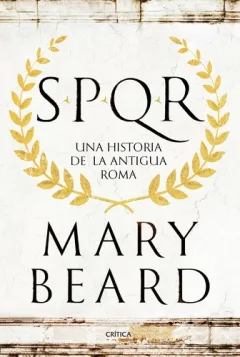
SPQR

A History of Ancient Rome

By Mary Beard

Mary Beard's SPQR examines how a small settlement in central Italy became the center of a vast and durable imperial system. Moving from Rome's uncertain beginnings and foundation legends through the Republic and early Empire, Beard asks how Roman power worked, who counted as Roman, and how conquest transformed both rulers and subjects. The account gives major figures such as Cicero, Julius Caesar, Augustus, and Caracalla their place without reducing Roman history to a procession of celebrated men. Political institutions, slavery, citizenship, migration, family life, religion, urban conditions, and social inequality are integral to the story. Beard also repeatedly exposes the difficulty of reconstructing antiquity from partisan texts, monumental self-presentation, inscriptions, coins, and incomplete archaeology. Ending in 212 CE, when Caracalla extended citizenship to almost all free inhabitants of the empire, SPQR presents Rome as a changing political community rather than a fixed mod…

View book

Articles in this category

No published articles are currently connected to this category in this language.