WebToTell

Books

Discover published books from independent authors and publishers.

Explore the library

Find your next book

289 unique books found Books may appear in more than one category.

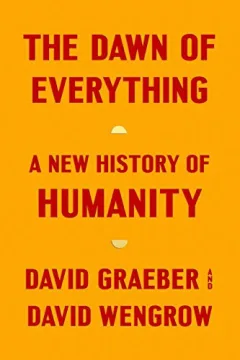
The Dawn of Everything book cover

The Dawn of Everything

By David Graeber , David Wengrow

A New History of Humanity

The Dawn of Everything is an ambitious reinterpretation of early human social and political history. Rather than offering another single-track account of humanity's supposed ascent from small egalitarian bands through agriculture, cities, states, and entrenched inequality, David Graeber and David Wengrow challenge the idea that these developments formed an inevitable sequence. They assemble archaeological, anthropological, and historical examples suggesting that people repeatedly experimented with different combinations of hierarchy, equality, administration, ritual authority, seasonal leadership, and collective government. The book begins by examining familiar European stories about human origins, particularly narratives associated with Thomas Hobbes and Jean-Jacques Rousseau. It then argues that European political thought was partly shaped by Indigenous criticism of European society, giving particular attention to accounts involving the Wendat statesman Kandiaronk. From there, the a…

View The Dawn of Everything

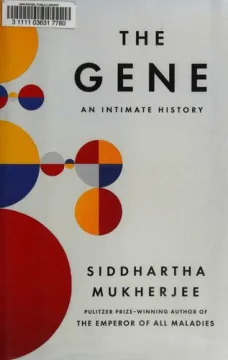
The Gene book cover

The Gene

By Siddhartha Mukherjee

An Intimate History

The Gene is a large-scale history of heredity as both a scientific problem and a consequential human idea. Mukherjee follows the subject from early speculation about reproduction and inheritance through Gregor Mendel’s experiments, Darwinian evolution, chromosome theory, the identification of DNA as hereditary material, molecular genetics, recombinant DNA, gene sequencing, cloning, the Human Genome Project, and early twenty-first-century genome editing. The chronology is interwoven with accounts of Mukherjee’s family history of mental illness and his clinical perspective as a cancer physician and researcher. This personal strand turns heredity from an abstract mechanism into a source of uncertainty about illness, identity, probability, and family responsibility. The book is therefore not simply a technical account of how genes work. It examines how societies have interpreted genetic knowledge, how eugenic programs converted claims about heredity into coercive policy, and how the abili…

View The Gene

The Anarchy book cover

The Anarchy

By William Dalrymple

The East India Company, Corporate Violence, and the Pillage of an Empire

The Anarchy is a large-scale narrative history of how the English East India Company evolved from a commercial enterprise into a military and governmental power in South Asia. Its central story runs through the eighteenth century, when Mughal authority fragmented, regional powers competed for territory and revenue, and Company officials learned to exploit both Indian political rivalries and financial resources. The book is not simply a chronicle of British expansion. Dalrymple reconstructs a crowded political field involving the Mughal court, Bengal’s nawabs, the Maratha Confederacy, Mysore, Afghan invaders, Indian bankers and financiers, European mercenaries, Company shareholders and officials in London. Figures such as Shah Alam II, Robert Clive, Warren Hastings, Tipu Sultan and the Maratha leader Mahadji Scindia appear within a history shaped as much by negotiation, credit and revenue collection as by battles. Dalrymple’s organizing argument is that the conquest was extraordinary b…

View The Anarchy

The Emperor of All Maladies book cover

The Emperor of All Maladies

By Siddhartha Mukherjee

A Biography of Cancer

Siddhartha Mukherjee approaches cancer as though it were the subject of a biography: an entity with ancient appearances, changing identities, influential interpreters, periods of apparent defeat, and repeated transformations. The book moves from early descriptions of tumors through surgery, radiation, chemotherapy, epidemiology, prevention, genetics, targeted treatment, and the political campaign commonly called the War on Cancer. Rather than presenting medical progress as a smooth accumulation of discoveries, Mukherjee reconstructs a history shaped by experiments, rival theories, institutional ambitions, public advocacy, commercial interests, clinical failures, and patients willing to undergo uncertain treatments. A contemporary leukemia patient, Carla Reed, helps anchor the historical account in the realities of diagnosis and care. The result combines medical history, popular science, clinical narrative, and institutional history while repeatedly returning to a central biological in…

View The Emperor of All Maladies

The Dispossessed book cover

The Dispossessed

By Ursula K. Le Guin

An Ambiguous Utopia

The Dispossessed follows Shevek, a physicist raised on Anarres, an arid moon settled by revolutionaries seeking to build a stateless, non-proprietary society. Convinced that intellectual isolation is obstructing both his scientific work and meaningful contact between worlds, Shevek travels to Urras, the wealthy planet from which the Anarresti founders departed generations earlier. His journey places him between societies that define freedom in radically different ways. The novel develops along two alternating timelines. One traces Shevek’s life on Anarres: his education, scientific vocation, partnership with Takver, experience of famine, and conflicts with institutions that exercise power despite officially rejecting hierarchy. The other follows his visit to Urras, where he receives material comfort and professional recognition but gradually recognizes the political interests surrounding his research. The timelines illuminate each other, turning his journey into both a political compa…

View The Dispossessed

The Sixth Extinction book cover

The Sixth Extinction

By Elizabeth Kolbert

An Unnatural History

The Sixth Extinction investigates the proposition that human activity is producing a biological crisis comparable in scale—though not necessarily identical in mechanism or duration—to the five major mass extinctions identified in the fossil record. Kolbert develops this case through thirteen chapters, each organized around an emblematic species, extinction mechanism, scientific discovery, or conservation problem. The sequence moves between deep time and contemporary field sites rather than presenting a conventional textbook survey. The early chapters reconstruct the intellectual history of extinction. Georges Cuvier’s study of fossil remains helped establish that species could disappear permanently, overturning assumptions that nature’s inventory was fixed. The great auk illustrates how direct exploitation can eliminate an abundant species, while ammonites and the end-Cretaceous catastrophe introduce sudden planetary disruption and the scientific struggle to recognize it. The book the…

View The Sixth Extinction

The Immortal Life of Henrietta Lacks book cover

The Immortal Life of Henrietta Lacks

By Rebecca Skloot

Rebecca Skloot combines biography, family history, science writing, medical history, and investigative reporting to reconstruct the life and legacy of Henrietta Lacks. In 1951, while Lacks was being treated for cervical cancer at Johns Hopkins Hospital, cells obtained from her tumor without her knowledge or consent became the source of HeLa, the first human cell line that could be continuously propagated in culture. The book explains why this development mattered to laboratory science, but its central purpose is to restore a person and family to a story that had often been told chiefly as scientific progress. The narrative moves among three interconnected histories: Henrietta's life and treatment; the development and expanding use of HeLa cells; and the later experiences of her children, particularly Deborah Lacks, as they tried to understand what had happened. Skloot also includes the process of her own reporting, showing that access to a family's history depends on trust, patience,…

View The Immortal Life of Henrietta Lacks

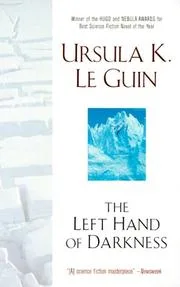
The Left Hand of Darkness book cover

The Left Hand of Darkness

By Ursula K. Le Guin

The Left Hand of Darkness combines diplomatic science fiction, speculative anthropology, political intrigue, and an arduous survival journey. Genly Ai, an envoy from a loose interplanetary association called the Ekumen, travels alone to Gethen—also known as Winter—to invite its nations into wider contact with other human worlds. His assignment is complicated by political rivalry, his limited understanding of Gethenian customs, and his difficulty perceiving the planet’s inhabitants outside the gender categories he brings with him. The novel initially follows Genly’s uncertain dealings in Karhide, where indirect communication, personal influence, ceremonial behavior, and political suspicion make straightforward diplomacy nearly impossible. His relationship with the statesman Estraven becomes central: Genly repeatedly misreads Estraven’s motives, while Estraven acts from a conception of loyalty larger than allegiance to a single ruler or nation. The story later moves through the bureaucr…

View The Left Hand of Darkness

The Warmth of Other Suns book cover

The Warmth of Other Suns

By Isabel Wilkerson

The Epic Story of America’s Great Migration

Isabel Wilkerson reconstructs the Great Migration, the decades-long movement of roughly six million Black Americans from the South to Northern, Midwestern, and Western cities. Rather than treating migration primarily as a demographic trend, she builds the history around three people whose journeys represent different routes, decades, social positions, and destinations: Ida Mae Brandon Gladney leaves Mississippi sharecropping for Chicago; George Swanson Starling escapes dangerous labor conflict in Florida and settles in New York; and Robert Joseph Pershing Foster leaves Louisiana to pursue a medical career in Los Angeles. Their stories are interwoven with census findings, archival evidence, historical explanation, and accounts gathered through extensive interviews. The result is both a collective history and a study of individual decision-making under racial constraint. The narrative follows the migrants before departure, through the practical and emotional ordeal of leaving, and acros…

View The Warmth of Other Suns

Braiding Sweetgrass book cover

Braiding Sweetgrass

By Robin Wall Kimmerer

Indigenous Wisdom, Scientific Knowledge and the Teachings of Plants

Braiding Sweetgrass is a collection of connected nonfiction essays in which Robin Wall Kimmerer brings together botany, personal experience, Potawatomi teachings, environmental history, and reflections on language and ethics. Rather than presenting Indigenous knowledge and Western science as interchangeable, the book explores what each way of knowing can perceive and what may become possible when they enter a respectful conversation. Plants provide the book’s recurring subjects and organizing teachers. Pecans, strawberries, maples, asters, goldenrod, black ash, beans, corn, squash, sweetgrass, and other beings become points of entry into ecology, family history, land use, gratitude, restoration, and responsibility. Scientific explanations are embedded in stories about parenting, teaching, gathering, gardening, field research, and participation in community life. The book gradually expands in scale. Early essays establish creation, gift, attention, and relationship as guiding ideas. Mi…

View Braiding Sweetgrass

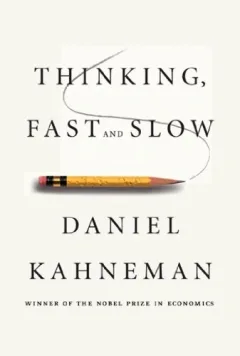
Thinking, Fast and Slow book cover

Thinking, Fast and Slow

By Daniel Kahneman

Thinking, Fast and Slow is a wide-ranging account of how people form judgments, estimate probabilities, make choices under uncertainty, remember experiences, and evaluate their lives. Kahneman organizes much of this material around two personified modes of cognition. System 1 represents rapid, automatic, associative, and usually effortless processing; System 2 represents more deliberate, attention-demanding reasoning. These are explanatory characters rather than literal anatomical divisions of the brain. The book’s five-part structure moves from cognitive machinery to practical consequences. Part I introduces the two-system vocabulary and examines attention, mental effort, associative memory, cognitive ease, and the mind’s tendency to construct coherent interpretations from limited evidence. Part II turns to heuristics: useful shortcuts that can also produce predictable errors involving small samples, anchors, availability, stereotypes, base rates, conjunctions, regression to the mean…

View Thinking, Fast and Slow

The Kite Runner book cover

The Kite Runner

By Khaled Hosseini

The Kite Runner is a first-person novel about Amir, a privileged boy growing up in Kabul, and Hassan, the Hazara son of a servant in Amir’s household. Their intimacy is genuine but structurally unequal: affection, dependence, ethnicity, social rank, and Amir’s desire for his father’s approval all shape what the boys can ask of one another. After Amir witnesses a brutal assault and fails to help Hassan, fear and shame lead him into a further betrayal. The narrative follows the long consequences of that failure. Political upheaval drives Amir and his father from Afghanistan to the United States, where their social positions change dramatically. Amir builds an adult life in California, but migration does not erase his memory or responsibility. A summons from the past eventually returns him to an Afghanistan transformed by war and Taliban rule, where an attempt to help Hassan’s son becomes both a rescue mission and a test of whether remorse can produce meaningful action. Although major ev…

View The Kite Runner