Category

Historical Fiction

Novels that bring the past to life. Several confront the history of slavery and its legacy: Yaa Gyasi's Homegoing, Edward P. Jones's The Known World, Alex Haley's Roots and Octavia E. Butler's Kindred. Others travel to medieval Italy in Umberto Eco's The Name of the Rose, Renaissance Florence in Maggie O'Farrell's The Marriage Portrait, feudal Japan in James Clavell's Shogun and Lincoln's Washington in George Saunders's Lincoln in the Bardo. Michael Chabon's The Amazing Adventures of Kavalier & Clay, Louise Erdrich's The Night Watchman and Taylor Jenkins Reid's The Seven Husbands of Evelyn Hugo bring the twentieth century closer. A wide shelf, with prize winners and book club favourites throughout.

38 published books 0 published articles

Books in this category

Related category

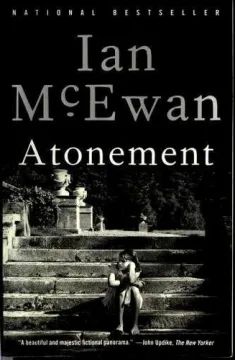
Atonement

A Novel

By Ian McEwan

Ian McEwan's Atonement opens on an oppressively hot day in 1935 at an English country house. Thirteen-year-old Briony Tallis, an aspiring writer, misreads an encounter between her older sister Cecilia and Robbie Turner, a family friend of humbler origins. The accusation she makes, shaped by a vivid imagination and a limited grasp of adult life, alters three lives for good. The novel follows the consequences through the retreat to Dunkirk and the hospital wards of wartime London, then closes with a late-century coda that changes how the earlier sections should be read. First published in 2001 and shortlisted for the Booker Prize, it is a leading example of literary fiction and historical fiction. It asks what stories can repair and what they can conceal.
View book

Related category

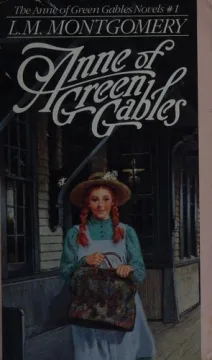
Anne of Green Gables

By L. M. Montgomery

Anne of Green Gables follows Anne Shirley, an eleven-year-old orphan whose talkative, imaginative nature collides with the quiet routines of a Prince Edward Island farm. A mix-up sends her to the Cuthbert household, which had expected a boy. Over several years in the village of Avonlea, she makes friends, courts disaster through her temper and daydreams, and slowly earns a place in a community that first seemed unlikely to keep her. L. M. Montgomery's 1908 debut mixes comedy with sincere feeling about belonging, growth, and the pull between ambition and duty. It is one of the classic novels to read for anyone curious about early twentieth-century Canadian fiction. Among coming of age books, it stands out for its warm humor and a heroine who is allowed to be both flawed and gifted.

View book

Related category

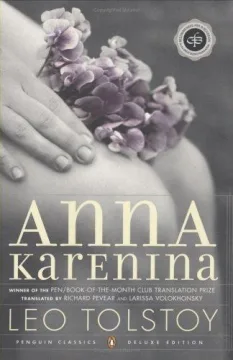
Anna Karenina

By Leo Tolstoy , Richard Pevear , Larissa Volokhonsky

Anna Karenina follows two intertwined stories in 1870s Russia. In one, Anna, a married St. Petersburg aristocrat, enters a passionate relationship that her society will not forgive. In the other, the landowner Konstantin Levin searches for love, purpose and a workable way to live, in the countryside and in marriage. Tolstoy surrounds them with a wide circle of relatives and friends, using their marriages, ambitions and failures to examine fidelity, social judgment, faith and the meaning of ordinary days. This Penguin Classics Deluxe Edition presents the Richard Pevear and Larissa Volokhonsky translation of a landmark of Russian literature. It is also a sensible pick among classic novels to read for anyone ready for a long, absorbing realist novel.

View book

Related category

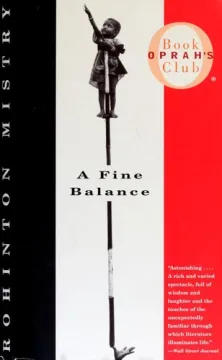
A Fine Balance

By Rohinton Mistry

Rohinton Mistry's A Fine Balance is a long novel set in an unnamed Indian city by the sea in the mid-1970s, when Prime Minister Indira Gandhi's government suspended ordinary democratic life under the Emergency. Four people who would never have met in easier times share a cramped flat: a widowed seamstress, two tailors from a village scarred by caste violence, and a student from the hills. Mistry follows their work, their friendship and the pressures of poverty, bureaucracy and state power that close in on them. Among award winning books about modern India, it stands out for its Dickensian breadth and its close, often darkly funny attention to how ordinary people get by.

View book

Related category

Sophie's Choice

By William Styron

William Styron's Sophie's Choice, a National Book Award winner and a landmark of American literary fiction, is set in Brooklyn in 1947. Stingo, a young Southern writer, rents a room in a boarding house and is drawn into the volatile love affair of Nathan Landau, a charismatic and unstable Jewish man, and Sophie Zawistowska, a Polish Catholic who survived Auschwitz. As Stingo learns her history piece by piece, the novel moves between postwar New York, a trip to the South, and wartime Poland and the camp. It asks how guilt, memory and love endure after atrocity. Among award winning books about the Holocaust, it is both widely read and sharply debated, because of how it frames suffering, evil and who may imagine them.

View book

Related category

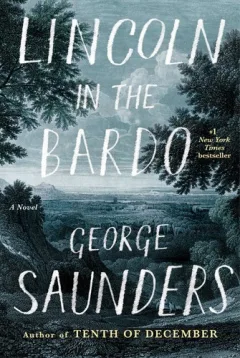
Lincoln in the Bardo

By George Saunders

In February 1862, as the American Civil War enters a worsening phase, eleven-year-old Willie Lincoln dies of illness and is placed in a Georgetown cemetery. George Saunders builds his novel around the grief of Willie’s father, President Abraham Lincoln, and the voices of spirits who linger among the graves, unable or unwilling to accept their deaths. During one night, the child’s confusion, the president’s mourning, and the ghosts’ unfinished attachments converge. The story moves between supernatural testimony and documentary-looking fragments about the Lincolns, the war, and the night of Willie’s burial. Its unusual chorus turns private bereavement into a larger meditation on attachment, denial, compassion, and collective loss. Both historical and deliberately invented, the novel asks how people release what they love—and how sorrow might deepen a person’s sense of responsibility toward strangers.

View book

Related category

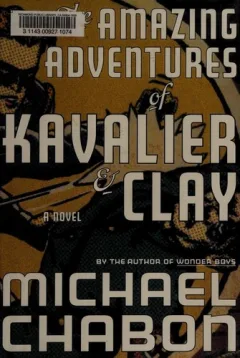
The Amazing Adventures of Kavalier & Clay

A Novel

By Michael Chabon

Beginning in 1939, Michael Chabon’s historical novel brings together Josef “Joe” Kavalier, a Jewish artist who has escaped Nazi-occupied Prague, and his Brooklyn cousin, Sammy Klayman, who adopts the professional name Sam Clay. Their complementary talents—Joe’s visual imagination and Sammy’s instinct for stories—produce the Escapist, a superhero whose battles transform private longings into colorful public fantasy. Success in the emerging comic-book business offers money, recognition, and a symbolic weapon against fascism, but it cannot rescue Joe’s family or release either cousin from grief, fear, secrecy, and compromise. Moving through wartime New York and beyond, the novel links the rise of American superhero comics with refugee experience, Jewish identity, artistic ownership, queer life under repression, and the uneasy promise of reinvention. Its central insight is that escape can be necessary and creative without ever being complete.

View book

Related category

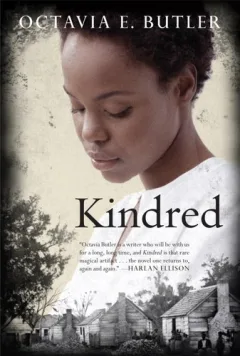
Kindred

By Octavia E. Butler

In 1976 California, Dana Franklin, a Black writer, is repeatedly and inexplicably transported to antebellum Maryland. Each journey places her near Rufus Weylin, a white ancestor whose survival is necessary for Dana’s own birth. What initially appears to be a series of rescues becomes prolonged exposure to the plantation on which Rufus is being formed by slavery’s habits of ownership, violence, and entitlement. Dana must protect him without accepting the system he represents, while also trying to help the enslaved people whose lives are bound to her family history. When her white husband, Kevin, is carried into the past with her, their marriage is tested by a society that assigns them radically unequal positions. Combining time travel, historical fiction, and the tradition of the slavery narrative, Kindred turns ancestry into an immediate physical crisis. Butler asks what it means to inherit a history that remains present in bodies, families, institutions, and relationships.

View book

Articles in this category

No published articles are currently connected to this category in this language.