Category

Literary Fiction

Novels valued for their writing, depth and ideas, from classics to recent prize winners. Toni Morrison's Beloved, Kazuo Ishiguro's Never Let Me Go, W. G. Sebald's Austerlitz and George Saunders's Lincoln in the Bardo are modern landmarks; Yaa Gyasi's Homegoing, Octavia E. Butler's Kindred and Parable of the Sower, and Michael Chabon's The Amazing Adventures of Kavalier & Clay are widely read and taught. Jane Austen's Pride and Prejudice and William Styron's Sophie's Choice stand beside Susanna Clarke's Piranesi and Jonathan Strange & Mr Norrell, which blend literature and fantasy. For readers and book clubs who want stories that stay with them; every book has discussion questions.

98 published books 0 published articles

Books in this category

Related category

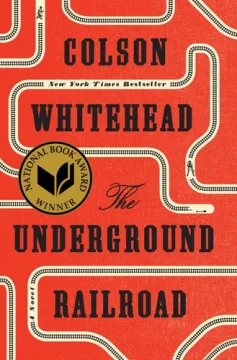
The Underground Railroad

A Novel

By Colson Whitehead

Cora, an enslaved young woman on a Georgia cotton plantation, accepts Caesar’s proposal that they flee north together. In Colson Whitehead’s central transformation of history, the Underground Railroad is not merely a clandestine network of people and routes: it is an actual subterranean railway. Cora’s passage from state to state becomes both a suspenseful pursuit and a journey through sharply different systems of racial control. Slave catcher Arnold Ridgeway follows her while each apparent refuge reveals another way that American institutions can exploit, confine, erase, or terrorize Black people. Combining historical fiction with allegory and speculative invention, the novel examines slavery’s violence, the instability of freedom, and the repeated reinvention of white supremacy. Its episodic geography reaches beyond a single decade, making Cora’s flight a larger reckoning with American history and the distance between national ideals and lived reality.
View book

Related category

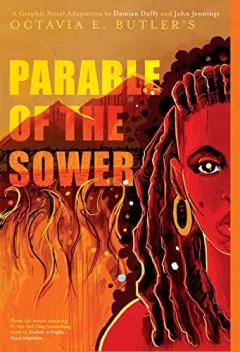
Parable of the Sower

By Octavia E. Butler

In a near-future California destabilized by climate disruption, extreme inequality, privatization, addiction, and failing public institutions, teenager Lauren Olamina recognizes that her walled neighborhood cannot remain safe. She also lives with hyperempathy, a condition that makes her physically experience the suffering she witnesses. When violence destroys her home, Lauren travels north among displaced people, concealing her vulnerability while gathering companions and testing the principles of Earthseed, the belief system she has begun to formulate. Told chiefly through Lauren’s dated journal entries, the novel combines a dangerous migration story with an inquiry into leadership, faith, adaptation, and collective survival. Butler’s future is frightening not because it depends on a single spectacular catastrophe, but because familiar social failures intensify and reinforce one another. The result is both dystopian science fiction and a coming-of-age novel about building purpose wit…

View book

Related category

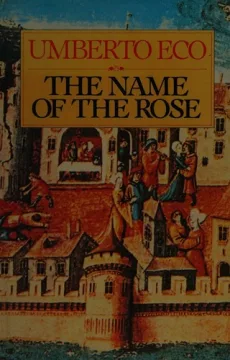
The Name of the Rose

By Umberto Eco

In a secluded Benedictine abbey in 1327, a series of unexplained deaths interrupts preparations for a politically sensitive religious meeting. William of Baskerville, a Franciscan friar skilled in observation and inference, investigates with the help of Adso of Melk, the young novice who later records their experience. Their inquiry leads through theological disputes, concealed histories, encoded manuscripts, and the abbey’s forbidden labyrinthine library. Although structured as a murder mystery, The Name of the Rose is equally concerned with how people interpret signs, preserve knowledge, enforce orthodoxy, and mistake persuasive patterns for truth. Umberto Eco combines a vividly constructed medieval setting with detective fiction, philosophical argument, literary play, and reflections on censorship. The result is a novel in which solving crimes cannot be separated from examining who controls books, how institutions defend authority, and whether certainty is ever justified by the evi…

View book

Related category

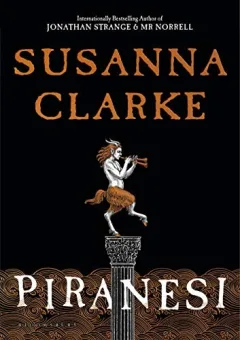
Piranesi

By Susanna Clarke

Piranesi lives in the House, an apparently endless world of classical halls, monumental statues, birds, clouds, and seawater. He maps its spaces, predicts its dangerous tides, cares for its dead, and records his discoveries in journals. His only regular companion is the Other, a sharply contrasting figure who treats the House as the possible repository of secret knowledge. When signs suggest that another living person has entered this world, Piranesi begins examining inconsistencies in his records and gaps in his memory. What starts as an account of solitary exploration gradually becomes a mystery about identity, captivity, trust, and the uses of knowledge. Susanna Clarke combines a fantastical setting with the investigative momentum of a psychological mystery, making the narrator’s careful observations both the substance of the world and the means by which its hidden history can be recovered.

View book

Related category

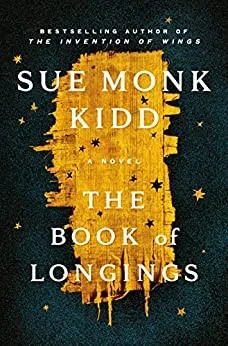
The Book of Longings

A Novel

By Sue Monk Kidd

In first-century Galilee, Ana is a wealthy, intellectually restless young woman determined to write the stories of women whose lives have been neglected or erased. Her ambitions conflict with a family intent on arranging a profitable marriage and with a society that grants women little authority over their work, bodies, or futures. After meeting Jesus of Nazareth, Ana becomes his wife and enters a household far poorer than the one she has known. Their marriage unfolds amid domestic strain, Roman occupation, political resistance, and Jesus’s developing spiritual vocation. Ana’s own path eventually carries her from Sepphoris and Nazareth to Alexandria and a community of Jewish contemplatives. By imagining a fictional wife for Jesus, Sue Monk Kidd shifts attention from familiar sacred history to the contested question of who is permitted to leave a record. The novel treats longing, writing, and female solidarity as forms of resistance against disappearance.

View book

Related category

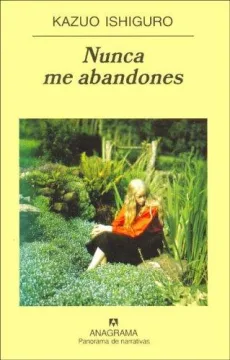
Never Let Me Go

By Kazuo Ishiguro

In an alternative late-twentieth-century England, Kathy H. looks back on her childhood at Hailsham, an isolated school where students were encouraged to make art, guard their health, and accept rules they only partly understood. Her memories center on Ruth and Tommy, the two friends with whom she forms a tense, enduring triangle of loyalty, rivalry, love, and regret. As Kathy’s recollections move from school to early adulthood, ordinary incidents acquire a darker meaning: the students have been created to supply organs to others, and their futures are severely limited. Rather than making technological speculation its main attraction, the novel studies how people build meaningful lives while inhabiting systems they cannot—or do not know how to—resist. Its quiet treatment of memory, mortality, social conditioning, and medical exploitation makes it both an intimate tragedy and an unsettling work of dystopian social fiction.

View book

Related category

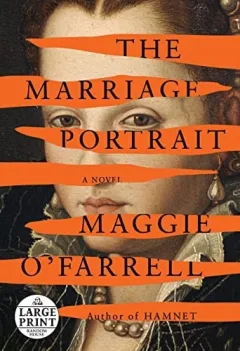
The Marriage Portrait

By Maggie O’Farrell

In Renaissance Italy, Lucrezia de’ Medici is transformed from an observant, artistically gifted Florentine girl into the adolescent wife of Alfonso II d’Este, heir to the duchy of Ferrara. Marriage removes her from her family and places her inside a court governed by ceremony, surveillance, dynastic rivalry, and the urgent demand that she produce an heir. When Lucrezia comes to believe that Alfonso intends to kill her, the novel becomes both a psychological struggle for survival and an inquiry into how powerful men control women’s bodies, images, and stories. Maggie O’Farrell draws on the historical Lucrezia, who died at sixteen, and on the cultural afterlife associated with Robert Browning’s “My Last Duchess.” Moving between Lucrezia’s endangered present and the experiences that brought her there, the book combines literary historical fiction with mounting suspense while restoring imagination, perception, and agency to a young woman largely reduced by history to a marriage and an ear…

View book

Related category

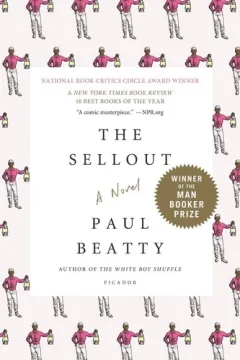
The Sellout

A Novel

By Paul Beatty

Paul Beatty’s The Sellout is a ferocious comic novel about race, belonging, and the contradictions hidden inside American ideals. Its unnamed Black narrator lives in Dickens, a fictional community on the southern edge of Los Angeles that has been erased from official maps. Convinced that restoring the town requires drastic action, he attempts to reintroduce segregation and becomes entangled in an arrangement that others interpret as slavery. The resulting case carries him to the United States Supreme Court. Beatty uses this deliberately outrageous premise to examine racial identity, civic neglect, educational inequality, policing, historical memory, and the consolations offered by simplistic stories of progress. The novel’s jokes are dense, abrasive, and inseparable from its serious questions: Who is allowed to define a community? What does equality mean when institutions remain unequal? And what happens when the language of racial transcendence obscures the persistence of racism?

View book

Articles in this category

No published articles are currently connected to this category in this language.