Category

Literary Fiction

Novels valued for their writing, depth and ideas, from classics to recent prize winners. Toni Morrison's Beloved, Kazuo Ishiguro's Never Let Me Go, W. G. Sebald's Austerlitz and George Saunders's Lincoln in the Bardo are modern landmarks; Yaa Gyasi's Homegoing, Octavia E. Butler's Kindred and Parable of the Sower, and Michael Chabon's The Amazing Adventures of Kavalier & Clay are widely read and taught. Jane Austen's Pride and Prejudice and William Styron's Sophie's Choice stand beside Susanna Clarke's Piranesi and Jonathan Strange & Mr Norrell, which blend literature and fantasy. For readers and book clubs who want stories that stay with them; every book has discussion questions.

98 published books 0 published articles

Books in this category

Related category

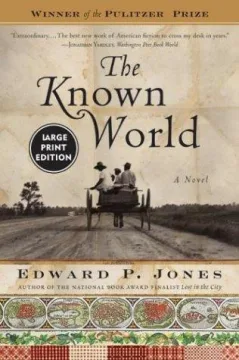
The Known World

By Edward P. Jones

Set in fictional Manchester County, Virginia, before the Civil War, The Known World begins with the death of Henry Townsend, a formerly enslaved Black man who has become a landowner and enslaver. His death unsettles the plantation he leaves to his widow, Caldonia, but the novel’s reach extends far beyond that household. Edward P. Jones follows enslaved people, free Black families, white landowners, patrolmen, officials, and others whose lives are connected by ownership, law, kinship, desire, and betrayal. Moving backward and forward through time, the narrative reveals consequences before causes and exposes how slavery reshapes generations. The novel’s central historical complication—Black participation in slaveholding—does not soften its judgment of slavery. Instead, it demonstrates how a system based on human property corrupts freedom itself, placing even legally free people inside a social order that can erase their rights, divide families, and turn aspiration into complicity.
View book

Related category

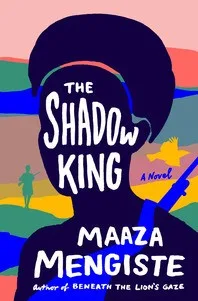
The Shadow King

A Novel

By Maaza Mengiste

Set principally during Fascist Italy’s 1935 invasion of Ethiopia, The Shadow King follows Hirut, a recently orphaned servant who is drawn from domestic subordination into armed resistance. She initially enters the conflict alongside Kidane, an officer in Emperor Haile Selassie’s army, and Aster, Kidane’s formidable wife. As Ethiopia confronts a technologically superior invader and the emperor leaves the country, Hirut helps transform a humble musician who resembles Haile Selassie into a symbolic “shadow king” capable of sustaining morale. The novel also crosses the battle line through Ettore Navarra, a Jewish Italian soldier and photographer serving a violent colonial command. By combining intimate trauma, military struggle, photography, myth, and collective memory, Maaza Mengiste recasts a frequently marginalized theater of twentieth-century history around women who fought, endured, and remembered. The result is both a war narrative and an inquiry into who controls the images through…

View book

Related category

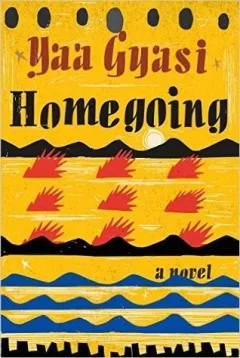
Homegoing

By Yaa Gyasi

Beginning in eighteenth-century Ghana, Homegoing follows two branches of one family whose histories divide before its members know they are related. Effia becomes the wife of a British officer at Cape Coast Castle, while her half sister, Esi, is imprisoned below and transported into American slavery. Yaa Gyasi then moves through successive generations in alternating chapters, tracing lives shaped by the slave trade, British colonial power, racial slavery in the United States, convict leasing, migration, segregation, and their modern consequences. Each character receives a concentrated story, yet together those stories form a family saga spanning roughly 250 years. The novel’s central achievement is to make historical inheritance visible without reducing descendants to symbols of suffering. Love, ambition, complicity, estrangement, and survival remain intensely personal even as institutions limit what each person can choose. Homegoing presents history not as a finished past but as a fo…

View book

Related category

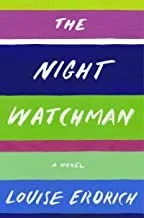
The Night Watchman

A Novel

By Louise Erdrich

In 1953, Thomas Wazhashk works nights at a jewel-bearing factory near North Dakota’s Turtle Mountain Reservation while serving as a tribal council leader. When Congress promotes a policy presented as Native “emancipation,” Thomas recognizes its real danger: ending federal obligations, weakening tribal sovereignty, and exposing his community’s remaining land and institutions to dissolution. He begins organizing a resistance that must carry local testimony all the way to Washington, D.C. Alongside this political struggle, young factory worker Patrice Paranteau travels to Minneapolis in search of her missing sister, Vera, encountering an urban world of danger, exploitation, and uneasy possibility. Through these intersecting stories, Louise Erdrich portrays a community defending itself through paperwork, memory, humor, kinship, labor, and spiritual endurance. Inspired by the life and letters of Erdrich’s grandfather, Patrick Gourneau, the novel transforms an often-overlooked chapter of fe…

View book

Related category

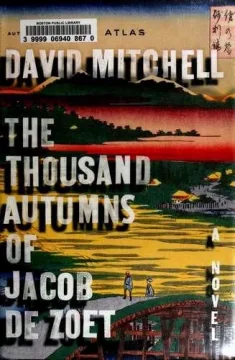
The Thousand Autumns of Jacob de Zoet

By David Mitchell

In 1799, Jacob de Zoet arrives at Dejima, the tightly controlled Dutch trading post in Nagasaki Harbor, intending to earn enough money to marry his fiancée at home. Employed as a clerk, he is expected to investigate corrupt accounts without becoming entangled in the colony’s rivalries. His plans change after he meets Orito Aibagawa, a gifted Japanese midwife and medical student whose intelligence attracts him across formidable boundaries of language, law, class, and custom. When Orito is taken to an isolated religious estate governed by the powerful Lord Enomoto, the novel widens from commercial intrigue and constrained courtship into a darker struggle over coercion, belief, and political influence. David Mitchell uses Jacob’s moral awakening, Orito’s fight for autonomy, and interpreter Uzaemon Ogawa’s divided loyalties to explore contact between societies that exchange goods and knowledge while remaining deeply suspicious of one another.

View book

Related category

The Fifth Season

By N. K. Jemisin

On the continent called the Stillness, civilization has been shaped by recurring geological catastrophes known as Fifth Seasons. Communities survive through rigid planning, inherited rules, and the exploitation of orogenes—people capable of sensing and manipulating thermal and seismic energy. When a massive rift threatens to produce an exceptionally long Season, Essun discovers that her husband has murdered their young son and fled with their daughter. Her pursuit unfolds alongside the stories of Damaya, a frightened child taken for training, and Syenite, an ambitious young orogene sent on an imperial assignment. Through these intertwined lives, N. K. Jemisin examines oppression, survival, parenthood, trauma, and the dangerous bargain between social usefulness and freedom. The result is both an apocalyptic journey and a structural mystery, using speculative geology and intimate human loss to ask what happens when a civilization depends upon the people it dehumanizes.

View book

Related category

Ficciones

By Jorge Luis Borges , Anthony Kerrigan , John Sturrock

Ficciones is Jorge Luis Borges's best-known book, a compact set of tales that turned philosophical puzzles into fiction. A secret encyclopedia leaks an invented planet into the real world. A minor author sets out to rewrite a famous novel word for word. A universe is imagined as an endless library, and a detective chases a killer through a geometry of clues. Borges often writes as a scholar, critic or witness rather than a conventional storyteller, and that choice shapes the whole book. Among short story collections, few have had so much influence on later writers worldwide. This Everyman's Library hardcover adds an introduction by John Sturrock and presents the stories in English.

View book

Related category

Breakfast of Champions

By Kurt Vonnegut

Breakfast of Champions is Kurt Vonnegut's 1973 satirical novel about two lonely older men heading for a collision in the fictional town of Midland City, Ohio. Kilgore Trout is an obscure science fiction writer. Dwayne Hoover is a wealthy Pontiac dealer whose mind is coming apart. Vonnegut appears in his own story as its creator. He uses plain language, his own marker-style drawings and abrupt asides to treat American myths about progress, race, money and violence as stories that people absorb and then act out. The book is short, strange, funny and at times disturbing. It is one of the books that make you think hardest about free will, mental illness and the narratives that shape behavior. This profile covers the Dell mass-market paperback edition.

View book

Articles in this category

No published articles are currently connected to this category in this language.