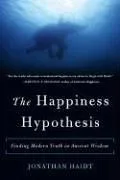
The Happiness Hypothesis
Finding Modern Truth in Ancient Wisdom
In The Happiness Hypothesis, social psychologist Jonathan Haidt examines enduring claims about happiness, virtue, love, adversity, self-command, and meaningful living. Rather than accepting ancient wisdom as timeless truth—or dismissing it as obsolete—he compares ideas drawn from religious and philosophical traditions with findings from psychology, neuroscience, and evolutionary thought. The book begins with the divided mind, memorably represented as a conscious rider attempting to guide a much larger elephant of automatic feeling and intuition. It then moves outward into reciprocity, self-serving judgment, relationships, circumstances, moral development, sacredness, and purpose. Haidt’s central conclusion is that flourishing is not produced by introspection or pleasure alone. It emerges through a workable alignment among temperament, habits, relationships, commitments, values, and social life. The result is an accessible investigation of what ancient traditions understood about human…