WebToTell

Books

Discover published books from independent authors and publishers.

Explore the library

Find your next book

253 unique books found Books may appear in more than one category.

The Seven Deaths of Evelyn Hardcastle book cover

The Seven Deaths of Evelyn Hardcastle

By Stuart Turton

At Blackheath, a decaying English country estate, a house party is approaching the moment when Evelyn Hardcastle will die. Aiden Bishop must identify her killer if he hopes to escape—but he is trapped in a repeating day and awakens each time inside a different guest. Every host gives him new access, abilities, weaknesses, and prejudices, turning detection into a struggle over perspective as well as evidence. Meanwhile, rival investigators pursue their own freedom, a murderous footman stalks the estate, and Aiden’s missing memories conceal another mystery. Stuart Turton combines the clue-driven architecture of a country-house whodunit with a speculative time loop and body-swapping narrative. The result is an intricate puzzle about identity, observation, guilt, punishment, and whether people can become more than the worst things they have done.


View The Seven Deaths of Evelyn Hardcastle

Beach Read book cover

Beach Read

By Emily Henry

January Andrews retreats to a Lake Michigan beach house after her father’s death leaves her grieving, financially strained, and unable to write the hopeful romances on which her career depends. Her summer becomes more complicated when she discovers that her neighbor is Augustus Everett, a successful literary novelist and former college rival facing his own creative impasse. To break their stalemate, the two agree to exchange fictional territory: Gus will attempt an upbeat novel, while January tackles a darker story. Their competing research trips draw them beyond easy assumptions about each other’s work—and into a relationship neither planned. Beneath its playful writerly premise, Beach Read explores what happens when familiar stories about love, family, and artistic seriousness stop feeling reliable. Emily Henry combines professional rivalry and romantic tension with a reflective account of bereavement, disillusionment, and the difficult choice to remain open to happiness.

View Beach Read

Dune book cover

Dune

By Frank Herbert

On Arrakis, the only source of the consciousness-altering spice melange, control of ecology is inseparable from control of empire. When House Atreides receives authority over the desert planet, young Paul Atreides enters a trap shaped by imperial politics, family rivalry, economic dependence, and ancient schemes. Betrayal drives Paul and his mother, Jessica, into the desert, where the Fremen have built a demanding culture around water scarcity and dreams of planetary transformation. Paul’s unusual training and emerging prescience make him valuable to competing powers—and dangerous to himself. Dune combines dynastic conflict, survival adventure, religious mythmaking, and ecological speculation. Its deeper tension lies in Paul’s rise: the abilities that help him resist oppression may also create a leader whose legend unleashes consequences beyond his control. The novel asks readers to distrust simple heroic narratives even while constructing one of science fiction’s most influential exa…

View Dune

Pedagogy of the Oppressed book cover

Pedagogy of the Oppressed

By Paulo Freire

50th Anniversary Edition

Paulo Freire’s Pedagogy of the Oppressed examines education as a field where social power is either reproduced or challenged. Freire criticizes the “banking” model, in which teachers treat learners as passive containers for authorized knowledge. He proposes instead a dialogical, problem-posing education rooted in learners’ experience and directed toward critical understanding of the world. Central to the book is praxis: the continuing union of reflection and action through which people can recognize oppression and participate in transforming the conditions that sustain it. Freire insists that liberation cannot be delivered to marginalized people as a gift; it must be developed with them as thinking and acting subjects. Moving from an account of dehumanization to contrasting theories of oppressive and liberatory cultural action, the book connects classroom relationships with wider struggles over authority, knowledge, and political agency. It remains a foundational work of critical peda…

View Pedagogy of the Oppressed

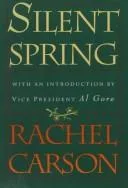
Silent Spring book cover

Silent Spring

By Rachel Carson

Silent Spring investigates the ecological and human consequences of widespread synthetic-pesticide use in mid-twentieth-century America. Rachel Carson follows chemicals such as DDT beyond the moment of application, tracing how persistent poisons move through soil and water, enter food chains, accumulate in living tissue, and injure organisms that were never their intended targets. Birds provide the book’s most memorable warning, but Carson’s argument encompasses insects, fish, mammals, plants, and human beings. She also examines the institutions behind chemical control: government eradication campaigns, commercial promotion, limited public consent, and regulatory systems that treated environmental harm as secondary to immediate results. Rather than demanding the abandonment of every pesticide, Carson argues against indiscriminate use and for careful research, selective intervention, biological controls, and public accountability. Published in 1962, the book transformed a technical dis…

View Silent Spring

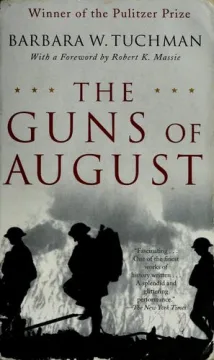
The Guns of August book cover

The Guns of August

By Barbara W. Tuchman

Barbara W. Tuchman reconstructs the opening of the First World War, moving from the assumptions and military plans formed before 1914 to the German advance through Belgium and France, the Allied retreat, and the Battle of the Marne. Her central concern is not simply who won or lost particular engagements. She examines how rigid timetables, institutional habits, personal rivalries, faulty intelligence, nationalism, and misplaced confidence narrowed the choices available to political and military leaders. The result is a closely observed account of strategy colliding with reality. Although concentrated chiefly on Europe’s western theater, the book also considers Russia’s invasion of East Prussia and the resulting pressures on German planning. Published in 1962, it became an influential work of narrative history and received the 1963 Pulitzer Prize in General Nonfiction. Its vivid storytelling remains compelling, while its interpretations are best read alongside later scholarship on the…

View The Guns of August

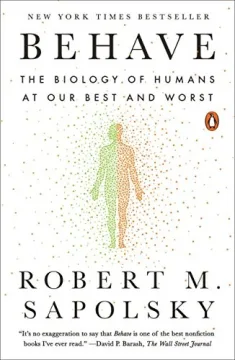
Behave book cover

Behave

By Robert M. Sapolsky

The Biology of Humans at Our Best and Worst

Why can the same species commit calculated cruelty, protect strangers, cooperate at enormous scale, and sacrifice for principles? In Behave, neuroendocrinologist and primatologist Robert M. Sapolsky investigates human conduct by tracing its causes backward through time. He begins with neural activity in the instant before an act, then moves through sensory cues, hormones, earlier experiences, childhood development, genes, culture, and evolutionary history. This structure allows him to challenge explanations that isolate a single cause—testosterone, an aggressive brain region, a supposed “violence gene,” upbringing, or social environment. Behavior instead emerges from interacting biological and social processes whose effects depend on context. Sapolsky applies this framework to empathy, hierarchy, competition, tribalism, prejudice, punishment, war, reconciliation, and moral responsibility. The result is a broad scientific synthesis that treats humanity’s generosity and brutality not as…

View Behave

The Lost City of Z book cover

The Lost City of Z

By David Grann

A Tale of Deadly Obsession in the Amazon

In 1925, British explorer Percy Harrison Fawcett entered Brazil’s Mato Grosso with his son Jack and Jack’s friend Raleigh Rimell. They were searching for evidence of an ancient Amazonian society that Fawcett called “Z.” None returned. David Grann reconstructs the expedition, the career that led Fawcett toward it, and the succession of investigators and adventurers who tried to solve the disappearance. He also follows Fawcett’s trail himself, turning the investigation into a meeting point between biography, travel reporting, historical mystery, and archaeology. The result is not merely a survival story. It examines how imperial assumptions shaped exploration, why outsiders long underestimated Indigenous Amazonian societies, and how a powerful idea can consume both its originator and later seekers. Grann preserves the uncertainty surrounding Fawcett’s fate while showing that his broad conviction—that the Amazon once supported complex, settled communities—deserved more serious considerat…

View The Lost City of Z

Jonathan Strange & Mr Norrell book cover

Jonathan Strange & Mr Norrell

By Susanna Clarke

In an alternative version of early nineteenth-century England, magic survives mainly as an antiquarian subject discussed by gentlemen who cannot perform it. That changes when the private, possessive Gilbert Norrell proves that practical magic still exists. Seeking respectability and political influence, he takes English magic to London and offers his services during the Napoleonic Wars. His rise depends, however, on a secret bargain with a dangerous fairy. Jonathan Strange soon emerges as a second practicing magician. More intuitive, sociable, and adventurous than Norrell, Strange becomes first his pupil and then his rival. Their dispute over how magic should be studied, controlled, and restored draws in the Duke of Wellington, Lord Byron, the legendary Raven King, and people trapped by enchantments the magicians do not fully understand. Susanna Clarke combines historical fantasy, social comedy, Gothic unease, and an invented scholarly record to examine authority, ambition, knowledge,…

View Jonathan Strange & Mr Norrell

A History of God book cover

A History of God

By Karen Armstrong

The 4,000-Year Quest of Judaism, Christianity and Islam

Karen Armstrong traces changing ideas and experiences of God across Judaism, Christianity, and Islam, beginning in the ancient Near East and continuing through classical philosophy, medieval mysticism, the Reformation, the Enlightenment, modern atheism, and twentieth-century theology. Rather than attempting to prove or disprove God’s existence, the book examines how communities repeatedly reformulated the divine in response to intellectual, political, and spiritual change.

View A History of God

Red, White & Royal Blue book cover

Red, White & Royal Blue

By Casey McQuiston

A Novel

In Casey McQuiston’s romantic comedy, Alex Claremont-Diaz, the ambitious son of the president of the United States, has long regarded Britain’s Prince Henry as an aloof rival. After a public confrontation creates an international embarrassment, their families and advisers require them to perform a carefully managed friendship. Private messages and reluctant encounters gradually overturn Alex’s assumptions, and the staged reconciliation becomes a secret romance with consequences for a presidential election and the British monarchy. The novel combines an enemies-to-lovers courtship with an optimistic alternative version of contemporary politics. Beneath its banter and public-relations crises, it examines the tension between private identity and inherited duty. Alex and Henry must decide whether protecting powerful institutions is worth concealing themselves—and whether honesty can become a form of political as well as personal courage.

View Red, White & Royal Blue

The Smartest Kids in the World book cover

The Smartest Kids in the World

By Amanda Ripley

And How They Got That Way

Amanda Ripley investigates why students in some countries demonstrate stronger academic skills than their American counterparts—and what their schools, families, and societies do differently. Rather than treating education as a contest between abstract policy models, she follows three American exchange students attending schools in Finland, South Korea, and Poland. Their experiences reveal sharply contrasting systems: Finland emphasizes selective teacher preparation and professional autonomy; South Korea produces formidable results through an intensely competitive culture; and Poland illustrates how national reform can raise expectations within a relatively short period. Ripley connects these stories to international assessment data, interviews, classroom observations, and the experiences of foreign students in the United States. Her central concern is not intelligence in a narrow sense but whether schools expect young people to master demanding material. The result is an accessible w…

View The Smartest Kids in the World