WebToTell

Books

Discover published books from independent authors and publishers.

Explore the library

Find your next book

253 unique books found Books may appear in more than one category.

Hidden Valley Road book cover

Hidden Valley Road

By Robert Kolker

Inside the Mind of an American Family

Robert Kolker’s narrative nonfiction account follows Don and Mimi Galvin and their twelve children, a Colorado family in which six of the ten sons were diagnosed with schizophrenia. The book examines how severe mental illness altered relationships within the household while exposing the other children to instability, secrecy, violence, abuse, and uneven burdens of care. Alongside this intimate history, Kolker traces changing explanations of schizophrenia—from theories that blamed family dynamics, especially mothers, to biological and genetic models that treated families such as the Galvins as vital research subjects. Their participation in psychiatric studies links private suffering to a much larger scientific effort. The result is both a family chronicle and a history of modern psychiatry, attentive to the distance between scientific promise and what patients and relatives experience in everyday life.


View Hidden Valley Road

In the Woods book cover

In the Woods

By Tana French

In a Dublin suburb, twelve-year-old Adam Ryan entered the woods with two friends in 1984 and emerged alone, blood in his shoes and unable to remember what happened. Twenty years later, living as Rob Ryan and concealing his past, he is a detective on Dublin’s murder squad. When another twelve-year-old is killed near the same place, Rob and his partner, Cassie Maddox, take the case. The investigation brings him dangerously close to the childhood mystery that has shaped his identity. Tana French’s debut combines a police procedural with an intimate study of trauma, memory, friendship, and self-deception. The immediate murder supplies the investigative momentum, but the novel’s deeper tension comes from Rob’s unreliable narration and deteriorating judgment. Rather than treating detection as a clean path from evidence to certainty, the book examines what happens when an investigator’s need for personal answers collides with his professional responsibilities.

View In the Woods

The Innovators book cover

The Innovators

By Walter Isaacson

How a Group of Hackers, Geniuses, and Geeks Created the Digital Revolution

Walter Isaacson’s The Innovators traces the development of computers, software, semiconductors, personal computing, the internet, and the web through the people and teams behind them. Beginning with Charles Babbage and Ada Lovelace, the narrative moves through wartime computing, Bell Labs, the microchip, Silicon Valley, hobbyist culture, Microsoft, Apple, online communities, and the World Wide Web. Its central argument challenges the familiar image of the solitary inventor: transformative technologies usually emerge when theorists, engineers, programmers, entrepreneurs, institutions, and earlier generations exchange ideas. Isaacson also emphasizes the productive meeting of technical skill with imagination, design, and human needs. Written as a broad, character-driven history rather than a technical manual, the book explains how linked breakthroughs accumulated into the digital revolution and why collaboration, institutional culture, and the ability to turn concepts into usable systems…

View The Innovators

Never Let Me Go book cover

Never Let Me Go

By Kazuo Ishiguro

In an alternative late-twentieth-century England, Kathy H. looks back on her childhood at Hailsham, an isolated school where students were encouraged to make art, guard their health, and accept rules they only partly understood. Her memories center on Ruth and Tommy, the two friends with whom she forms a tense, enduring triangle of loyalty, rivalry, love, and regret. As Kathy’s recollections move from school to early adulthood, ordinary incidents acquire a darker meaning: the students have been created to supply organs to others, and their futures are severely limited. Rather than making technological speculation its main attraction, the novel studies how people build meaningful lives while inhabiting systems they cannot—or do not know how to—resist. Its quiet treatment of memory, mortality, social conditioning, and medical exploitation makes it both an intimate tragedy and an unsettling work of dystopian social fiction.

View Never Let Me Go

The Knowledge Gap book cover

The Knowledge Gap

By Natalie Wexler

The Hidden Cause of America's Broken Education System—and How to Fix It

Why do many children learn to pronounce written words yet struggle to understand increasingly complex texts? Natalie Wexler argues that a major cause lies in the way American elementary schools often teach reading comprehension: as a collection of general-purpose skills, such as identifying a main idea, rather than as an ability grounded in vocabulary and knowledge of the world. Combining classroom reporting, intellectual history, cognitive-science research, and education-policy analysis, she traces how content-light literacy instruction became widespread and why it particularly disadvantages children who cannot rely on home environments to supply missing background knowledge. The book also follows educators experimenting with coherent, content-rich curricula organized around subjects such as history, science, and the arts. Wexler’s larger claim is that curriculum is an equity issue: schools cannot narrow educational disparities unless they deliberately give every child sustained acce…

View The Knowledge Gap

A Time of Gifts book cover

A Time of Gifts

By Patrick Leigh Fermor

On Foot to Constantinople: From the Hook of Holland to the Middle Danube

In December 1933, eighteen-year-old Patrick Leigh Fermor began walking from the Hook of Holland toward Constantinople. A Time of Gifts follows the first portion of that journey through the Low Countries, Germany, Austria, Czechoslovakia, and toward Hungary. He moves between barns, inns, monasteries, workers’ homes, and aristocratic houses, observing landscapes and social worlds that would soon be transformed by dictatorship and war. Written more than four decades after the walk, the book combines youthful immediacy with an older writer’s historical knowledge. Rivers, buildings, songs, languages, legends, religious traditions, and chance encounters become routes into Europe’s layered past. The result is at once a travel narrative, a coming-of-age memoir, and an elegy for the cultural variety of interwar Central Europe. Its central achievement lies less in reaching a destination than in showing how attentive movement through unfamiliar places can turn geography into lived history.

View A Time of Gifts

The Great Influenza book cover

The Great Influenza

By John M. Barry

The Epic Story of the Deadliest Plague in History

John M. Barry’s The Great Influenza is a history of the 1918–1919 influenza pandemic, with particular attention to the United States. It follows the disease through military camps, cities, hospitals, laboratories, and public institutions while explaining why a modernizing society proved so vulnerable. Barry places the catastrophe within two intertwined stories: the transformation of American medical education and research, and the pressures created by World War I. Scientists struggled to identify an agent they could not yet see, physicians faced overwhelming numbers of patients without antiviral drugs or antibiotics, and officials often subordinated candid public communication to wartime priorities. The result is more than a chronicle of mass illness. It is an examination of scientific uncertainty, institutional capacity, political leadership, and public trust—forces that shape whether societies can recognize and contain a fast-moving emergency.

View The Great Influenza

Bury My Heart at Wounded Knee book cover

Bury My Heart at Wounded Knee

By Dee Brown

An Indian History of the American West

Dee Brown’s Bury My Heart at Wounded Knee recounts the conquest of the American West largely through the experiences and recorded words of Native peoples. Concentrating on the period from 1860 to 1890, it follows a succession of treaty negotiations, removals, wars, surrenders, killings, and reservation policies involving nations across the Plains, Southwest, Great Basin, and Northwest. Leaders including Little Crow, Red Cloud, Black Kettle, Sitting Bull, Crazy Horse, Chief Joseph, Captain Jack, and Big Foot emerge not as marginal figures in someone else’s frontier story but as political and military actors confronting invasion and dispossession. Brown ends with the killing at Wounded Knee, making it the culmination of a repeated pattern: federal promises yield to settler pressure, military force, and administrative control. Published in 1970, the book decisively challenged celebratory popular accounts of western expansion. It remains powerful and influential, though it is best read al…

View Bury My Heart at Wounded Knee

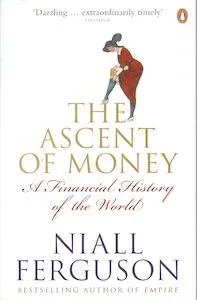
The Ascent of Money book cover

The Ascent of Money

By Niall Ferguson

A Financial History of the World

Niall Ferguson presents finance as a central force in world history rather than a technical activity confined to banks and trading floors. Moving from early money and credit through banking, government bonds, joint-stock companies, insurance, mortgages, and global capital flows, he connects financial institutions to war, empire, revolution, social policy, homeownership, and economic crisis. The book’s recurring claim is that financial innovation has expanded societies’ capacity to mobilize resources and distribute risk, while repeatedly generating new forms of instability and inequality. Ferguson builds his account around vivid cases—including the Medici, the Rothschilds, John Law’s Mississippi scheme, the development of insurance, and the financial relationship between China and the United States. The result is a broad narrative explaining both how modern finance acquired its power and why systems built on credit, confidence, and leverage remain vulnerable to panic and collapse.

View The Ascent of Money

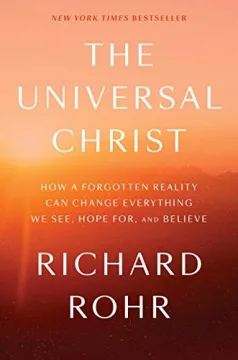
The Universal Christ book cover

The Universal Christ

By Richard Rohr

How a Forgotten Reality Can Change Everything We See, Hope For, and Believe

In The Universal Christ, Franciscan teacher Richard Rohr distinguishes Jesus of Nazareth, a historical person, from “Christ,” which he understands as God's presence disclosed throughout creation. Jesus does not become less important in this account; rather, Rohr presents him as the concrete, personal revelation of a divine reality that precedes and exceeds one life in history. Drawing on biblical texts, Christian mysticism, Franciscan spirituality, theology, psychology, and reflections on nature and suffering, the book asks readers to recognize the sacred in matter, other people, and ordinary experience. Rohr connects this incarnational vision with contemplation, compassion, inclusion, and a less punitive understanding of salvation. The result is an accessible work of constructive Christian theology that challenges sharply divided categories such as sacred and secular, spirit and matter, insider and outsider. Its interpretation is intentionally expansive and differs from some conventi…

View The Universal Christ

The Water Will Come book cover

The Water Will Come

By Jeff Goodell

Rising Seas, Sinking Cities, and the Remaking of the Civilized World

In The Water Will Come, environmental journalist Jeff Goodell investigates how rising seas will alter coastlines, cities, economies, and patterns of human settlement. Traveling from Miami and New York to Venice, Lagos, the Netherlands, the Marshall Islands, and vulnerable military installations, he connects climate science with the decisions being made by engineers, politicians, property owners, and residents. The book explains how warming water and melting land ice raise sea levels, but its principal concern is social: what happens when roads, homes, drinking-water systems, cultural landmarks, and entire communities can no longer be defended at an acceptable cost? Goodell presents adaptation as an unavoidable process involving engineering, finance, migration, and political conflict. Published in 2017, the book is both a report from places already confronting recurrent flooding and an examination of the difficult choices that coastal societies face as the boundary between land and sea…

View The Water Will Come

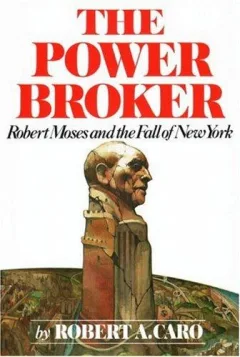
The Power Broker book cover

The Power Broker

By Robert A. Caro

Robert Moses and the Fall of New York

Robert A. Caro’s monumental biography examines how Robert Moses transformed New York’s physical landscape while building a political empire largely insulated from voters. Following Moses from idealistic reformer to dominant public official, Caro shows how command of legislation, public authorities, patronage, toll revenue, and overlapping appointments enabled one unelected man to influence parks, highways, bridges, housing, and urban renewal for decades. The book gives substantial attention to the achievements associated with that power, including beaches, parkways, playgrounds, and major infrastructure. Its central concern, however, is the human and democratic cost: displaced neighborhoods, weakened institutions, racial and class inequalities, and a transportation system oriented toward automobiles rather than mass transit. More than a biography, The Power Broker is an investigation of how power is acquired, concealed, exercised, and eventually lost—and of how governmental machinery…

View The Power Broker