WebToTell

Books

Discover published books from independent authors and publishers.

Explore the library

Find your next book

253 unique books found Books may appear in more than one category.

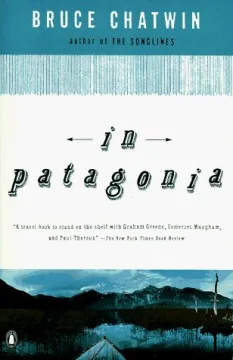
In Patagonia book cover

In Patagonia

By Bruce Chatwin

Bruce Chatwin’s In Patagonia follows a journey through the southern regions of Argentina and Chile, but it is neither a practical guide nor a continuous record of an itinerary. Chatwin assembles the book from brief encounters, historical digressions, family legends, archival traces, and sharply observed landscapes. A childhood memory of a mysterious scrap of animal skin—said to come from a prehistoric creature—provides the journey with its initial quest. Along the way, Chatwin investigates Welsh settlement, Indigenous displacement, European migration, labor unrest, vanished outlaws, eccentric colonists, and stories attached to remote houses and settlements. The result is a mosaic in which Patagonia becomes both a geographical region and a repository of exile, longing, violence, and reinvention. First published in 1977, the book became influential for its compressed, episodic approach to travel writing and its deliberate movement between reportage, oral history, literary reconstruction…


View In Patagonia

The Three-Body Problem book cover

The Three-Body Problem

By Cixin Liu

During China’s Cultural Revolution, the persecution of scientists shapes astrophysicist Ye Wenjie’s judgment of humanity and eventually connects her to a secret installation searching for extraterrestrial intelligence. Decades later, nanotechnology researcher Wang Miao encounters inexplicable experimental results, a disturbing countdown, and a virtual world governed by wildly unstable celestial cycles. His investigation—with the blunt, observant police officer Shi Qiang—reveals that these mysteries belong to a conflict extending far beyond Earth. The Three-Body Problem combines historical trauma, scientific investigation, conspiracy, and first-contact fiction. Its central threat is not simply the arrival of another civilization, but humanity’s divided response to that possibility. Some see extraterrestrial intervention as extinction; others welcome it as judgment or rescue. Through this division, Cixin Liu asks whether technological intelligence produces wisdom, whether despair can be…

View The Three-Body Problem

The Shame of the Nation book cover

The Shame of the Nation

By Jonathan Kozol

The Restoration of Apartheid Schooling in America

Jonathan Kozol examines the renewed racial segregation of American public schools and the unequal educational conditions accompanying it. Drawing on visits to nearly sixty schools, especially in large urban systems, he combines classroom observation, conversations with children and educators, historical reflection, and policy criticism. His argument extends beyond disparities in buildings or budgets: racially isolated schools are often subjected to rigid discipline, scripted instruction, relentless test preparation, reduced arts and humanities offerings, and assumptions about children’s future economic roles that affluent communities would resist. The book places these conditions against the unfulfilled promise of Brown v. Board of Education and challenges claims that standards and accountability can compensate for unequal opportunities. Its central concern is moral as well as institutional: what does a democracy reveal about itself when it accepts profoundly different forms of school…

View The Shame of the Nation

Democracy in Chains book cover

Democracy in Chains

By Nancy MacLean

The Deep History of the Radical Right’s Stealth Plan for America

Democracy in Chains is Nancy MacLean’s history of the ideas, institutions, and donors that she argues transformed the American libertarian right into a campaign to restrict majority rule. Its central figure is James McGill Buchanan, the economist associated with public choice theory and constitutional political economy. MacLean follows his career from Virginia’s battles over school desegregation through the growth of university centers and donor-supported policy organizations, culminating in his relationship with Charles Koch’s political network. Her central contention is that an organized movement sought not merely to win elections but to rewrite governing rules so that taxation, regulation, unions, public education, and social programs would become harder for popular majorities to sustain. The book connects intellectual history to practical politics, asking how private wealth can reshape democratic institutions. It is also a sharply contested interpretation: scholars have disputed M…

View Democracy in Chains

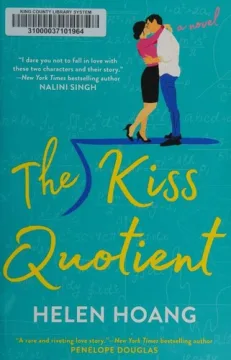
The Kiss Quotient book cover

The Kiss Quotient

By Helen Hoang

Stella Lane is highly accomplished at finding patterns in economic data but feels far less certain about dating and physical intimacy. Convinced that she can approach the problem through structured practice, she hires Michael Phan, an escort who accepts the arrangement while carrying financial responsibilities and private ambitions of his own. Their carefully defined lessons soon become complicated by desire, affection, and the widening gap between what each person feels and what each believes they deserve. Helen Hoang’s contemporary romance uses this transactional beginning to examine consent, communication, autistic experience, cultural identity, family obligation, and shame. Alternating attention between Stella and Michael, the novel gives both partners substantial emotional obstacles rather than treating either as the other’s solution. Its central question is not whether love can be calculated, but whether two people accustomed to protecting themselves can trust what cannot be mad…

View The Kiss Quotient

The Case for God book cover

The Case for God

By Karen Armstrong

Karen Armstrong presents a wide-ranging intellectual history of how human beings have approached God, sacred reality, and religious knowledge. Moving from Paleolithic ritual through ancient philosophy, Judaism, Christianity, Islam, medieval theology, the scientific revolution, the Enlightenment, modern atheism, and fundamentalism, she argues that religion was traditionally understood less as assent to factual propositions than as a disciplined way of life. Ritual, ethical conduct, contemplation, myth, and compassion were practices through which people sought transformation and transcendence. Central to her account is the apophatic tradition: the recognition that ultimate reality exceeds literal description and conceptual mastery. Armstrong contends that modern believers and critics often share an overly rationalized picture of God, treating religious language as if it were scientific explanation. The book therefore makes its “case” not by proving a supernatural being, but by recoverin…

View The Case for God

The Priory of the Orange Tree book cover

The Priory of the Orange Tree

By Samantha Shannon

Samantha Shannon’s expansive epic fantasy follows four people whose divided societies must confront the return of an ancient draconic enemy. In Inys, Queen Sabran Berethnet faces pressure to preserve a royal line believed to protect the world, while Ead Duryan secretly guards her on behalf of the hidden Priory of the Orange Tree. Across the sea, Tané trains to become a dragonrider in a culture that reveres water-linked dragons, and the exiled alchemist Niclays Roos searches for a route back to influence. Their stories expose incompatible accounts of a foundational dragon-slaying legend—and the political and religious structures built upon those accounts. Combining court intrigue, a sapphic central romance, competing faiths, magical artifacts, sea voyages, and large-scale conflict, the novel reworks heroic fantasy around women who act as rulers, warriors, scholars, and makers of history.

View The Priory of the Orange Tree

The Righteous Mind book cover

The Righteous Mind

By Jonathan Haidt

Why Good People Are Divided by Politics and Religion

Why do sincere, decent people reach sharply opposed conclusions about politics, religion, and morality? Social psychologist Jonathan Haidt argues that moral judgment usually begins with rapid intuition, while conscious reasoning often arrives afterward to explain or defend what already feels right. He then presents morality as a plural system: people respond to several concerns—including care, fairness, loyalty, authority, sanctity, and liberty—but cultures and political groups assign them different weight. The final part examines humanity’s capacity to form cohesive groups, proposing that the same moral instincts that make cooperation, institutions, and religious communities possible can also produce tribalism and hostility. Combining psychological research, evolutionary argument, anthropology, political analysis, and memorable metaphors, The Righteous Mind offers a framework for interpreting disagreement without assuming that one’s opponents are merely ignorant or malicious. Its cen…

View The Righteous Mind

The Amazing Adventures of Kavalier & Clay book cover

The Amazing Adventures of Kavalier & Clay

By Michael Chabon

A Novel

Beginning in 1939, Michael Chabon’s historical novel brings together Josef “Joe” Kavalier, a Jewish artist who has escaped Nazi-occupied Prague, and his Brooklyn cousin, Sammy Klayman, who adopts the professional name Sam Clay. Their complementary talents—Joe’s visual imagination and Sammy’s instinct for stories—produce the Escapist, a superhero whose battles transform private longings into colorful public fantasy. Success in the emerging comic-book business offers money, recognition, and a symbolic weapon against fascism, but it cannot rescue Joe’s family or release either cousin from grief, fear, secrecy, and compromise. Moving through wartime New York and beyond, the novel links the rise of American superhero comics with refugee experience, Jewish identity, artistic ownership, queer life under repression, and the uneasy promise of reinvention. Its central insight is that escape can be necessary and creative without ever being complete.

View The Amazing Adventures of Kavalier & Clay

The Story of Art book cover

The Story of Art

By E. H. Gombrich

E. H. Gombrich’s The Story of Art is an illustrated introduction to the development of visual art, especially the Western tradition, from prehistoric image-making and the ancient Mediterranean world to modernism and late twentieth-century debates. Rather than treating art history as a procession of isolated masterpieces, Gombrich asks what problems artists faced, what purposes their works served, and how inherited conventions changed through experiment. His narrative gives particular attention to representation: the long effort to render bodies, space, light, movement, and emotion convincingly, followed by modern artists’ challenges to naturalism. Architecture, sculpture, and painting appear within religious, civic, courtly, and commercial settings. The book’s clarity and close attention to individual works make it a durable entry point into art history. Its account is not a balanced global survey, however; Europe dominates, while women artists and many non-Western traditions receive…

View The Story of Art

The Man Who Knew book cover

The Man Who Knew

By Sebastian Mallaby

The Life and Times of Alan Greenspan

Sebastian Mallaby’s biography follows Alan Greenspan from a statistics-obsessed childhood and early career as a jazz musician through economic consulting, Republican politics, and more than eighteen years as chair of the Federal Reserve. Its central concern is not simply whether Greenspan was a brilliant policymaker or a principal architect of financial disaster. Mallaby instead examines the contradiction between Greenspan’s ability to recognize economic danger and his reluctance to use public power against leverage, speculation, and asset bubbles. The result is simultaneously a life story, an institutional history of the Federal Reserve, and an account of the transformation of American finance after World War II. By tracing Greenspan’s encounters with Ayn Rand, Richard Nixon, Gerald Ford, Ronald Reagan, and successive presidential administrations, the book shows monetary policy as a product of political calculation, incomplete evidence, personal influence, and ideas about markets. Gr…

View The Man Who Knew

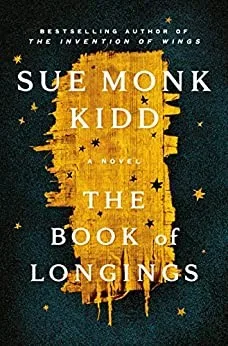
The Book of Longings book cover

The Book of Longings

By Sue Monk Kidd

A Novel

In first-century Galilee, Ana is a wealthy, intellectually restless young woman determined to write the stories of women whose lives have been neglected or erased. Her ambitions conflict with a family intent on arranging a profitable marriage and with a society that grants women little authority over their work, bodies, or futures. After meeting Jesus of Nazareth, Ana becomes his wife and enters a household far poorer than the one she has known. Their marriage unfolds amid domestic strain, Roman occupation, political resistance, and Jesus’s developing spiritual vocation. Ana’s own path eventually carries her from Sepphoris and Nazareth to Alexandria and a community of Jewish contemplatives. By imagining a fictional wife for Jesus, Sue Monk Kidd shifts attention from familiar sacred history to the contested question of who is permitted to leave a record. The novel treats longing, writing, and female solidarity as forms of resistance against disappearance.

View The Book of Longings