WebToTell

Books

Discover published books from independent authors and publishers.

Explore the library

Find your next book

254 unique books found Books may appear in more than one category.

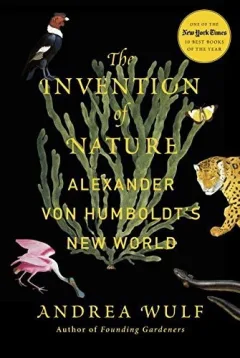
The Invention of Nature book cover

The Invention of Nature

By Andrea Wulf

Alexander von Humboldt's New World

Andrea Wulf’s biography restores Alexander von Humboldt to the center of nineteenth-century science and environmental thought. Following the Prussian naturalist from his constrained youth through expeditions in the Spanish Americas and Russia, the book shows how field observation, measurement, aesthetic response, and wide reading shaped his vision of nature as an interconnected whole. Wulf also traces his encounters with figures including Johann Wolfgang von Goethe, Aimé Bonpland, Simón Bolívar, and Thomas Jefferson. The later chapters move beyond Humboldt’s lifetime to examine his influence on Charles Darwin, Henry David Thoreau, George Perkins Marsh, Ernst Haeckel, and John Muir. The result is both an adventure-filled life and a history of ideas: an account of how connections among climate, geography, plants, animals, and human activity became central to understanding the living world—and why Humboldt’s warnings about environmental destruction remain significant.

View The Invention of Nature

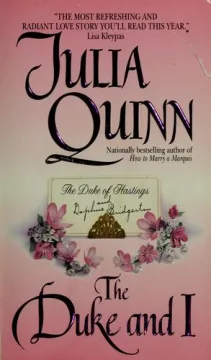
The Duke and I book cover

The Duke and I

By Julia Quinn

In Regency-era London, Daphne Bridgerton wants a loving marriage but finds that eligible men treat her more like a friend than a prospective wife. Simon Basset, the newly returned Duke of Hastings, has the opposite problem: ambitious families relentlessly pursue him, though he has privately resolved never to marry or father children. They arrange a false courtship that promises to make Daphne appear more desirable while discouraging Simon’s unwanted admirers. Predictably, the performance begins to produce real intimacy. Their attraction, however, cannot erase Simon’s childhood wounds or Daphne’s limited understanding of marriage and sexuality. What begins as a witty social bargain consequently develops into a more difficult story about trust, family expectations, reproductive choice, and the harm caused by secrecy. The novel launches Julia Quinn’s Bridgerton series by combining a central romance with the lively dynamics of the large Bridgerton family and the sharp observations of anon…

View The Duke and I

The Name of the Wind book cover

The Name of the Wind

By Patrick Rothfuss

The Kingkiller Chronicle: Day One

At a quiet inn in a troubled corner of the world, an unassuming man called Kote is revealed as Kvothe, the brilliant and notorious figure at the center of countless contradictory legends. Persuaded to tell his own story, Kvothe recounts his childhood among the Edema Ruh, his early instruction under the arcanist Abenthy, a devastating encounter with the mysterious Chandrian, and his struggle to survive in Tarbean before earning admission to the University. There he pursues knowledge, music, status, and clues about the forces that destroyed his family. The Name of the Wind combines a coming-of-age narrative with a framed confession, continually asking how much of a celebrated life is truth, performance, memory, or myth. Its distinctive appeal lies less in a conventional campaign against evil than in the making—and possible unmaking—of a legendary identity.

View The Name of the Wind

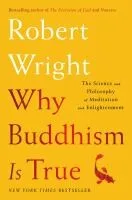
Why Buddhism Is True book cover

Why Buddhism Is True

By Robert Wright

The Science and Philosophy of Meditation and Enlightenment

Robert Wright argues that selected Buddhist teachings offer an unusually accurate diagnosis of ordinary human experience. Natural selection, he explains, shaped minds to pursue rewards, avoid threats, defend status, and divide the social world into allies and enemies—not necessarily to perceive reality impartially or remain content. This evolutionary framework helps him interpret Buddhist ideas about suffering, impermanence, attachment, not-self, and the deceptive character of perception. Drawing on psychology, evolutionary theory, philosophy, personal experience, and mindfulness practice, Wright presents meditation as a way to observe feelings without automatically obeying them. His claim is deliberately narrower than the title suggests: he does not defend every Buddhist doctrine or supernatural belief. Instead, he makes a secular case that central Buddhist insights into craving, cognition, and identity illuminate why people suffer and how greater awareness might produce clarity, equ…

View Why Buddhism Is True

The Expanding Circle book cover

The Expanding Circle

By Peter Singer

Ethics, Evolution, and Moral Progress

Why do human beings help one another, and how can concern extend beyond family, community, or nation? Peter Singer approaches these questions by bringing evolutionary accounts of altruism into conversation with moral philosophy. Biology, he argues, helps explain the origins and limits of many social impulses: natural selection can favor assistance to relatives, reciprocal cooperation, and loyalty within groups. Yet an evolutionary explanation of conduct does not by itself determine how anyone ought to live. Singer assigns a decisive role to reason, whose demand for consistency can expose the arbitrariness of privileging one’s own group simply because it is one’s own. The resulting image is an expanding circle of moral concern, potentially widening from kin and neighbors to distant strangers and nonhuman animals. Originally published amid intense debate over sociobiology, the book remains a compact argument about human nature, impartiality, and whether moral progress is possible.

View The Expanding Circle

The Everything Store book cover

The Everything Store

By Brad Stone

Jeff Bezos and the Age of Amazon

Brad Stone’s The Everything Store traces Amazon’s transformation from an online bookseller into a company determined to sell, build, and operate nearly everything. Its central figure is founder Jeff Bezos, whose appetite for expansion shapes the company’s strategy, demanding culture, technological ambitions, and dealings with competitors. Stone follows Amazon through early funding crises, the dot-com collapse, the development of its fulfillment network, and major initiatives such as Marketplace, Amazon Prime, the Kindle, and Amazon Web Services. The result is both a company history and a portrait of a leader whose long-term thinking repeatedly pushed Amazon beyond conventional retail. Written before Amazon reached its later scale, the book is best read as an account of the formative decisions, conflicts, and management principles that established its trajectory—and as an investigation of the human and commercial costs accompanying relentless growth.

View The Everything Store

The Hating Game book cover

The Hating Game

By Sally Thorne

A Novel

Lucy Hutton and Joshua Templeman are executive assistants at Bexley & Gamin, a publishing company created by a merger whose unresolved tensions are embodied in their shared office. Lucy is personable, colorful, and eager to be liked; Joshua is controlled, intimidating, and seemingly impossible to please. Their mutual hostility has hardened into a daily ritual of staring contests, mimicry, insults, and strategic victories. When both become candidates for the same promotion, their private contest acquires professional consequences: each refuses to work beneath the other, and losing may mean leaving the company. Yet attraction increasingly disrupts Lucy’s certainty that she understands her rival. Told through her witty, intensely subjective perspective, Sally Thorne’s debut novel turns workplace competition into an enemies-to-lovers romantic comedy about misread signals, vulnerability, ambition, and the unstable boundary between antagonism and desire.

View The Hating Game

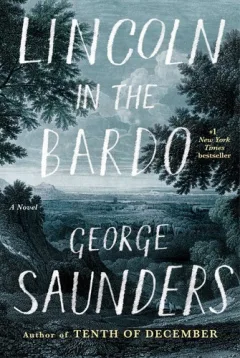
Lincoln in the Bardo book cover

Lincoln in the Bardo

By George Saunders

In February 1862, as the American Civil War enters a worsening phase, eleven-year-old Willie Lincoln dies of illness and is placed in a Georgetown cemetery. George Saunders builds his novel around the grief of Willie’s father, President Abraham Lincoln, and the voices of spirits who linger among the graves, unable or unwilling to accept their deaths. During one night, the child’s confusion, the president’s mourning, and the ghosts’ unfinished attachments converge. The story moves between supernatural testimony and documentary-looking fragments about the Lincolns, the war, and the night of Willie’s burial. Its unusual chorus turns private bereavement into a larger meditation on attachment, denial, compassion, and collective loss. Both historical and deliberately invented, the novel asks how people release what they love—and how sorrow might deepen a person’s sense of responsibility toward strangers.

View Lincoln in the Bardo

Arabian Sands book cover

Arabian Sands

By Wilfred Thesiger

Arabian Sands is Wilfred Thesiger’s account of his journeys through southern Arabia between 1945 and 1950, including two camel crossings of the Rubʿ al Khali, or Empty Quarter. Although the crossings supply the book’s physical drama, its deeper subject is the life Thesiger shared with his Bedouin companions: dependence on wells and camels, endurance of hunger and thirst, tribal obligations, hospitality, loyalty, raiding, and the constant judgment required for survival. Written after oil development and motor transport had begun transforming the region, the narrative also serves as an elegy for a social world Thesiger believed was disappearing. The book combines expedition narrative, portraiture, landscape description, and cultural observation. Its lasting interest lies in the tension between its unusually close record of mid-twentieth-century desert life and the unmistakably personal—and sometimes romanticizing—perspective through which that life is presented.

View Arabian Sands

When Breath Becomes Air book cover

When Breath Becomes Air

By Paul Kalanithi

Paul Kalanithi's posthumously published memoir follows his passage from literature student to neurosurgeon and, after a diagnosis of metastatic lung cancer at thirty-six, from physician to patient. Medicine had promised him a vocation at the border between biology and identity: neurosurgery could preserve life, but it also forced difficult judgments about what forms of life patients would consider worth living. Cancer makes those questions immediate and personal. Kalanithi must reconsider professional ambition, marriage, parenthood, time, and the meaning of action when the future can no longer be treated as predictable. The book does not offer a formula for accepting death. Instead, it examines how a person continues choosing and caring under radical uncertainty. A foreword by physician-writer Abraham Verghese places Kalanithi's unfinished work in context, while Lucy Kalanithi's epilogue recounts his final decline and gives the memoir an essential second perspective on illness, love,…

View When Breath Becomes Air

Piranesi book cover

Piranesi

By Susanna Clarke

Piranesi lives in the House, an apparently endless world of classical halls, monumental statues, birds, clouds, and seawater. He maps its spaces, predicts its dangerous tides, cares for its dead, and records his discoveries in journals. His only regular companion is the Other, a sharply contrasting figure who treats the House as the possible repository of secret knowledge. When signs suggest that another living person has entered this world, Piranesi begins examining inconsistencies in his records and gaps in his memory. What starts as an account of solitary exploration gradually becomes a mystery about identity, captivity, trust, and the uses of knowledge. Susanna Clarke combines a fantastical setting with the investigative momentum of a psychological mystery, making the narrator’s careful observations both the substance of the world and the means by which its hidden history can be recovered.

View Piranesi

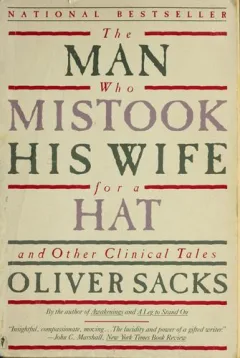
The Man Who Mistook His Wife for a Hat book cover

The Man Who Mistook His Wife for a Hat

By Oliver Sacks

And Other Clinical Tales

In this collection of twenty-four clinical narratives, neurologist Oliver Sacks examines people whose injuries, illnesses, and atypical neurological conditions have profoundly altered perception, memory, bodily awareness, language, impulse, or identity. The title case concerns Dr. P., a musician who can describe individual visual features yet cannot reliably recognize the objects and people before him. Other chapters consider severe amnesia, Tourette syndrome, loss of proprioception, phantom limbs, involuntary reminiscence, unusual artistic abilities, and distinctive forms of calculation and attention. Sacks is interested not only in locating an impairment but also in understanding the life constructed around it. Music, routine, imagination, faith, art, and personal relationships may become essential means of orientation. The result is an influential example of literary medical writing that presents neurology as a study of whole lives, while also raising enduring questions about patie…

View The Man Who Mistook His Wife for a Hat