WebToTell

Books

Discover published books from independent authors and publishers.

Explore the library

Find your next book

251 unique books found Books may appear in more than one category.

Seven Days in June book cover

Seven Days in June

By Tia Williams

A Novel

Eva Mercy has built a demanding life in Brooklyn as a successful writer of supernatural erotica and the single mother of a perceptive teenager. Her carefully managed world is disrupted when Shane Hall, an acclaimed and famously private literary novelist, appears at a publishing event. To everyone else, their meeting looks like an introduction. In reality, Eva and Shane shared an intense, formative week as troubled adolescents—and have carried its emotional consequences into adulthood. Their reunion unfolds over seven summer days, while flashbacks reveal the pain, attraction, and desperate coping strategies that first drew them together. As Eva and Shane reconsider what happened between them, the novel asks whether enduring love is enough without honesty, accountability, and recovery. Tia Williams combines a second-chance romance with an exploration of chronic pain, addiction, self-harm, Black literary culture, motherhood, inherited trauma, and the ways writers transform private experi…


View Seven Days in June

The End of Everything book cover

The End of Everything

By Katie Mack

(Astrophysically Speaking)

In The End of Everything (Astrophysically Speaking), theoretical astrophysicist Katie Mack examines five scientifically discussed ways the universe might meet its ultimate fate: the Big Crunch, heat death, the Big Rip, vacuum decay, and a cosmic bounce. Each possibility depends on unresolved questions about expansion, dark energy, gravity, quantum fields, and the earliest moments of cosmic history. Rather than treating these endings as disaster entertainment, Mack uses them to explain how cosmologists test theories about the universe as a whole. The result is both an introduction to modern cosmology and an exploration of scientific uncertainty. Mack distinguishes evidence-supported conclusions from increasingly speculative possibilities while showing how small changes in physical assumptions can produce radically different futures. Her informal humor makes the subject approachable without removing its intellectual or existential weight: even if humanity cannot influence the final dest…

View The End of Everything

Austerlitz book cover

Austerlitz

By W. G. Sebald

In Austerlitz, an unnamed narrator recounts his intermittent encounters with Jacques Austerlitz, an architectural historian whose composed intellectual life conceals a childhood he cannot remember. Sent from Prague to Britain on a Kindertransport in 1939, Austerlitz was raised by a Welsh minister and his wife under a different name and without knowledge of his Jewish family. Decades later, fragments of memory lead him through railway stations, libraries, archives, photographs, Prague, Terezín, and Paris as he attempts to reconstruct what was taken from him. Sebald turns this search into a meditation on historical catastrophe, exile, personal identity, and the uncertain authority of images and documents. Buildings and transport networks become repositories of suppressed history, while the novel’s long sentences and embedded photographs blur fiction, testimony, essay, and archival investigation. The result is both an intimate account of belated remembrance and a wider examination of how…

View Austerlitz

The Death and Life of the Great American School System book cover

The Death and Life of the Great American School System

By Diane Ravitch

How Testing and Choice Are Undermining Education

In this critique of American education reform, historian and former federal education official Diane Ravitch reassesses policies she once supported. She argues that standards-based reform lost its educational purpose when standards became inseparable from high-stakes testing, sanctions, and numerical targets. She also questions whether charter schools, school choice, mayoral control, private management, and business-style accountability can deliver the broad improvements their advocates promise. Drawing on federal policy and reform campaigns in cities including New York and San Diego, Ravitch examines how incentives can narrow curricula, encourage manipulation of results, destabilize schools, and weaken trust in teachers. The book is both a policy argument and an intellectual self-correction: Ravitch explains why she changed her mind about central elements of the reform movement. Her alternative emphasizes a coherent curriculum, knowledgeable teachers, strong neighborhood schools, app…

View The Death and Life of the Great American School System

The Checklist Manifesto book cover

The Checklist Manifesto

By Atul Gawande

How to Get Things Right

Modern professionals possess extraordinary knowledge, yet serious mistakes persist because knowledge must be applied amid expanding complexity, time pressure, specialization, and imperfect communication. In The Checklist Manifesto, surgeon and writer Atul Gawande argues that well-designed checklists can make demanding work more reliable without replacing judgment or expertise. Drawing on medicine, aviation, construction, disaster response, and investment, he examines how brief prompts help teams remember essential steps, exchange critical information, and prepare for predictable trouble. The book gives particular attention to hospital infections and the development and testing of the World Health Organization Surgical Safety Checklist. Its larger argument concerns professional culture: experts often resist simple procedural aids because they appear to diminish autonomy, but disciplined coordination can be as important as individual brilliance. Gawande presents the checklist not as a u…

View The Checklist Manifesto

The Origins of Totalitarianism book cover

The Origins of Totalitarianism

By Hannah Arendt

Hannah Arendt’s The Origins of Totalitarianism investigates how unprecedented systems of domination emerged from the political and social crises of modern Europe. Organized into three major parts—Antisemitism, Imperialism, and Totalitarianism—the book traces elements that converged in Nazi Germany and Stalin’s Soviet Union without presenting their rise as the inevitable result of a single cause. Arendt examines the weakening of the nation-state, the production of stateless and rightless populations, racial ideology, colonial violence, mass political organization, propaganda, secret police, and concentration camps. Her central claim is that totalitarianism cannot be understood as ordinary dictatorship enlarged in scale. It seeks to transform reality and human beings themselves through ideology and terror, destroying spontaneity, plurality, legal protection, and the distinction between fact and fiction. The book remains influential because it joins historical inquiry to political theory…

View The Origins of Totalitarianism

The Thousand Autumns of Jacob de Zoet book cover

The Thousand Autumns of Jacob de Zoet

By David Mitchell

In 1799, Jacob de Zoet arrives at Dejima, the tightly controlled Dutch trading post in Nagasaki Harbor, intending to earn enough money to marry his fiancée at home. Employed as a clerk, he is expected to investigate corrupt accounts without becoming entangled in the colony’s rivalries. His plans change after he meets Orito Aibagawa, a gifted Japanese midwife and medical student whose intelligence attracts him across formidable boundaries of language, law, class, and custom. When Orito is taken to an isolated religious estate governed by the powerful Lord Enomoto, the novel widens from commercial intrigue and constrained courtship into a darker struggle over coercion, belief, and political influence. David Mitchell uses Jacob’s moral awakening, Orito’s fight for autonomy, and interpreter Uzaemon Ogawa’s divided loyalties to explore contact between societies that exchange goods and knowledge while remaining deeply suspicious of one another.

View The Thousand Autumns of Jacob de Zoet

The Uninhabitable Earth book cover

The Uninhabitable Earth

By David Wallace-Wells

Life After Warming

In The Uninhabitable Earth, journalist David Wallace-Wells surveys the human consequences of a rapidly warming planet. Rather than treating climate change chiefly as a question of rising seas or endangered wildlife, he presents it as a force capable of reshaping food systems, public health, migration, conflict, economic life, politics, and culture. The book moves from physical dangers—including extreme heat, wildfire, water scarcity, ocean damage, and disease—to the social narratives and institutions through which people interpret those dangers. Its central contention is that climate disruption is neither remote nor confined to a single environmental problem: it is an all-encompassing condition created by human choices. Wallace-Wells writes in an intentionally alarming register, but he does not argue that catastrophe is predetermined. The range of possible futures remains politically contingent, making the book both a warning about cascading risks and an argument for collective agency.

View The Uninhabitable Earth

Ways of Seeing book cover

Ways of Seeing

By John Berger

Based on the BBC Television Series with John Berger

In Ways of Seeing, John Berger examines how social conventions, technology, ownership, gender, and commerce influence the interpretation of visual images. Beginning with the transformation caused by photographic reproduction, he argues that paintings no longer remain confined to a single place or ritual setting: they can be copied, cropped, enlarged, captioned, and combined with other images, changing what viewers think they mean. Berger then turns to the European nude, where he distinguishes between living in one’s body and being arranged for another person’s inspection. He also interprets oil painting as a visual language closely connected to property and possession, before comparing its legacy with the promises made by modern advertising. Combining written and image-only essays, the book teaches readers to question not merely what a picture depicts, but who controls its presentation, what interests its conventions serve, and how the viewer’s own circumstances participate in meaning.

View Ways of Seeing

The Box book cover

The Box

By Marc Levinson

How the Shipping Container Made the World Smaller and the World Economy Bigger

A standardized steel box might seem an unlikely agent of economic transformation, but Marc Levinson shows how container shipping reorganized the movement of goods and helped create the infrastructure of globalization. Beginning with Malcom McLean’s 1956 experiment aboard the Ideal-X, the book follows containerization through technical disputes, labor conflict, costly port reconstruction, military logistics, international standardization, and commercial expansion. Its subject is not merely an invention but an interconnected system of ships, cranes, trucks, railways, terminals, regulations, and business practices. Levinson explains how sharply lower freight-handling costs altered the location of factories and warehouses, weakened older waterfront economies, strengthened new ports, and enabled longer supply chains. The result is both a history of modern logistics and an argument about technological change: simple devices become revolutionary only when institutions, infrastructure, invest…

View The Box

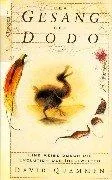
The Song of the Dodo book cover

The Song of the Dodo

By David Quammen

Island Biogeography in an Age of Extinctions

David Quammen uses islands—both literal and ecological—to explain how species originate, spread, persist, and disappear. Moving between evolutionary history, field reporting, scientific biography, and conservation debates, he traces island biogeography from the observations of nineteenth-century naturalists to the mathematical theories and reserve-design controversies of the twentieth century. Alfred Russel Wallace occupies a central place in this history, while later figures such as Robert MacArthur, Edward O. Wilson, Daniel Simberloff, and Jared Diamond show how island patterns became a framework for modern ecology. The book’s crucial shift is from oceanic islands to fragmented continents: forests, parks, and reserves surrounded by altered land can function as ecological islands. Their isolated populations become vulnerable to genetic decline, demographic accidents, invasive species, and habitat disruption. Expansive and cautionary, the book connects the intellectual history of evol…

View The Song of the Dodo

Kindred book cover

Kindred

By Octavia E. Butler

In 1976 California, Dana Franklin, a Black writer, is repeatedly and inexplicably transported to antebellum Maryland. Each journey places her near Rufus Weylin, a white ancestor whose survival is necessary for Dana’s own birth. What initially appears to be a series of rescues becomes prolonged exposure to the plantation on which Rufus is being formed by slavery’s habits of ownership, violence, and entitlement. Dana must protect him without accepting the system he represents, while also trying to help the enslaved people whose lives are bound to her family history. When her white husband, Kevin, is carried into the past with her, their marriage is tested by a society that assigns them radically unequal positions. Combining time travel, historical fiction, and the tradition of the slavery narrative, Kindred turns ancestry into an immediate physical crisis. Butler asks what it means to inherit a history that remains present in bodies, families, institutions, and relationships.

View Kindred