WebToTell

Books

Discover published books from independent authors and publishers.

Explore the library

Find your next book

254 unique books found Books may appear in more than one category.

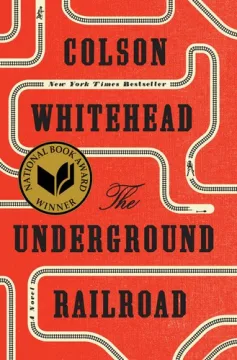
The Underground Railroad book cover

The Underground Railroad

By Colson Whitehead

A Novel

Cora, an enslaved young woman on a Georgia cotton plantation, accepts Caesar’s proposal that they flee north together. In Colson Whitehead’s central transformation of history, the Underground Railroad is not merely a clandestine network of people and routes: it is an actual subterranean railway. Cora’s passage from state to state becomes both a suspenseful pursuit and a journey through sharply different systems of racial control. Slave catcher Arnold Ridgeway follows her while each apparent refuge reveals another way that American institutions can exploit, confine, erase, or terrorize Black people. Combining historical fiction with allegory and speculative invention, the novel examines slavery’s violence, the instability of freedom, and the repeated reinvention of white supremacy. Its episodic geography reaches beyond a single decade, making Cora’s flight a larger reckoning with American history and the distance between national ideals and lived reality.
View The Underground Railroad

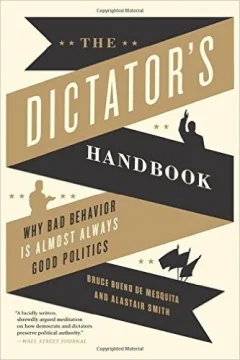
The Dictator's Handbook book cover

The Dictator's Handbook

By Bruce Bueno de Mesquita , Alastair Smith

Why Bad Behavior Is Almost Always Good Politics

The Dictator’s Handbook presents politics as a problem of survival rather than a contest between noble principles. Bruce Bueno de Mesquita and Alastair Smith argue that every leader—from an autocrat supported by a few generals to an elected president dependent on millions of voters—must maintain a coalition capable of keeping that leader in office. The size and replaceability of this coalition shape how rulers raise money, distribute benefits, tolerate corruption, provide public services, wage war, handle foreign aid, and respond to popular unrest. Small coalitions encourage private rewards for loyal insiders; large coalitions make broadly shared benefits more politically useful. Drawing examples from governments, municipalities, corporations, monarchies, and other organizations, the authors turn selectorate theory into an accessible framework for comparative politics. Their account is deliberately unsentimental: harmful conduct can be politically rational even when it is disastrous f…

View The Dictator's Handbook

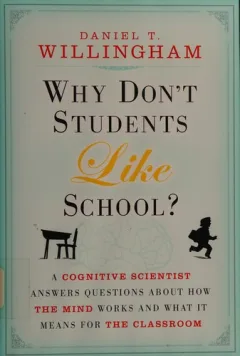
Why Don’t Students Like School? book cover

Why Don’t Students Like School?

By Daniel T. Willingham

A Cognitive Scientist Answers Questions About How the Mind Works and What It Means for the Classroom

Why Don’t Students Like School? explains classroom learning through cognitive psychology. Daniel T. Willingham begins with an apparent contradiction: people are curious, yet sustained thinking is slow, demanding, and often avoided. Students are most likely to engage when a problem is challenging enough to be satisfying but not so difficult that success seems remote. From that foundation, the book examines how prior knowledge supports reasoning and reading comprehension, why memory depends on what learners think about, why abstract ideas require concrete examples, and when practice helps. It also considers expertise, differences among learners, beliefs about intelligence, educational technology, and the mental demands placed on teachers. Rather than offering a single teaching method, Willingham presents cognitive principles and asks educators to adapt them to particular subjects and classrooms. The result is an accessible bridge between research on memory and thought and the daily work…

View Why Don’t Students Like School?

The Hare with Amber Eyes book cover

The Hare with Amber Eyes

By Edmund de Waal

A Hidden Inheritance

Edmund de Waal traces the history of the Ephrussis, a prosperous European Jewish banking family, by following an inherited collection of 264 Japanese netsuke—small carvings originally used as toggles with traditional clothing. The collection passes from the art-filled world of Charles Ephrussi in late nineteenth-century Paris to the family palace in Vienna, survives Nazi seizure after the 1938 Anschluss, and eventually travels with Ignace “Iggie” Ephrussi to postwar Tokyo. De Waal combines family memoir, cultural history, art history, travel, and archival investigation to ask what objects can preserve when wealth, homes, status, and lives are violently dispersed. The carvings do not provide a simple recovery of the past; instead, their survival exposes both the durability and the limitations of material memory. Through their changing settings and owners, the book turns one inheritance into a closely observed account of collecting, antisemitism, dispossession, migration, and remembranc…

View The Hare with Amber Eyes

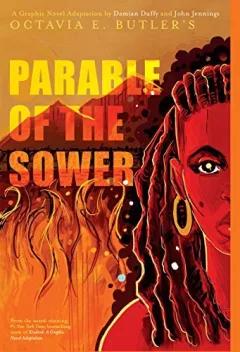
Parable of the Sower book cover

Parable of the Sower

By Octavia E. Butler

In a near-future California destabilized by climate disruption, extreme inequality, privatization, addiction, and failing public institutions, teenager Lauren Olamina recognizes that her walled neighborhood cannot remain safe. She also lives with hyperempathy, a condition that makes her physically experience the suffering she witnesses. When violence destroys her home, Lauren travels north among displaced people, concealing her vulnerability while gathering companions and testing the principles of Earthseed, the belief system she has begun to formulate. Told chiefly through Lauren’s dated journal entries, the novel combines a dangerous migration story with an inquiry into leadership, faith, adaptation, and collective survival. Butler’s future is frightening not because it depends on a single spectacular catastrophe, but because familiar social failures intensify and reinforce one another. The result is both dystopian science fiction and a coming-of-age novel about building purpose wit…

View Parable of the Sower

Justice book cover

Justice

By Michael J. Sandel

What's the Right Thing to Do?

Michael J. Sandel turns political philosophy into a sustained public argument about how people should live together. Beginning with vivid moral dilemmas and disputes over policy, he tests three broad approaches to justice: maximizing welfare, respecting freedom, and cultivating virtue or the common good. Utilitarianism, libertarianism, Immanuel Kant’s account of duty, John Rawls’s theory of fairness, and Aristotle’s purpose-centered ethics are introduced through questions about taxation, military service, markets, affirmative action, loyalty, and marriage. Sandel does more than survey competing schools of thought. He asks readers to uncover the moral assumptions beneath their political opinions and to decide whether a just society can remain neutral about the good life. The book’s enduring value lies in its method: difficult public controversies become occasions for reasoning with, and against, principles that may initially seem self-evident.

View Justice

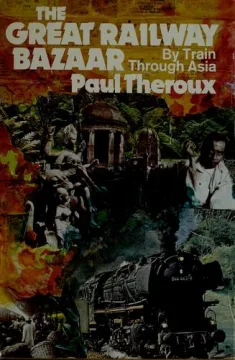
The Great Railway Bazaar book cover

The Great Railway Bazaar

By Paul Theroux

By Train Through Asia

In The Great Railway Bazaar, Paul Theroux recounts a four-month rail journey begun in London in 1973. Traveling east through Europe, Turkey, Iran, the Indian subcontinent, Southeast Asia, and Japan, he eventually returns across the Soviet Union on the Trans-Siberian Railway. The itinerary supplies the book's structure, but its real substance lies in railway compartments, stations, border crossings, delays, landscapes, and conversations with strangers. Theroux treats each train as a temporary society in which class, nationality, loneliness, prejudice, curiosity, and political tension become unusually visible. His approach is literary rather than instructional: he selects telling encounters and sharp impressions instead of offering a comprehensive account of every destination. The result is both a record of a vanished network of overland travel and an influential example of personality-driven travel writing. Its wit and observational force remain central to its appeal, while its judgmen…

View The Great Railway Bazaar

The World's Religions book cover

The World's Religions

By Huston Smith

Huston Smith introduces several of the world’s most influential religious traditions by asking what makes each one compelling to its adherents. Separate chapters consider Hinduism, Buddhism, Confucianism, Taoism, Islam, Judaism, Christianity, and traditions Smith groups under the historically common but now contested label “primal religions.” Rather than attempting an exhaustive institutional history, he concentrates on formative teachings, spiritual ideals, conceptions of reality, and paths of human transformation. The result is a sympathetic work of comparative religion that treats faiths as living responses to enduring questions about suffering, purpose, morality, community, and transcendence. Smith’s approach helped make the book an enduring introduction to religious diversity, but it also reflects the assumptions of an earlier generation of religious studies: it favors coherent spiritual essences over internal disputes, political conditions, and everyday variations. Readers can t…

View The World's Religions

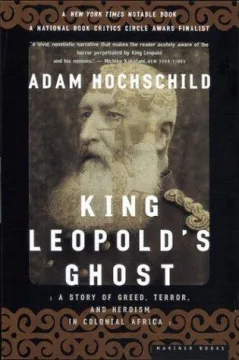
King Leopold's Ghost book cover

King Leopold's Ghost

By Adam Hochschild

A Story of Greed, Terror, and Heroism in Colonial Africa

In King Leopold’s Ghost, Adam Hochschild reconstructs the creation of the Congo Free State, the privately controlled Central African territory ruled by Belgium’s King Leopold II from 1885 to 1908. Promoted internationally as a humanitarian and antislavery project, the regime became an extractive system built around ivory, rubber, forced labor, hostage-taking, military coercion, and carefully managed propaganda. Hochschild follows both the people who helped construct this system and those who exposed it, including George Washington Williams, William Henry Sheppard, Roger Casement, E. D. Morel, and Alice Seeley Harris. The book is therefore not only an account of colonial brutality but also a history of political concealment and organized protest. By connecting corporate interests, royal ambition, racial ideology, missionary testimony, journalism, photography, and international activism, Hochschild shows how distant violence was made profitable, how evidence of it reached the wider worl…

View King Leopold's Ghost

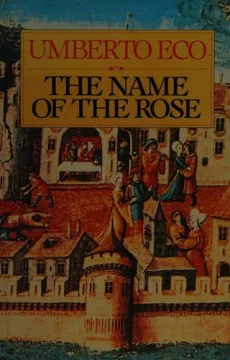
The Name of the Rose book cover

The Name of the Rose

By Umberto Eco

In a secluded Benedictine abbey in 1327, a series of unexplained deaths interrupts preparations for a politically sensitive religious meeting. William of Baskerville, a Franciscan friar skilled in observation and inference, investigates with the help of Adso of Melk, the young novice who later records their experience. Their inquiry leads through theological disputes, concealed histories, encoded manuscripts, and the abbey’s forbidden labyrinthine library. Although structured as a murder mystery, The Name of the Rose is equally concerned with how people interpret signs, preserve knowledge, enforce orthodoxy, and mistake persuasive patterns for truth. Umberto Eco combines a vividly constructed medieval setting with detective fiction, philosophical argument, literary play, and reflections on censorship. The result is a novel in which solving crimes cannot be separated from examining who controls books, how institutions defend authority, and whether certainty is ever justified by the evi…

View The Name of the Rose

The World for Sale book cover

The World for Sale

By Javier Blas , Jack Farchy

Money, Power and the Traders Who Barter the Earth’s Resources

The World for Sale investigates the private commodity-trading firms that move oil, metals, grain, and other raw materials between producers and buyers. Javier Blas and Jack Farchy show how these firms became essential intermediaries in the global economy while remaining far less visible than banks, oil majors, or governments. Their account follows traders into markets transformed by decolonization, resource nationalization, the rise of OPEC, the Soviet Union’s collapse, China’s economic expansion, sanctions, and civil war. Companies such as Glencore, Vitol, Trafigura, and Cargill emerge not merely as brokers but as financiers, logisticians, intelligence gatherers, and sometimes politically consequential actors. The book’s central significance lies in connecting ordinary consumption to transactions conducted in distant ports, mines, ministries, and financial centers. It presents commodity trading as a form of capitalism built on information, credit, appetite for risk, and a willingness…

View The World for Sale

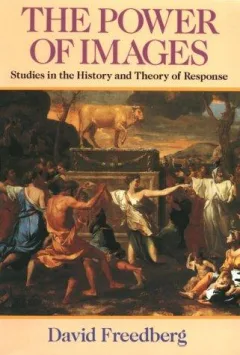
The Power of Images book cover

The Power of Images

By David Freedberg

Studies in the History and Theory of Response

Why do people pray before images, touch them, fear them, censor them, attack them, or respond to them sexually? David Freedberg argues that such behavior is not a marginal residue of superstition but evidence of a fundamental feature of visual experience: viewers frequently react to representations as though the depicted person or power were somehow present. Drawing on material from classical antiquity, Christianity, European popular devotion, legal punishment, magic, erotic art, and iconoclasm, he shifts attention from style and attribution to what images cause people to feel and do. Pilgrimage objects, votive offerings, effigies, visions, wax figures, and celebrated paintings consequently belong to one history of response. The book challenges the disciplinary boundary between “high art” and supposedly crude or irrational image use, proposing that embarrassment and aesthetic convention often conceal the bodily, emotional, and behavioral force of seeing.

View The Power of Images