WebToTell

Books

Discover published books from independent authors and publishers.

Explore the library

Find your next book

254 unique books found Books may appear in more than one category.

Pride and Prejudice book cover

Pride and Prejudice

By Jane Austen

In rural England, the Bennet family’s uncertain future makes the marriages of its five daughters an urgent economic concern. Elizabeth Bennet, intelligent and quick to judge, resists treating marriage as a purely financial arrangement. Her encounters with the wealthy, reserved Fitzwilliam Darcy produce mutual attraction, wounded pride, and serious misunderstanding. Around them, other courtships reveal sharply different combinations of affection, convenience, vanity, status, and desire. The novel is both a romantic comedy and a precise examination of judgment. Elizabeth must recognize how readily wit and confidence can harden into prejudice, while Darcy must confront the arrogance encouraged by wealth and rank. Through lively dialogue, social embarrassment, letters, reversals, and carefully placed irony, Jane Austen explores how people learn—or fail to learn—to distinguish reputation from character. The result joins emotional satisfaction to a searching critique of class, inheritance,…


View Pride and Prejudice

SPQR book cover

SPQR

By Mary Beard

A History of Ancient Rome

Mary Beard's SPQR examines how a small settlement in central Italy became the center of a vast and durable imperial system. Moving from Rome's uncertain beginnings and foundation legends through the Republic and early Empire, Beard asks how Roman power worked, who counted as Roman, and how conquest transformed both rulers and subjects. The account gives major figures such as Cicero, Julius Caesar, Augustus, and Caracalla their place without reducing Roman history to a procession of celebrated men. Political institutions, slavery, citizenship, migration, family life, religion, urban conditions, and social inequality are integral to the story. Beard also repeatedly exposes the difficulty of reconstructing antiquity from partisan texts, monumental self-presentation, inscriptions, coins, and incomplete archaeology. Ending in 212 CE, when Caracalla extended citizenship to almost all free inhabitants of the empire, SPQR presents Rome as a changing political community rather than a fixed mod…

View SPQR

The End of Education book cover

The End of Education

By Neil Postman

Redefining the Value of School

Neil Postman argues that the deepest crisis in American public schooling is not primarily a shortage of information, technology, testing, or administrative technique. It is a crisis of purpose. Schools, he contends, need compelling shared narratives that explain why learning matters and what kind of society education should help create. He examines inadequate substitutes—including economic utility, consumerism, technological progress, and narrowly divisive accounts of identity—and then proposes alternative organizing stories. These include planetary responsibility, disciplined awareness of human fallibility, democratic experimentation, diversity as a source of collective strength, and attention to language as a maker of social reality. The title uses “end” chiefly in the sense of an aim or purpose, while warning that schooling without a defensible end may lose public legitimacy. Written as cultural criticism and philosophy of education, the book asks readers to judge schools not only…

View The End of Education

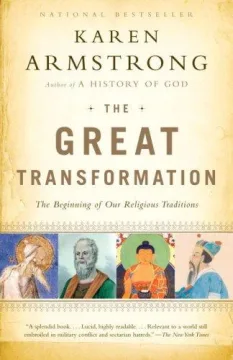
The Great Transformation book cover

The Great Transformation

By Karen Armstrong

The Beginning of Our Religious Traditions

Karen Armstrong examines the formative centuries commonly called the Axial Age, when major religious and philosophical traditions developed across China, India, Israel, and Greece. Moving among Confucianism, Daoism, Hindu traditions, Buddhism, Israelite monotheism, and Greek rational inquiry, she asks why comparable ethical and spiritual innovations appeared in societies with no single shared history. Armstrong connects these developments to political upheaval, warfare, urbanization, and changing social structures. Her central emphasis is not doctrinal agreement but a recurring turn away from ritual performed for its own sake and toward inward discipline, compassion, self-criticism, and responsibility for others. Figures including Confucius, the Buddha, Socrates, and the prophet Jeremiah become part of a comparative account of humanity’s attempts to answer violence without reproducing it. The result is an ambitious history of ideas that also challenges modern readers to reconsider wha…

View The Great Transformation

The Phoenix Project book cover

The Phoenix Project

By Gene Kim , Kevin Behr , George Spafford

A Novel About IT, DevOps, and Helping Your Business Win

When a critical business initiative at Parts Unlimited falls dangerously behind schedule, IT manager Bill Palmer is abruptly placed in charge of technology operations and given little time to restore order. He inherits unstable systems, conflicting priorities, exhausted employees, weak coordination, and a project whose failure could threaten the company. Guided by the enigmatic Erik, Bill begins treating technology work as a production system rather than an endless series of emergencies. The Phoenix Project uses a fictional corporate crisis to introduce DevOps, the Theory of Constraints, flow, feedback, controlled work in process, and continual learning. Its central argument is that reliable technology delivery depends less on isolated technical heroics than on understanding the entire value stream. By dramatizing the relationships among development, operations, security, executives, and business units, the novel shows how organizational design and management decisions shape technical…

View The Phoenix Project

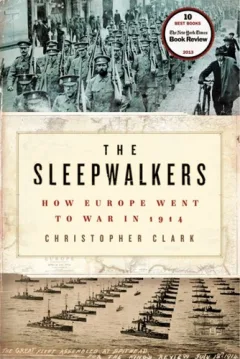
The Sleepwalkers book cover

The Sleepwalkers

By Christopher Clark

How Europe Went to War in 1914

Christopher Clark reconstructs the political and diplomatic decisions that transformed the assassination of Archduke Franz Ferdinand in Sarajevo into a European war. Rather than treating the catastrophe as the execution of a single power’s settled plan, he follows decision-makers in Serbia, Austria-Hungary, Germany, Russia, France, and Britain as they responded to threats, allies, domestic pressures, incomplete information, and rapidly narrowing choices. The account reaches back beyond the July Crisis to Serbian politics, Balkan nationalism, imperial rivalry, shifting alliances, and earlier confrontations that shaped how leaders interpreted events in 1914. Its central significance lies in replacing a simple search for one guilty state with an international study of interacting agency. Clark does not present the war as automatic: he emphasizes choices, misjudgments, and calculated risks. The result is both a detailed narrative of escalation and a major intervention in the long-running…

View The Sleepwalkers

The Glass Castle book cover

The Glass Castle

By Jeannette Walls

A Memoir

In The Glass Castle, Jeannette Walls recounts a childhood shaped by poverty, frequent moves, parental neglect, and fierce family loyalty. Her father, Rex, is intelligent, charismatic, and full of magnificent plans, but his alcoholism repeatedly turns promise into instability. Her mother, Rose Mary, prizes artistic freedom and self-reliance while resisting the ordinary responsibilities of parenthood. Their children consequently learn to find food, manage danger, protect one another, and imagine lives beyond the family’s worsening circumstances. The memoir moves from the American Southwest to Welch, West Virginia, and eventually to New York City, where Jeannette builds an independent adult life. Rather than offering a simple story of villainous parents and heroic escape, Walls examines how love can coexist with anger, shame, admiration, and betrayal. The result is both a family narrative and an inquiry into resilience, memory, poverty, and the difficult work of defining home.

View The Glass Castle

The Human Condition book cover

The Human Condition

By Hannah Arendt

Hannah Arendt’s The Human Condition examines the forms of activity through which people sustain life, construct a shared world, and appear before one another as political beings. Its central distinction is among labor, work, and action: labor answers recurring biological necessity; work produces relatively durable objects and institutions; action unfolds among plural persons through speech and deeds. Arendt uses these categories to diagnose modernity, arguing that production, consumption, administration, and concern for survival increasingly crowd out spaces where people can act freely in public. Yet the book is not simply nostalgic for ancient politics. It also studies action’s dangers—its unpredictability, irreversibility, and dependence on others—and considers forgiveness and promising as partial responses. Combining conceptual analysis with interpretations of Greek and Roman thought, Christianity, Marx, and modern science, the book remains a foundational inquiry into freedom, publ…

View The Human Condition

Chip War book cover

Chip War

By Chris Miller

The Fight for the World's Most Critical Technology

Chip War is a global history of the semiconductor and an argument about technological power. Chris Miller traces how transistors and integrated circuits moved from American laboratories and Cold War weapons programs into nearly every part of modern economic life. He follows the industry’s expansion through the United States, Japan, South Korea, Taiwan, Europe, and China, showing how design, fabrication, manufacturing equipment, and intellectual property became distributed across a remarkably intricate supply chain. That specialization made chips cheaper and more capable, but it also concentrated indispensable expertise in a small number of firms and locations. Miller connects business decisions by companies such as Intel and TSMC with military strategy, industrial policy, globalization, and the intensifying rivalry between the United States and China. The result is both a history of technological development and a warning that access to computing power now shapes prosperity, national…

View Chip War

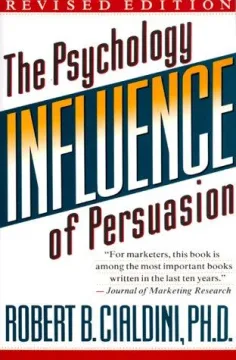
Influence book cover

Influence

By Robert B. Cialdini

The Psychology of Persuasion

Why do people agree to requests that they might reject under more deliberate conditions? In Influence, social psychologist Robert B. Cialdini explains how familiar cues can trigger rapid compliance. The 2007 revised edition organizes its account around six principles: reciprocation, commitment and consistency, social proof, liking, authority, and scarcity. Each principle can support legitimate cooperation, but each can also be engineered by sellers, fundraisers, negotiators, advertisers, and others seeking agreement. Cialdini combines research from social psychology with observations of persuasion in everyday and commercial settings, emphasizing both how influence works and how readers can recognize questionable uses of it. The result is an accessible framework for examining decisions that may feel personal and spontaneous but are often shaped by context. Its central value lies not in promising immunity from persuasion, but in making common influence patterns easier to notice, evaluat…

View Influence

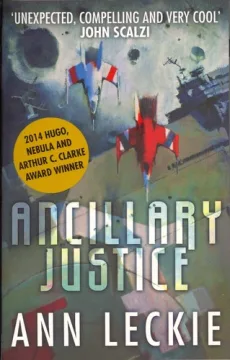
Ancillary Justice book cover

Ancillary Justice

By Ann Leckie

Breq travels across a remote, frozen world in pursuit of the final stage of a long-planned act of vengeance. Although she appears to be one human being, she was once the artificial intelligence of Justice of Toren, a Radchaai warship whose consciousness extended through the vessel and thousands of human ancillary bodies. Now confined to one surviving body, she carries the memories of an imperial conquest, a beloved officer’s death, and the betrayal that destroyed nearly everything she was. Moving between Breq’s present journey and the events that produced it, Ancillary Justice combines space opera with a study of divided identity, colonial power, loyalty, grief, and moral responsibility. Ann Leckie’s use of “she” as the Radchaai default pronoun also makes readers confront how language shapes assumptions about gender. The result is both a revenge narrative and an inquiry into whether a being created to serve an empire can judge that empire—and act against it.

View Ancillary Justice

Zealot book cover

Zealot

By Reza Aslan

The Life and Times of Jesus of Nazareth

Reza Aslan’s Zealot reconstructs Jesus of Nazareth as a first-century Jewish preacher whose message cannot be separated from Roman occupation, economic inequality, messianic expectation, and conflict over the Jerusalem Temple. Rather than beginning with Christian doctrines about Jesus, Aslan asks what can plausibly be said about the historical person behind the Gospels. He presents Jesus’s proclamation of the Kingdom of God as politically charged and interprets the crucifixion under Pontius Pilate as evidence that Rome regarded him as a threat to public order. The book then follows the transformation of a Jewish movement after Jesus’s death, emphasizing tensions among James, Peter, and Paul and the gradual emergence of Christianity beyond Judaism. Written as accessible narrative history, Zealot offers a vivid, forcefully argued portrait. Its central reconstruction is disputed, however, and readers should approach it as one provocative interpretation within historical-Jesus scholarship…

View Zealot